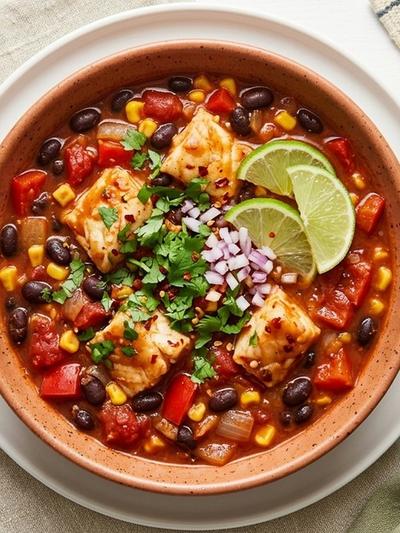
Each serving of this citrus-cured mahi-mahi ceviche bowl delivers 38 grams of protein from a combination of fresh fish and fiber-rich black beans, all for under 350 calories. Mahi-mahi is one of the leanest white fish options available, providing roughly 20 grams of protein per 100 grams with less than 1 gram of fat. Paired with canned black beans and a small amount of avocado, this bowl covers protein, fiber, and healthy fats in a single no-cook assembly.
The flavor here is bright and layered. Fresh lime and orange juice cure the fish while building a tangy, almost sweet dressing that coats each piece. Crunchy cucumber, juicy cherry tomatoes, peppery red onion, and a thread of jalapeño create contrast against the silky cured fish and creamy avocado. A handful of fresh cilantro ties everything together in a way that tastes unmistakably Mexican without relying on heavy sauces or cheese.
For anyone on Mounjaro or Wegovy, this bowl is especially practical. The cold, light texture tends to sit well when warm or heavy meals feel unappealing. Portions are compact but protein-dense, so even eating half a bowl still provides meaningful nutrition. And because there is no cooking at all — just slicing, mixing, and waiting — it requires minimal effort on low-energy days.
Why This Works on GLP-1
The 38 grams of protein per serving come from two complementary sources: mahi-mahi provides complete animal protein with all essential amino acids, while black beans contribute plant-based protein along with complex carbohydrates. This combination supports muscle preservation during the weight loss that GLP-1 medications facilitate. Research consistently shows that maintaining adequate protein intake — at least 25 to 30 grams per meal — helps protect lean body mass even during caloric deficit, which is critical since muscle loss can lower resting metabolic rate.
The 10 grams of fiber per bowl come primarily from the black beans and vegetables. This is a moderate, gut-friendly amount that supports the slower gastric emptying already promoted by GLP-1 receptor agonists like Ozempic and Zepbound. Unlike raw salads loaded with cruciferous vegetables, the soft beans and tender cured fish are gentle on a digestive system that may already be moving more slowly than usual.
Ceviche is naturally low in fat because the fish is cured rather than fried or sautéed in oil. The small amount of avocado provides monounsaturated fats that aid absorption of fat-soluble vitamins without adding heaviness. The citrus marinade also provides vitamin C, which supports iron absorption from the black beans — a practical nutritional bonus that requires no extra effort.
Ingredients (serves 2)
For the ceviche:
- 10 oz (285g) fresh sushi-grade mahi-mahi fillet, skin removed
- 1/3 cup (80ml) fresh lime juice (about 3 limes)
- 2 tablespoons fresh orange juice
- 1/4 teaspoon fine sea salt
For the bowls:
- 1 cup (170g) canned black beans, drained and rinsed
- 1/2 teaspoon ground cumin
- 1/4 teaspoon smoked paprika
- 1 tablespoon fresh lime juice
- 1 medium Persian cucumber (about 5 oz / 140g), diced
- 1/2 cup (75g) cherry tomatoes, quartered
- 3 tablespoons (30g) red onion, finely diced
- 1 small jalapeño, seeded and minced
- 1/4 medium avocado (about 1.5 oz / 40g), diced
- 3 tablespoons fresh cilantro, roughly chopped
- Pinch of flaky salt
Instructions
Cure the mahi-mahi:
Check the mahi-mahi fillet carefully for bones by running your fingers along the surface. Cut the fish into 1/2-inch (1.25cm) cubes, keeping the pieces uniform so they cure evenly. Uniform size matters here — larger pieces will remain raw in the center while smaller ones become rubbery.
Place the cubed fish in a glass or ceramic bowl. Pour the lime juice and orange juice over the fish, making sure every piece is submerged. The acid in the citrus juice denatures the proteins in the fish, effectively "cooking" it without heat. Add the sea salt and stir gently.
Cover tightly with plastic wrap or a lid and refrigerate for 25 to 35 minutes. The fish is ready when it turns opaque white all the way through and feels firm rather than soft when pressed. Do not cure longer than 45 minutes or the texture becomes tough and chalky.
Prepare the bean base:
While the fish cures, combine the drained black beans with the cumin, smoked paprika, and 1 tablespoon lime juice in a small bowl. Stir well and let sit at room temperature so the beans absorb the spices. Seasoning the beans separately ensures every bite in the bowl carries flavor rather than relying only on the ceviche dressing.
Dice the cucumber, quarter the tomatoes, mince the red onion and jalapeño, and chop the cilantro. Keep these components separate until assembly — mixing too early draws moisture from the vegetables and dilutes the textures.
Assemble the bowls:
When the fish is fully cured, drain off about half of the citrus liquid, leaving a few tablespoons in the bowl as dressing. The reserved liquid adds brightness without making the bowl soupy.
Divide the seasoned black beans between two bowls, spreading them across the base. Spoon the cured mahi-mahi over the beans. Arrange the cucumber, tomatoes, red onion, and jalapeño around the fish. Top each bowl with diced avocado and cilantro. Finish with a pinch of flaky salt.
Nutrition per Serving
| Nutrient | Amount (approx.) |
|---|---|
| Calories | ~345 kcal |
| Protein | ~38g |
| Fat | ~9g |
| Carbohydrates | ~28g |
| Fiber | ~10g |
Based on 5 oz raw mahi-mahi per serving, 1/2 cup drained canned black beans, and 1/8 of a whole avocado per bowl.
Practical Notes
Buy the freshest fish you can find. Since ceviche relies on raw fish cured in acid rather than heat, quality matters more than in cooked preparations. Ask your fishmonger for sushi-grade or previously frozen mahi-mahi — the freezing process eliminates parasites. Smell the fish before buying: it should smell like the ocean, not fishy.
Season the beans in advance for deeper flavor. If you have 30 minutes before you start, mix the black beans with the cumin, paprika, and lime juice and refrigerate. The longer the beans sit in the spice mixture, the more integrated the flavor becomes. You can season them up to 24 hours ahead.
Start with half a bowl if your appetite is limited. During the first weeks on Ozempic or similar medications, appetite suppression can be strong. This recipe divides neatly — eat half a portion for about 19 grams of protein and save the remainder in the fridge for up to 8 hours. The ceviche continues to cure slowly, so eat the second half within the same day.
Swap mahi-mahi for other firm white fish. Halibut, sea bass, or red snapper all work well in ceviche. Avoid soft-fleshed fish like tilapia or catfish, which fall apart during curing. Shrimp is another option — butterfly and devein raw shrimp, then cure for 20 minutes until pink and opaque throughout.
Keep it cold for food safety. Ceviche should stay refrigerated from start to finish. Never let it sit at room temperature for more than 30 minutes. If serving outdoors or at a gathering, place the bowl over a larger bowl filled with ice to maintain a safe temperature.
Frequently Asked Questions
Will the acid in the lime juice cause nausea on GLP-1 medications?
Can I use frozen mahi-mahi instead of fresh?
How long does leftover ceviche last in the refrigerator?
What if I can only eat a very small portion right now?
How can I tell when the mahi-mahi is fully cured?
This article provides general food and nutrition guidance only. It does not constitute medical advice. Always consult your healthcare provider regarding your GLP-1 medication and individual nutritional needs.