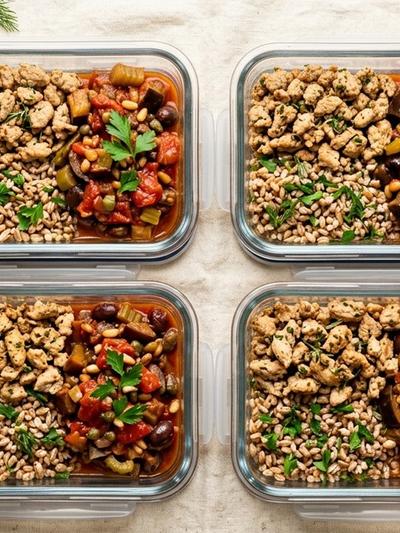
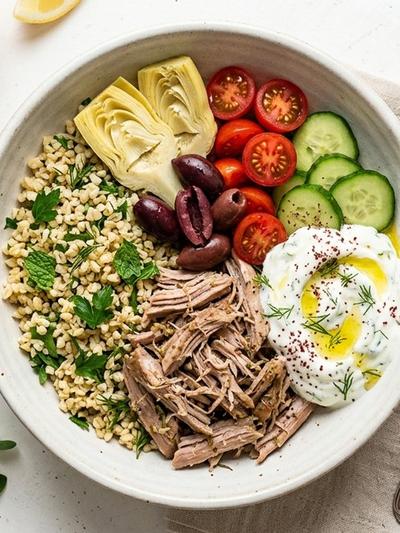
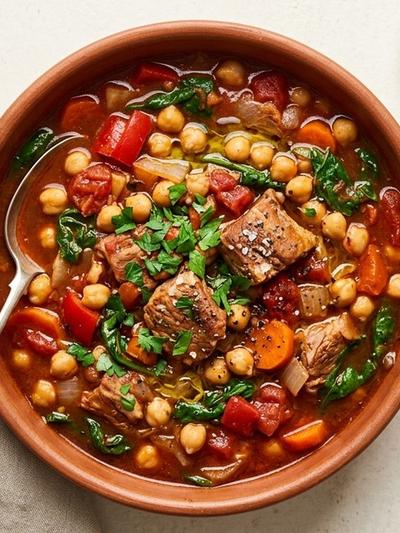
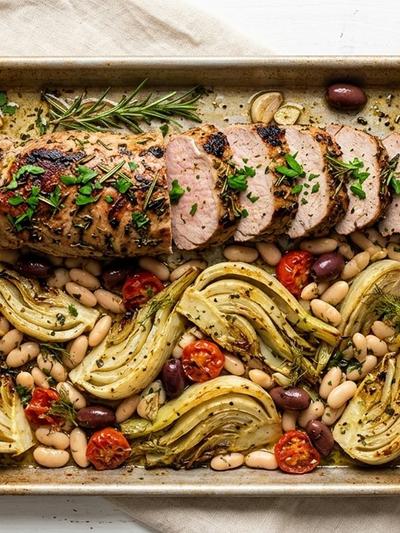
With 42 grams of protein and 11 grams of fiber per serving, these Mediterranean pork and farro bowls build a complete nutritional profile from just a handful of whole ingredients. Lean pork tenderloin supplies nearly 70 percent of the protein on its own, while farro and roasted artichoke hearts contribute the rest along with slow-digesting complex carbohydrates. The full bowl comes in at 460 calories — concentrated enough to satisfy without requiring a large volume of food.
The herb crust on the pork does most of the flavor work here. Dried oregano and smoked paprika form a fragrant, slightly smoky bark when seared in a hot skillet, and that warmth carries through the entire bowl. Underneath, nutty farro provides a chewy contrast to tender sliced pork, while roasted zucchini, bell pepper, cherry tomatoes, and artichoke hearts bring sweetness and body. A bright lemon-herb yogurt dressing ties everything together without heaviness.
This recipe was built around the realities of meal prep on a GLP-1 medication. All four components — farro, roasted vegetables, seared pork, and dressing — cook simultaneously in about 40 minutes, and the bowls hold up in the refrigerator for four days without turning soggy or losing texture. Farro keeps its chew far better than rice or couscous after reheating, and the pork stays moist when stored with its resting juices. You eat a smaller dinner, so every forkful needs to count — these bowls deliver.
Why This Works on GLP-1
Preserving lean muscle mass is one of the central nutritional challenges during GLP-1-assisted weight loss. Medications like Ozempic and Mounjaro suppress appetite so effectively that many people undereat protein without realizing it, which accelerates muscle loss alongside fat loss. Each serving of these bowls provides 42 grams of protein, putting you well above the 25–30 gram threshold that research suggests is needed to stimulate muscle protein synthesis at a single meal. Having four portions ready in the refrigerator removes the friction of cooking when your appetite is low — you just reheat and eat.
The 11 grams of fiber per bowl come primarily from farro and artichoke hearts, both of which are gentle on the digestive system. Unlike raw cruciferous vegetables or very high-fiber legumes, these ingredients break down gradually without producing excessive gas or bloating — an important consideration when GLP-1 medications are already slowing gastric emptying. The roasted vegetables add additional soluble fiber that supports steady blood sugar after the meal.
At 12 grams of fat per serving, the macronutrient balance leans heavily toward protein and complex carbohydrates. This is intentional. High-fat meals tend to sit uncomfortably when gastric motility is reduced, and concentrating calories in protein and fiber means you get more satiety per calorie. The small amount of fat present — mostly from olive oil and a light feta crumble — is enough to carry the fat-soluble flavors of the herbs and smoked paprika without weighing down the meal.
Ingredients (serves 4)
For the herb-crusted pork:
- 1 1/4 lb (565g) pork tenderloin, trimmed of silver skin
- 1 tbsp dried oregano
- 1 tsp smoked paprika
- 1/2 tsp garlic powder
- 1/2 tsp fine sea salt
- 1/4 tsp black pepper
- 1/2 tbsp olive oil
For the farro:
- 3/4 cup (140g) dry farro, rinsed
- 2 cups (480ml) low-sodium chicken broth
- 1 bay leaf
For the roasted vegetables:
- 1 (14 oz / 400g) can artichoke hearts, drained and quartered
- 2 medium zucchini, halved lengthwise and sliced into 1/2-inch half-moons
- 1 large red bell pepper, cut into 1-inch pieces
- 1 pint (300g) cherry tomatoes, halved
- 1 small red onion, cut into thin wedges
- 1 tbsp olive oil
- 1/2 tsp fine sea salt
- 1/4 tsp black pepper
For the lemon-herb yogurt dressing:
- 1/2 cup (120g) plain Greek yogurt, 2% fat
- 2 tbsp fresh lemon juice (about 1 lemon)
- 1 small clove garlic, finely grated
- 2 tbsp chopped fresh dill
- 1 tbsp chopped fresh flat-leaf parsley
- Pinch of fine sea salt
For assembly:
- 1 oz (28g) feta cheese, crumbled
- 8 kalamata olives, halved
- Lemon wedges for serving
Instructions
Start the farro and preheat the oven:
- Preheat your oven to 425°F (220°C) and line a large rimmed sheet pan with parchment paper. Starting the oven first means it reaches temperature while you prep the vegetables.
- Combine the rinsed farro, chicken broth, and bay leaf in a medium saucepan. Bring to a boil over high heat, then reduce to a low simmer, cover, and cook for 25–30 minutes until the farro is tender but still pleasantly chewy. Drain any excess liquid through a fine-mesh strainer, discard the bay leaf, and spread the farro on a plate to cool slightly. Cooking farro in broth rather than water builds savory depth into the grain itself.
Roast the vegetables:
- While the farro simmers, spread the artichoke hearts, zucchini, bell pepper, cherry tomatoes, and red onion on the prepared sheet pan. Drizzle with the tablespoon of olive oil, sprinkle with salt and pepper, and toss until evenly coated. Arrange the vegetables in a single layer with space between the pieces — crowding steams them instead of roasting them, and you want caramelized edges.
- Roast for 25–30 minutes, stirring once at the halfway mark, until the zucchini is golden at the edges and the cherry tomatoes have collapsed and concentrated their juices. The artichoke hearts will develop light brown tips that add a subtle nuttiness.
Sear the pork:
- While the vegetables roast, pat the pork tenderloin completely dry with paper towels. Combine the dried oregano, smoked paprika, garlic powder, salt, and pepper in a small bowl, then rub the mixture evenly over all surfaces of the pork. Drying the meat first is critical — moisture on the surface prevents browning and creates steam instead of a crust.
- Heat the half tablespoon of olive oil in a large oven-safe skillet or heavy-bottomed pan over medium-high heat until the oil just begins to shimmer. Sear the pork tenderloin for 3–4 minutes per side, turning to brown all four sides, until the herb coating forms a dark, fragrant crust and the internal temperature reaches 145°F (63°C). This takes 10–12 minutes total. If the pork is thick, you can transfer the skillet to the 425°F oven for the final 3–4 minutes.
- Transfer the pork to a cutting board and let it rest for at least 5 minutes. Resting allows the juices to redistribute — slicing immediately sends them onto the board instead of keeping them in the meat. After resting, slice against the grain into 1/2-inch medallions. Save any juices that collect on the cutting board.
Make the dressing:
- While the pork rests, whisk together the Greek yogurt, lemon juice, grated garlic, dill, parsley, and salt in a small bowl until smooth. Taste and adjust the lemon or salt. The dressing should be bright and tangy — it cuts through the richness of the farro and the smokiness of the pork.
Assemble the meal prep bowls:
- Divide the cooked farro evenly among four airtight meal prep containers. Arrange the roasted vegetables alongside the farro, then fan the sliced pork medallions on top. Drizzle any reserved pork resting juices over the meat. Scatter the crumbled feta and halved olives over each bowl.
- Portion the lemon-herb yogurt dressing into four small separate containers or silicone cups — adding it before refrigeration will make it warm and thin when you reheat. Tuck a lemon wedge into each container if you like extra acidity at serving time.
Nutrition per Serving
| Nutrient | Amount (approx.) |
|---|---|
| Calories | ~460 kcal |
| Protein | ~42g |
| Fat | ~12g |
| Carbohydrates | ~44g |
| Fiber | ~11g |
Estimates calculated from USDA data for trimmed pork tenderloin, dry farro, canned artichoke hearts, and 2% Greek yogurt. Actual values may vary with specific brands and produce sizes.
Practical Notes
Pork tenderloin dries out if overcooked — use a thermometer. Pull the pork at 145°F (63°C) internal temperature and let carryover cooking bring it to a safe 150°F during the rest. Overcooked tenderloin turns chalky and mealy, which is especially unappealing when reheated. A simple instant-read thermometer eliminates guesswork and costs under ten dollars.
Store the dressing separately and add it cold. The lemon-herb yogurt dressing works best drizzled over the warm bowl right before eating. Storing it on top of the hot farro and pork causes it to thin out and soak in, losing its bright contrast. The dressing keeps for five days refrigerated in a sealed container.
These bowls reheat best with a splash of water. Farro absorbs moisture in the refrigerator. When microwaving, sprinkle a tablespoon of water over the bowl, cover loosely, and heat for 2–3 minutes. The steam rehydrates the grain and gently warms the pork without drying it out. You can also reheat uncovered in a 350°F oven for 10 minutes if you prefer.
Swap the farro for barley or freekeh if needed. Pearled barley has a similar chew and cook time, and freekeh adds a toasty, slightly smoky flavor that pairs well with the herb-crusted pork. Both options maintain the fiber content. Quinoa works in a pinch but has a softer texture after reheating. Avoid white rice — it turns gummy by day three.
If your appetite is very small, split each bowl into two mini meals. At roughly 230 calories and 21 grams of protein per half-portion, these bowls scale down gracefully. Eat half for dinner and save the rest for a late-night snack or next-day lunch. This approach is especially useful during the first weeks of a GLP-1 dose increase when appetite suppression peaks.
Frequently Asked Questions
Can I eat this if I just started Ozempic and feel nauseous after meals?
What can I use instead of pork tenderloin?
How long do these meal prep bowls last in the refrigerator?
I can only eat very small portions right now. How should I adjust the recipe?
Do I need to use canned artichoke hearts, or can I use frozen or fresh?
This article provides general food and nutrition guidance only. It does not constitute medical advice. Always consult your healthcare provider regarding your GLP-1 medication and individual nutritional needs.