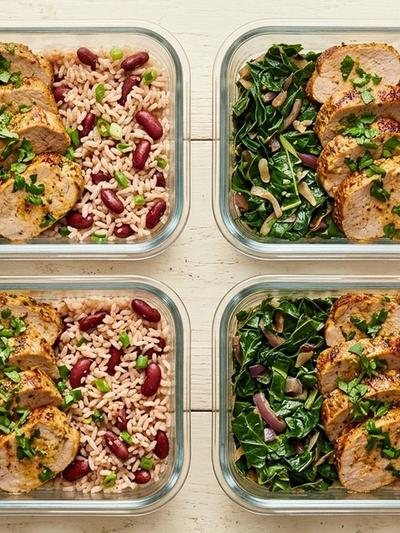
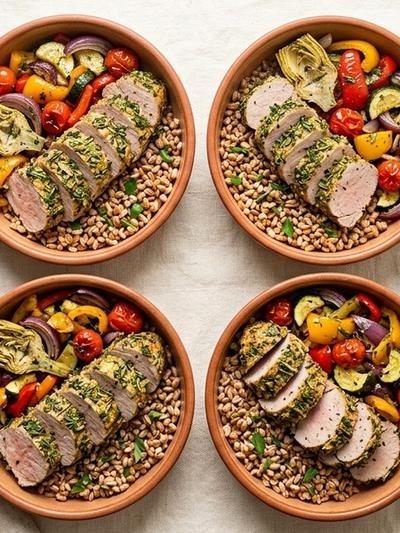
Each of these make-ahead breakfast bowls delivers 33 grams of protein and 9 grams of fiber from a combination of lean pork tenderloin and black-eyed peas. Pork tenderloin is one of the leanest cuts available, providing just 2.5 grams of fat per four-ounce portion while matching chicken breast gram-for-gram on protein. Paired with black-eyed peas — a Caribbean pantry staple rich in folate, iron, and slow-digesting starch — these bowls offer a nutritionally complete breakfast that holds up beautifully through five days of refrigeration.
The flavor here is warm and aromatic without being heavy. A dry rub of allspice, thyme, garlic, and a touch of smoked paprika transforms the pork tenderloin into something that smells like a Kingston kitchen. Roasted bell peppers and red onion add sweetness and body, while a bright lime-herb dressing stirred through just before serving keeps everything tasting fresh even on day four.
For GLP-1 users, this is a breakfast built around the realities of reduced appetite. Each bowl is compact enough to finish comfortably, yet nutrient-dense enough to protect muscle mass and sustain energy through the morning. The batch format means you cook once on a quiet Sunday and simply grab a bowl each morning — no decisions, no skipped meals, no excuses to eat nothing when your appetite is low.
Why This Works on GLP-1
Preserving lean muscle mass is one of the most important nutritional priorities during GLP-1-assisted weight loss. Research consistently shows that higher protein intake — at least 25 to 30 grams per meal — helps counteract the muscle loss that can accompany rapid weight reduction. These bowls deliver 33 grams of complete protein per serving, primarily from pork tenderloin, which contains all essential amino acids in high bioavailability. For people on Mounjaro or similar GLP-1 medications, hitting that protein target at breakfast sets a strong foundation for the rest of the day.
The 9 grams of fiber per bowl come almost entirely from black-eyed peas, which provide a gentler form of soluble fiber compared to larger beans like kidney or lima beans. This matters because GLP-1 medications already slow gastric emptying, and overly fibrous meals can amplify bloating or discomfort. Black-eyed peas strike a useful middle ground — enough fiber to support gut health and blood sugar stability without overwhelming a sensitive stomach.
The overall macronutrient balance — 33 grams of protein, 29 grams of carbohydrates, and just 8 grams of fat — creates a meal with a high thermic effect, meaning your body expends more energy digesting it. The low fat content also supports faster gastric transit, which can help reduce the nausea some GLP-1 users experience with fattier morning meals.
Ingredients (serves 4)
For the spice rub:
- 1 teaspoon ground allspice
- 1 teaspoon dried thyme
- 1 teaspoon garlic powder
- ½ teaspoon smoked paprika
- ½ teaspoon onion powder
- ¼ teaspoon ground black pepper
- ¼ teaspoon cayenne pepper (optional — omit for sensitive stomachs)
- ½ teaspoon fine sea salt
For the bowls:
- 1 lb (450g) pork tenderloin, trimmed of silver skin
- 2 teaspoons olive oil, divided
- 2 medium bell peppers (1 red, 1 green), diced
- 1 medium red onion, diced
- 2 cloves garlic, minced
- 2 cups (340g) cooked black-eyed peas (or one 15-oz can, drained and rinsed)
- 2 cups (60g) baby spinach
- ½ cup (120ml) low-sodium chicken broth
For the lime-herb dressing:
- 2 tablespoons fresh lime juice (about 1 lime)
- 1 tablespoon olive oil
- 2 tablespoons fresh cilantro, finely chopped
- 1 green onion, thinly sliced
- Pinch of salt
Instructions
Prepare the pork tenderloin:
Preheat your oven to 400°F (200°C). Combine all spice rub ingredients in a small bowl, then pat the pork tenderloin dry with paper towels and coat it evenly with the rub, pressing the spices into the surface. This dry rub forms a flavorful crust without adding any fat.
Heat 1 teaspoon of olive oil in an oven-safe skillet over medium-high heat. Sear the tenderloin for about 2 minutes per side until a dark crust develops on all surfaces. This Maillard reaction creates the deep, savory flavor that makes the bowls satisfying even when reheated.
Transfer the skillet to the oven and roast for 15 to 18 minutes, until the internal temperature reaches 145°F (63°C). Remove from the oven, tent loosely with foil, and rest for 10 minutes before slicing. The tenderloin will continue cooking during the rest and the juices will redistribute for moist, tender slices.
Cook the vegetables and black-eyed peas:
While the pork roasts, heat the remaining 1 teaspoon of olive oil in a large skillet over medium heat. Add the diced bell peppers and red onion and cook for 5 to 6 minutes, stirring occasionally, until softened and lightly caramelized at the edges. The natural sugars in the peppers develop a sweetness that balances the warm allspice on the pork.
Add the minced garlic and cook for 30 seconds until fragrant. Stir in the black-eyed peas and chicken broth, then bring to a gentle simmer. Cook for 4 to 5 minutes until the broth has mostly absorbed and the peas are heated through and well seasoned.
Add the baby spinach in handfuls, stirring each addition until wilted — about 1 minute total. The spinach adds volume and a dose of iron and vitamin K without noticeably changing the texture after reheating.
Make the dressing and assemble:
Whisk together the lime juice, olive oil, cilantro, green onion, and salt in a small bowl. This dressing is intentionally bright and acidic to cut through the warm spices and revive the bowls when you eat them cold or reheated.
Slice the rested pork tenderloin into ½-inch medallions, then halve each medallion for easier portioning. Divide the black-eyed pea and vegetable mixture evenly among four meal prep containers. Arrange the sliced pork on top.
Drizzle the lime-herb dressing over each bowl, dividing it evenly. If prepping for the full week, store the dressing in a small separate container and add it fresh each morning for the brightest flavor.
Nutrition per Serving
| Nutrient | Amount (approx.) |
|---|---|
| Calories | ~328 kcal |
| Protein | ~33g |
| Fat | ~8g |
| Carbohydrates | ~29g |
| Fiber | ~9g |
Estimates based on 4 oz trimmed pork tenderloin, ½ cup cooked black-eyed peas, and measured oil per serving.
Practical Notes
Refrigerator life is five days. Store assembled bowls with lids tightly sealed. The pork tenderloin actually improves after a day in the fridge as the spices meld into the meat. For the freshest taste, keep the lime-herb dressing in a small separate jar and spoon it over each morning.
Reheat gently or eat cold. Microwave each bowl for 90 seconds at 70% power to warm it through without drying out the pork. Alternatively, these bowls taste surprisingly good straight from the fridge — the lime dressing keeps the flavors bright at any temperature, which is helpful on mornings when even the smell of hot food feels like too much.
Swap black-eyed peas for lentils if needed. Green or brown lentils work well here and cook in about 20 minutes if you do not have canned black-eyed peas available. The protein and fiber numbers stay nearly identical. Chickpeas are another option, though their slightly firmer texture changes the character of the bowl.
Portion down for very low appetite days. If you are in the early weeks of GLP-1 treatment and struggling with breakfast volume, split each bowl into two smaller portions — you will still get roughly 16 grams of protein per half portion, which is better than skipping breakfast entirely. Eat the second half as a mid-morning snack when your appetite returns.
Freeze the pork separately for longer storage. If you want to extend beyond five days, slice and freeze the cooked pork tenderloin in individual portions. Thaw overnight in the refrigerator, then combine with a fresh batch of the black-eyed pea mixture. The pork holds its texture well through freezing when sliced before storage.
Frequently Asked Questions
Can I eat this bowl if I experience nausea on my GLP-1 medication?
What can I use instead of pork tenderloin?
How should I reheat these bowls at work without a microwave?
I am in my first month on Wegovy and can barely eat half a meal. How do I make this work?
Can I use dried black-eyed peas instead of canned?
This article provides general food and nutrition guidance only. It does not constitute medical advice. Always consult your healthcare provider regarding your GLP-1 medication and individual nutritional needs.