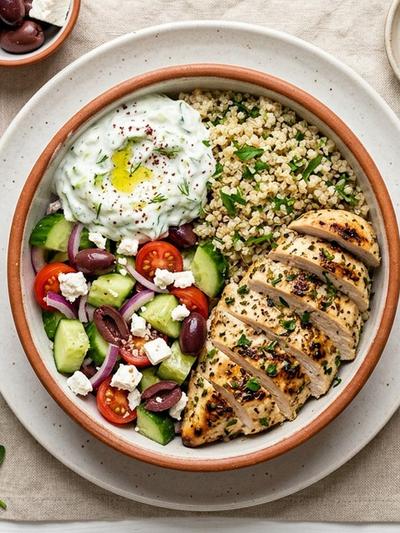
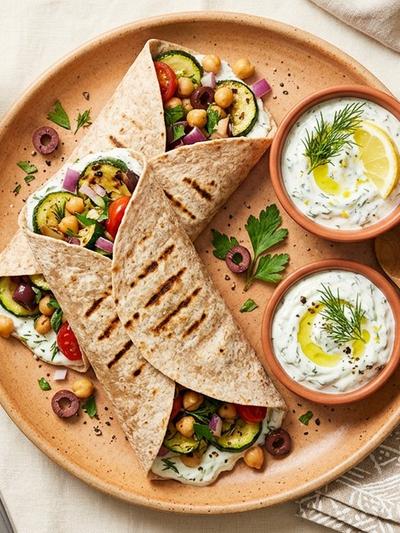
Each of these grilled chicken wraps delivers 40 grams of protein from a combination of charred lemon-oregano chicken breast and a whipped feta spread made with Greek yogurt. The chicken alone provides 31 grams of complete protein, while the feta-yogurt blend adds another 5 grams along with calcium and probiotics. A whole wheat tortilla rounds out the macros with gentle fiber and slow-digesting carbohydrates, bringing the total to 415 calories per wrap.
The flavor here is distinctly coastal Mediterranean — bright lemon zest and dried oregano form a crust on the grilled chicken, while the whipped feta adds a salty, creamy richness without the heaviness of a traditional cheese spread. Charred cherry tomatoes burst with concentrated sweetness against the cool crunch of cucumber and peppery fresh mint. The contrast between the warm, smoky chicken and the cold, tangy spread makes this taste like something from a Greek seaside taverna.
Wraps work exceptionally well for GLP-1 users because they compress a complete meal into a manageable, portion-controlled format. There is no loose grain to push around a plate when appetite is uncertain — everything stays contained in one handheld package. The whipped feta acts as both binding agent and flavor anchor, so even a half-portion eaten slowly feels complete and satisfying.
Why This Works on GLP-1
At 40 grams of protein per serving, this wrap sits squarely in the range that research associates with optimal muscle protein synthesis — the 25 to 45 gram window that matters most during GLP-1-assisted weight loss. Muscle preservation is the primary nutritional challenge on medications like Mounjaro and Zepbound, and hitting this protein threshold at lunch prevents the gradual lean mass loss that can slow metabolism over time. Chicken breast is one of the most bioavailable protein sources, meaning your body absorbs and uses nearly all of it. The additional protein from feta and Greek yogurt provides casein, a slower-digesting protein that extends the satiety window beyond what chicken alone offers.
The four grams of fiber per wrap come from the whole wheat tortilla and the vegetable fillings — enough to support digestive regularity without triggering the bloating that higher-fiber meals can cause when gastric emptying is slowed. Cherry tomatoes and cucumber add water content and volume without significant caloric load, which helps the wrap feel substantial even at modest calories.
The monounsaturated fats from the small amount of olive oil in the marinade support absorption of fat-soluble vitamins A and K from the vegetables and herbs. At 415 calories, this meal fits comfortably within most GLP-1 daily targets while leaving room for a protein-rich snack or a lighter dinner. The sodium level stays moderate thanks to using just a small amount of naturally salty feta rather than adding table salt to the filling.
Ingredients (serves 2)
For the chicken:
- 10 oz (285g) boneless, skinless chicken breast, butterflied or pounded to even thickness
- 1 tablespoon fresh lemon juice
- 1 teaspoon lemon zest
- 1 teaspoon extra-virgin olive oil
- 1 teaspoon dried oregano
- 1 clove garlic, finely grated
- 1/4 teaspoon salt
- 1/8 teaspoon black pepper
For the whipped feta:
- 1.5 oz (45g) feta cheese
- 3 tablespoons (45g) plain nonfat Greek yogurt
- 1 teaspoon fresh lemon juice
- Pinch of black pepper
For assembling:
- 2 medium whole wheat tortillas, 8-inch (about 50g each)
- 1/2 cup (75g) cherry tomatoes, halved
- 1/2 medium cucumber (about 80g), sliced into thin half-moons
- 8 fresh mint leaves, roughly torn
- 2 tablespoons fresh flat-leaf parsley, chopped
- Pinch of sumac for finishing (optional)
Instructions
Prepare the chicken:
Combine the lemon juice, lemon zest, olive oil, oregano, garlic, salt, and pepper in a shallow bowl. Add the chicken breast, turning to coat both sides. Let sit at room temperature for 10 minutes while you prepare the remaining ingredients — this brief rest allows the acid to begin tenderizing the surface without making the meat mushy.
Heat a grill pan or outdoor grill over medium-high heat until very hot. You should see wisps of smoke from the surface. Grill the chicken for 5 to 6 minutes per side, resisting the urge to move it — undisturbed contact creates the charred oregano crust that defines this wrap. The chicken is done when it reaches 165°F (74°C) internally and the juices run clear.
Transfer the chicken to a cutting board and let it rest for 5 minutes. Resting allows the juices to redistribute, so they end up in the wrap rather than pooling on the board. Slice against the grain into thin strips.
Make the whipped feta:
- While the chicken rests, crumble the feta into a small bowl. Add the Greek yogurt, lemon juice, and pepper. Mash and stir vigorously with a fork until the mixture is mostly smooth with a few small feta chunks remaining — this takes about two minutes. The texture should be spreadable, like a thick dip. For an even smoother result, pulse briefly in a small food processor.
Char the tomatoes:
- Place the halved cherry tomatoes cut-side down on the still-hot grill pan. Press gently and let them char for 90 seconds without moving them. The concentrated heat caramelizes the natural sugars, creating sweet, slightly smoky pockets that contrast with the tangy feta. Remove and set aside.
Assemble the wraps:
Warm the tortillas on the grill pan for about 20 seconds per side — just enough to make them pliable without crisping. Spread half the whipped feta across the center of each tortilla, leaving a one-inch border on all sides.
Layer the sliced chicken over the feta, followed by the charred tomatoes, cucumber slices, torn mint, and parsley. Finish with a light dusting of sumac if using — it adds a fruity tartness that complements the lemon without adding heat.
Fold the bottom edge of the tortilla up, then fold in the sides and roll tightly away from you. Cut in half on a diagonal for easier handling and to reveal the colorful cross-section.
Nutrition per Serving
| Nutrient | Amount (approx.) |
|---|---|
| Calories | ~415 kcal |
| Protein | ~40g |
| Fat | ~14g |
| Carbohydrates | ~26g |
| Fiber | ~4g |
Estimates based on 5 oz chicken breast per wrap, standard whole wheat tortillas (50g each), and 0.75 oz feta per serving. Exact values vary with tortilla brand and feta type.
Practical Notes
The whipped feta keeps for five days. Make a double batch on Sunday and store it in an airtight container in the fridge. It works as a spread on toast, a dip for raw vegetables, or a sauce for grilled fish — having it ready removes one step from weekday assembly.
Butterfly the chicken for even cooking. Chicken breasts vary wildly in thickness. Slicing them horizontally or pounding them to about 3/4 inch thick ensures the thin end does not dry out before the thick center reaches safe temperature. This single step is the difference between juicy and cardboard-dry chicken.
On low-appetite days, eat half. Wrap the remaining half tightly in foil and refrigerate — it holds well for up to 24 hours. The whipped feta prevents the tortilla from getting soggy the way watery sauces do, so the texture stays intact.
Swap the tortilla for lettuce if carbs are a concern. Two large butter lettuce leaves make a lighter vessel that drops the wrap to roughly 290 calories while keeping the protein at 36 grams. The trade-off is less structural integrity, so eat it over a plate rather than on the go.
Skip the grill pan with a cast iron skillet. If you do not own a grill pan, a well-seasoned cast iron skillet preheated over medium-high heat produces excellent results. The char marks will be different — more of an even sear than distinct grill lines — but the flavor development is the same.
Frequently Asked Questions
Will the grilled chicken be hard to digest on GLP-1 medication?
Can I use a different cheese instead of feta?
How long do these wraps keep, and can I meal prep them?
What if I can only eat a very small portion on my current GLP-1 dose?
Can I use a gas or charcoal grill instead of a grill pan?
This article provides general food and nutrition guidance only. It does not constitute medical advice. Always consult your healthcare provider regarding your GLP-1 medication and individual nutritional needs.