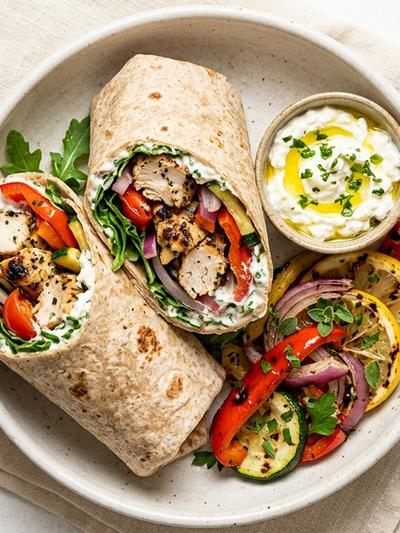
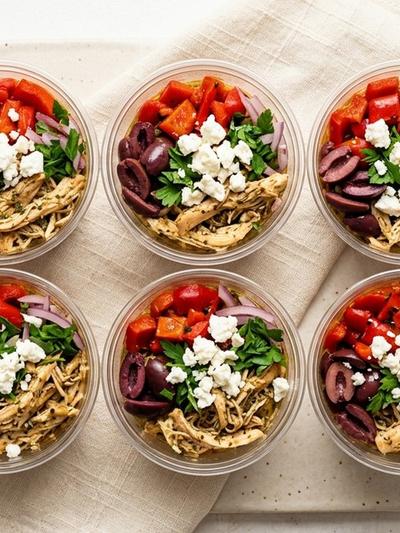
There is a particular kind of frustration that comes with meal prepping on GLP-1 medication: you pack a full lunch on Sunday, then Tuesday arrives and even looking at it feels like too much. The solution is not to stop meal prepping — it is to prep components, not complete plates.
The Greek chicken bowl works on this principle. Instead of a fixed portion, you have marinated chicken, a simple tzatziki sauce, cucumber, cherry tomatoes, and whole-wheat pita or a grain base — all prepped separately, all assembled at the moment you are actually hungry. Some days that is a full bowl. Other days it is two tablespoons of chicken and a quarter of a pita. Both are fine. The components hold for four days in the fridge and never feel like leftovers.
The central theme here is flexible protein assembly for unpredictable appetites. When you don't know how hungry you'll be at noon, having protein in a form you can eat in small bites — without committing to a full plate — removes friction and keeps nutrition consistent.
Why This Works on GLP-1
The tzatziki is doing double duty. Made with full-fat Greek yogurt, it provides extra protein in what looks and feels like a condiment — around 4g per two tablespoons. Greek yogurt is one of the most tolerated dairy foods on GLP-1 medications because it is thick, cool, and has a probiotic culture that supports gut health.
The marinade is olive oil-based rather than acidic-heavy, which reduces the risk of nausea that Mounjaro or Zepbound users sometimes experience. The chicken breast itself is lean, easy to eat cold or warm, and shreds beautifully for smaller bites.
Ingredients (serves 4)
For the Chicken
- 4 medium chicken breasts (about 600g total)
- 3 tablespoons olive oil
- 2 cloves garlic, minced
- 1 teaspoon dried oregano
- 1 teaspoon smoked paprika
- ½ teaspoon ground cumin
- ½ teaspoon salt
- ¼ teaspoon black pepper
- Juice of ½ lemon
For the Tzatziki
- 1 cup (240g) full-fat Greek yogurt
- ½ English cucumber, grated and squeezed dry
- 1 clove garlic, finely grated
- 1 tablespoon fresh dill (or ½ teaspoon dried)
- 1 tablespoon fresh lemon juice
- 1 tablespoon olive oil
- Salt to taste
Bowl Components
- 2 cups cooked whole-wheat couscous, quinoa, or brown rice
- 1 cup cherry tomatoes, halved
- 1 English cucumber, sliced into half-moons
- ½ cup kalamata olives, pitted
- 100g feta cheese, crumbled
- Small whole-wheat pitas or flatbreads (optional)
Instructions
Prepare the Chicken
Marinate. Whisk together olive oil, garlic, oregano, smoked paprika, cumin, salt, pepper, and lemon juice. Add chicken breasts, coat well, and marinate for at least 20 minutes — or up to 24 hours in the fridge.
Cook. Heat a large skillet or grill pan over medium-high heat. Cook chicken for 5–6 minutes per side until cooked through (internal temperature 74°C / 165°F). Rest for 5 minutes.
Slice or shred. Slice against the grain for clean pieces, or shred into irregular strips for easier small-bite eating. Both options work well in bowls.
Make the Tzatziki
Grate the cucumber on the large holes of a box grater. Gather it in your hands and squeeze firmly over the sink to remove as much liquid as possible — this is what keeps the tzatziki thick rather than watery.
In a bowl, combine Greek yogurt, grated cucumber, grated garlic, dill, lemon juice, and olive oil. Stir well and season with salt. Cover and refrigerate for at least 15 minutes before serving so the flavors develop.
Assemble the Bowls
Divide the grain base among four bowls or containers. Add chicken, cucumber slices, cherry tomatoes, olives, and crumbled feta. Spoon tzatziki over the top or serve on the side for dipping.
Nutrition per Bowl (with ½ cup couscous, without pita)
- Calories: ~450
- Protein: ~45g
- Fiber: ~5g
- Fat: ~18g (mostly healthy unsaturated from olive oil, olives, and feta)
Frequently Asked Questions
Can I eat this bowl cold straight from the fridge?
Is feta okay if I'm watching sodium?
What else can I do with leftover tzatziki?
How do I store the components and how long do they last?
This article provides general food and nutrition guidance only. It does not constitute medical advice. Always consult your healthcare provider regarding your GLP-1 medication and individual nutritional needs.