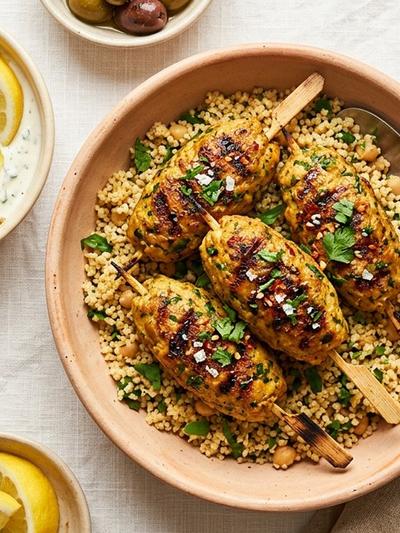
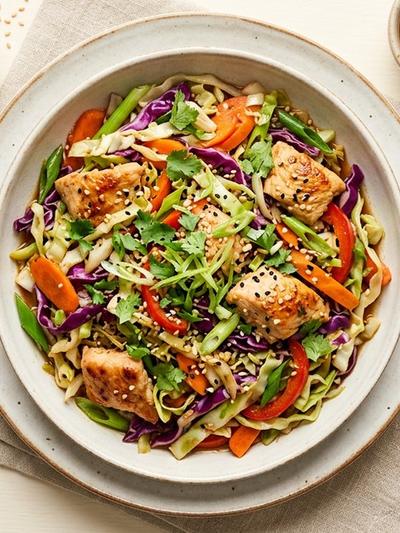
Each serving of these Japanese-style chicken tsukune bowls delivers 38 grams of protein and just 305 calories, making them a near-perfect macro split for a midday meal. Ground chicken breast forms the base of each meatball, bolstered with egg white for binding and a small amount of panko for tenderness. Shelled edamame adds another layer of complete plant protein alongside the chicken, bringing the amino acid profile into excellent range for preserving lean mass.
Tsukune are traditionally grilled yakitori-style, but the air fryer produces the same lightly caramelized exterior with a juicy center in about ten minutes. A quick tare glaze — soy sauce, mirin, and a touch of honey — gets brushed on during the last two minutes, creating a savory-sweet lacquer that tastes deeply Japanese without heavy sauce. The pickled ginger slaw underneath brings acid and crunch, cutting through the richness of the meatballs with every bite.
For GLP-1 users, this bowl works because the protein density is high relative to volume, so even a smaller portion feels genuinely satisfying. The meatball format is gentle on digestion — ground chicken breaks down more easily than whole cuts — and the slaw provides raw vegetables in a finely shredded form that most stomachs tolerate well. Everything comes together in under 25 minutes, and the components pack beautifully for next-day lunches.
Why This Works on GLP-1
Each bowl provides 38 grams of protein primarily from ground chicken breast, with an additional boost from shelled edamame. This level of protein intake at lunch is particularly important for people on Mounjaro or similar GLP-1 medications, where reduced appetite can inadvertently lead to insufficient protein consumption and muscle loss over time. Research consistently shows that distributing protein across meals — rather than loading it all at dinner — supports better muscle protein synthesis throughout the day. These tsukune bowls make hitting that midday target effortless.
The pickled ginger slaw provides gentle fiber from napa cabbage and carrot, while the acidity from rice vinegar and pickled ginger can actually support digestion. For GLP-1 users who experience slower gastric emptying, finely shredded raw vegetables are typically better tolerated than large, chunky salads because they require less mechanical breakdown.
The overall calorie count of roughly 305 per serving leaves plenty of room in your daily budget for breakfast and dinner while still providing substantial nutrition. The moderate fat content — just 8 grams per serving — means this meal won't sit heavily, which is a real advantage when your appetite window is narrow and you need to make every bite count nutritionally.
Ingredients (serves 4)
For the tsukune meatballs:
- 1½ lbs (680g) ground chicken breast
- 1 large egg white
- ¼ cup (15g) panko breadcrumbs
- 3 scallions, finely minced
- 1 tablespoon fresh ginger, finely grated
- 2 cloves garlic, minced
- 1 tablespoon low-sodium soy sauce
- 1 teaspoon toasted sesame oil
- ¼ teaspoon white pepper
For the tare glaze:
- 2 tablespoons low-sodium soy sauce
- 2 tablespoons mirin
- 1 tablespoon honey
- 1 teaspoon rice vinegar
For the pickled ginger slaw:
- 4 cups (280g) finely shredded napa cabbage
- 1 large carrot, julienned or grated
- ½ English cucumber, halved and thinly sliced
- 2 tablespoons pickled sushi ginger (gari), finely chopped
- 1 tablespoon pickled ginger brine (from the jar)
- 1 tablespoon rice vinegar
- 1 teaspoon toasted sesame oil
- Pinch of salt
For serving:
- 1½ cups (225g) shelled edamame, thawed if frozen
- 1 teaspoon sesame seeds
- 2 scallions, thinly sliced on the bias
Instructions
Make the slaw first (it improves as it sits):
- Toss the shredded napa cabbage, carrot, cucumber, and chopped pickled ginger together in a large bowl. The napa cabbage should be sliced into thin ribbons — about ⅛ inch wide — so it wilts slightly and becomes easy to eat.
- Whisk together the pickled ginger brine, rice vinegar, sesame oil, and salt. Pour over the vegetables and toss well. Set aside at room temperature while you prepare the meatballs — the acid will gently soften the cabbage.
Form the tsukune meatballs:
- Combine the ground chicken, egg white, panko, minced scallions, grated ginger, garlic, soy sauce, sesame oil, and white pepper in a large bowl. Mix with your hands until just combined — overmixing makes meatballs tough. The mixture will be quite soft, which is normal for chicken breast.
- Wet your hands slightly (this prevents sticking) and roll the mixture into 20 meatballs, each about 1½ inches in diameter. They should be roughly uniform in size so they cook evenly in the air fryer.
Air fry the tsukune:
- Preheat your air fryer to 380°F (193°C) for 3 minutes. Lightly mist the basket or tray with cooking spray.
- Arrange the meatballs in a single layer with a small gap between each one — air needs to circulate for even browning. You may need to work in two batches depending on your air fryer size.
- Cook for 8 minutes, then gently shake the basket or flip the meatballs with tongs. They should be starting to turn golden on the outside.
Glaze and finish:
- While the meatballs cook, stir together the soy sauce, mirin, honey, and rice vinegar in a small bowl. This tare glaze is a simplified version of the classic yakitori sauce — sweet, salty, and deeply savory.
- After flipping, brush or drizzle the tare glaze over the meatballs. Cook for another 3–4 minutes until the glaze is sticky and caramelized and the internal temperature reaches 165°F (74°C).
Assemble the bowls:
- Divide the pickled ginger slaw among four bowls. Arrange 5 tsukune meatballs on top of each portion of slaw.
- Add a scoop of thawed edamame to each bowl — about ⅓ cup per serving. Sprinkle with sesame seeds and sliced scallions.
Nutrition per Serving
| Nutrient | Amount (approx.) |
|---|---|
| Calories | ~305 kcal |
| Protein | ~38g |
| Fat | ~8g |
| Carbohydrates | ~16g |
| Fiber | ~4g |
Estimates based on ground chicken breast (99% lean), shelled edamame, and measured glaze ingredients. Using dark meat ground chicken will increase fat and calories by roughly 40–50 kcal per serving.
Practical Notes
Meal prep storage. The tsukune meatballs keep in an airtight container in the refrigerator for up to 4 days. Store the slaw separately — it stays crisp for 2 days but will gradually wilt. Pack edamame in a separate compartment or small container so the bowls stay fresh and texturally distinct at lunch.
Reheat gently. Pop the meatballs back in the air fryer at 350°F for 3–4 minutes to restore the exterior texture. Microwaving works in a pinch but softens the glaze — covering them with a damp paper towel helps prevent drying out.
Swap the protein source. Ground turkey breast works as a direct 1:1 substitute and produces a very similar texture. For a pork version, use lean ground pork but note the fat and calorie counts will increase. The panko and egg white binder ratios stay the same regardless of protein.
Add gentle carbs if you need them. A small scoop of steamed short-grain rice — about ⅓ cup cooked — adds roughly 70 calories and 15 grams of carbohydrates. This can be helpful for GLP-1 users who exercise regularly and find that protein-only lunches leave them low on energy by mid-afternoon.
Batch-freeze the uncooked meatballs. Form the tsukune, arrange on a parchment-lined sheet pan, and freeze until solid. Transfer to a zip-top bag — they keep for up to 3 months. Air fry from frozen at 370°F for 14–16 minutes, adding the glaze in the final 3 minutes. This gives you a protein-rich lunch component ready in under 20 minutes on any weekday.
Frequently Asked Questions
I'm in the first few weeks of Wegovy and can barely eat — how do I adapt this recipe?
Can I make these gluten-free?
How long do assembled bowls last in the fridge?
What if I find the ginger too strong for my stomach on GLP-1 medication?
My air fryer is small — can I cook these in batches without drying them out?
This article provides general food and nutrition guidance only. It does not constitute medical advice. Always consult your healthcare provider regarding your GLP-1 medication and individual nutritional needs.