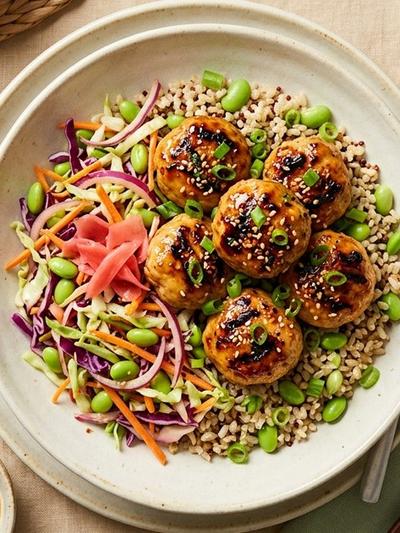
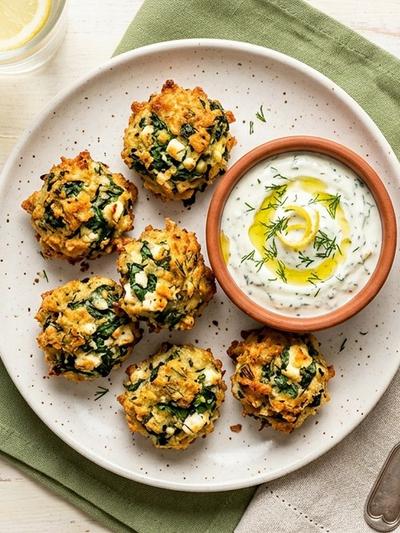
Each serving of these Moroccan chicken and chickpea kefta delivers 33 grams of protein and just 238 calories, making them one of the most efficient protein-per-calorie lunches you can prepare. The mashed chickpeas add gentle fiber and act as a natural binder, keeping the kefta moist through the air fryer's intense heat. Ground chicken breast provides the lean protein base, while a single egg holds everything together without adding unnecessary fat.
The flavor profile here is distinctly Moroccan — warm cumin, sweet paprika, and a whisper of cinnamon create the aromatic backbone that defines traditional kefta. Fresh cilantro and flat-leaf parsley brighten every bite, while grated onion melts into the mixture during cooking, adding sweetness and moisture from within. The cumin-lemon yogurt dip ties everything together with its cool tang, cutting through the warmth of the spices beautifully.
For GLP-1 users, these kefta solve two common challenges at once: they're small enough to eat in satisfying portions without overwhelming a reduced appetite, and they're dense with protein to prevent the muscle loss that can accompany medication-assisted weight loss. The air fryer develops a golden crust that makes each piece feel indulgent, even at under 250 calories per serving.
Why This Works on GLP-1
Preserving lean muscle mass is one of the most important nutritional goals during GLP-1-assisted weight loss, and these kefta deliver 33 grams of complete protein per serving to support exactly that. Research consistently shows that protein intake of 25–40 grams per meal helps maintain muscle tissue during caloric deficit — the range where these kefta land. For anyone on Mounjaro or similar GLP-1 medications experiencing reduced hunger, getting enough protein in smaller meals becomes critical, and these compact kefta make that straightforward.
The chickpeas contribute gentle, soluble fiber that supports digestion without causing the bloating that GLP-1 users often report with high-fiber foods. Unlike raw vegetables or cruciferous greens, mashed chickpeas are already partially broken down, making them easier on a digestive system slowed by GLP-1 receptor agonists. The yogurt dip adds an additional probiotic benefit that supports gut health.
At just 238 calories per serving with 6 grams of fat, these kefta leave room in your daily intake for other nutrient-dense meals without calorie anxiety. The combination of lean protein and complex carbohydrates from chickpeas provides steady energy release, avoiding the blood sugar spikes that can interfere with GLP-1 medication efficacy.
Ingredients (serves 4)
For the kefta:
- 1 lb (450g) ground chicken breast
- 3/4 cup (130g) canned chickpeas, drained and rinsed
- 1 large egg
- 1 small yellow onion, finely grated
- 2 cloves garlic, minced
- 1/4 cup (10g) fresh cilantro, finely chopped
- 1/4 cup (10g) fresh flat-leaf parsley, finely chopped
- 1 1/2 tsp ground cumin
- 1 tsp sweet paprika
- 1/4 tsp ground cinnamon
- 1/4 tsp ground coriander
- 1/2 tsp fine sea salt
- 1/4 tsp freshly ground black pepper
- Olive oil cooking spray
For the cumin-lemon yogurt:
- 3/4 cup (180g) plain Greek yogurt (2% fat)
- 1 tbsp fresh lemon juice
- 1/2 tsp ground cumin
- 1 small clove garlic, finely grated
- Pinch of salt
For serving (optional):
- Lemon wedges
- Fresh cilantro leaves
- Pinch of sweet paprika
Instructions
Make the cumin-lemon yogurt:
- Stir together the Greek yogurt, lemon juice, cumin, grated garlic, and salt in a small bowl. Cover and refrigerate while you prepare the kefta — chilling allows the flavors to meld and the cumin to bloom in the acid from the lemon.
Prepare the kefta mixture:
Place the drained chickpeas in a medium bowl and mash them thoroughly with a fork until mostly broken down but still slightly chunky. Small pieces of chickpea throughout the kefta add texture and help trap moisture during cooking.
Add the ground chicken, egg, grated onion, garlic, cilantro, parsley, cumin, paprika, cinnamon, coriander, salt, and pepper to the mashed chickpeas. Mix with your hands until just combined — overworking the mixture will make the kefta dense and rubbery rather than tender.
Squeeze out any excess liquid from the grated onion before adding if it seems very wet. The mixture should hold its shape when formed but not be sticky. If too wet, let it rest for 5 minutes so the chickpeas absorb the moisture.
Divide the mixture into 12 equal portions and shape each into an oval kefta about 3 inches (7cm) long and 1 inch (2.5cm) thick. Wetting your hands slightly prevents sticking and helps achieve smooth surfaces that brown evenly.
Air fry the kefta:
Preheat your air fryer to 380°F (190°C) for 3 minutes. This ensures the kefta begin cooking immediately on contact, which develops the golden exterior crust that makes these so satisfying.
Lightly spray the air fryer basket with olive oil cooking spray. Arrange the kefta in a single layer with at least half an inch of space between each piece — air circulation is what creates the crispy exterior, so avoid crowding. You may need to cook in two batches depending on your air fryer size.
Cook for 6 minutes, then carefully flip each kefta using tongs. Cook for an additional 5–6 minutes until the exterior is golden brown and the internal temperature reaches 165°F (74°C). The kefta will feel firm to the touch when done.
Remove to a plate and let rest for 2 minutes. This brief rest allows the juices to redistribute, keeping the interior moist when you cut into them.
Serve:
- Arrange 3 kefta per plate alongside a generous spoonful of the cumin-lemon yogurt. Garnish with fresh cilantro leaves, a pinch of paprika over the yogurt, and a lemon wedge for squeezing. Serve immediately while the crust is still crisp.
Nutrition per Serving
| Nutrient | Amount (approx.) |
|---|---|
| Calories | ~238 kcal |
| Protein | ~33g |
| Fat | ~6g |
| Carbohydrates | ~12g |
| Fiber | ~3g |
Estimates based on ground chicken breast (99% lean), canned chickpeas, 2% Greek yogurt, and standard spice amounts. Actual values may vary based on specific brands and chicken fat content.
Practical Notes
Meal prep friendly for up to 4 days. Cook all 12 kefta and store them in an airtight container in the refrigerator. Reheat in the air fryer at 350°F (175°C) for 3–4 minutes to restore the crispy exterior — microwaving works but sacrifices the crust. Keep the yogurt dip in a separate container.
Ground chicken thigh works but changes the macros. If you can only find ground chicken that includes dark meat, the kefta will be juicier but higher in fat — expect roughly 9 grams of fat per serving instead of 6. The flavor will be richer, which some people prefer, and the kefta will be more forgiving if slightly overcooked.
Squeeze your grated onion. This is the most common mistake with kefta — excess onion moisture makes the mixture too wet to hold its shape. Grate the onion over a fine-mesh strainer or squeeze it in a clean kitchen towel before adding to the chicken. The onion flavor still comes through, but the kefta will form and cook properly.
Start with 2 kefta if you're in early GLP-1 phases. During the first weeks on Wegovy or other GLP-1 medications, appetite is often dramatically reduced. Two kefta with a tablespoon of yogurt still provides over 20 grams of protein — enough to be meaningful — without pushing past your comfort level. You can always eat the third one later as a snack.
Freeze uncooked for quick future meals. Shape the kefta, place them on a parchment-lined tray, and freeze until solid. Transfer to a freezer bag for up to 3 months. Cook directly from frozen at 380°F (190°C) for 14–16 minutes, flipping halfway through — no thawing needed.
Frequently Asked Questions
Can I eat these kefta if GLP-1 medication has made me sensitive to meat textures?
What can I use instead of chickpeas for a lower-carb version?
How should I store and reheat these for weekly meal prep?
I can only eat very small portions right now — how do I make this work?
My air fryer runs hot — how do I prevent the kefta from drying out?
This article provides general food and nutrition guidance only. It does not constitute medical advice. Always consult your healthcare provider regarding your GLP-1 medication and individual nutritional needs.