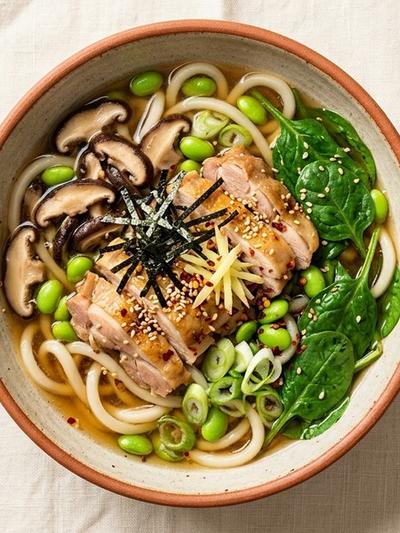
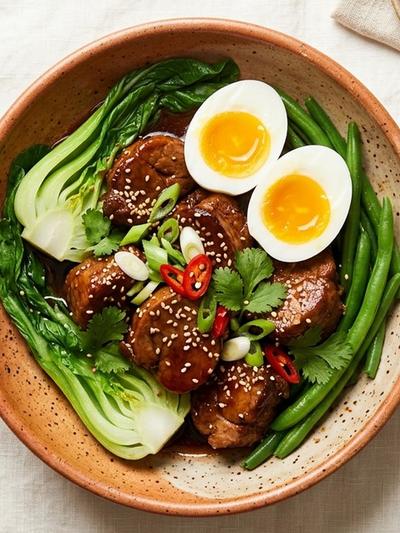
Each serving of this Chinese-inspired braised turkey delivers 35 grams of lean protein alongside 4 grams of fiber from tender napa cabbage and crisp snow peas. Turkey breast, often overlooked in Chinese cooking, takes beautifully to a fragrant braising liquid built on soy sauce, fresh ginger, and whole star anise — absorbing deep, rounded flavor while staying remarkably lean at just 7 grams of fat per bowl.
The braising liquid does most of the work here. Soy sauce and a splash of Shaoxing rice wine create a savory, slightly sweet base, while star anise and a whisper of five-spice powder add warmth without heat. Napa cabbage melts into silky ribbons that soak up the broth, and snow peas added at the end bring a bright crunch that keeps the whole dish from feeling heavy. Water chestnuts scattered through each serving add a clean, almost apple-like snap that contrasts the tender turkey slices.
This one-pot format is particularly well suited to GLP-1 users because the rich braising broth makes a small portion feel deeply satisfying. The turkey is sliced thin before serving, which helps with the slower digestion many people experience on Mounjaro or Wegovy. Everything cooks gently — no searing, no high heat — so the result is easy on the stomach while still delivering restaurant-quality flavor.
Why This Works on GLP-1
Preserving lean muscle mass is one of the most important nutritional priorities during GLP-1-assisted weight loss. This recipe delivers 35 grams of complete protein per serving, primarily from turkey breast, which provides all essential amino acids with minimal fat. That protein density matters: research consistently shows that distributing adequate protein across meals — aiming for 25 to 40 grams per sitting — supports muscle protein synthesis even during caloric restriction. For people on Ozempic or similar medications who are eating significantly less overall, hitting that threshold at dinner is critical.
The napa cabbage in this dish provides gentle, soluble fiber that supports digestion without the bloating that high-fiber cruciferous vegetables like broccoli or raw kale can cause. Snow peas contribute additional fiber and vitamin C, which aids iron absorption from the turkey — a nutrient that GLP-1 users sometimes fall short on when appetite decreases.
The braising method itself offers a metabolic advantage: slow-cooked in liquid, the turkey becomes extremely easy to digest compared to grilled or pan-seared preparations. The warm broth also supports hydration, which is particularly important for Zepbound and Mounjaro users who may not feel thirsty as often while on medication. The dish is naturally low in added sugar — just a small amount of honey to balance the soy — keeping blood glucose response moderate.
Ingredients (serves 4)
For the braising liquid:
- 2 cups (480ml) low-sodium chicken broth
- 3 tablespoons (45ml) low-sodium soy sauce
- 1 tablespoon (15ml) Shaoxing rice wine or dry sherry
- 1 teaspoon honey
- 2 whole star anise pods
- 1/4 teaspoon Chinese five-spice powder
For the pot:
- 1 1/4 lbs (565g) boneless, skinless turkey breast, cut into 1/2-inch thick slices
- 1 tablespoon (15ml) toasted sesame oil
- 4 cloves garlic, thinly sliced
- 1 piece (2 inches / 5cm) fresh ginger, peeled and cut into thin matchsticks
- 3 scallions, whites and greens separated, sliced
- 6 cups (450g) napa cabbage, sliced into 1-inch ribbons
- 1 can (8 oz / 227g) sliced water chestnuts, drained
- 6 oz (170g) snow peas, trimmed and halved on a diagonal
- 1 teaspoon cornstarch mixed with 1 tablespoon cold water (optional, for thickening)
For serving:
- 2 scallion greens, thinly sliced
- 1 teaspoon toasted sesame seeds
- White pepper to taste
Instructions
Build the braising liquid:
- Whisk together the chicken broth, soy sauce, rice wine, honey, and five-spice powder in a bowl and set aside. Having this ready before you start cooking ensures the turkey goes straight into the liquid without overcooking the aromatics.
Cook the aromatics and turkey:
Heat the sesame oil in a large Dutch oven or heavy-bottomed pot over medium heat. Add the garlic, ginger, scallion whites, and star anise pods. Stir for about 60 seconds until fragrant — you want the ginger and garlic softened, not browned, which would turn them bitter.
Arrange the turkey slices in a single layer across the bottom of the pot. Let them sit undisturbed for 2 minutes, just long enough to lightly color one side. This brief contact with the hot pan develops a subtle savory crust without drying out the meat.
Pour the braising liquid over the turkey. Bring to a gentle simmer — not a rolling boil, which would toughen the breast meat. Reduce heat to medium-low, cover, and braise for 12 minutes.
Add the vegetables:
Lift the lid and add the napa cabbage in two batches, stirring the first batch down before adding the second. The cabbage will look like far too much at first but wilts dramatically within a couple of minutes. Add the water chestnuts and stir to distribute them evenly.
Cover and continue braising for 8 minutes, until the cabbage is silky and the turkey is cooked through (internal temperature of 165°F / 74°C). The cabbage should be tender but still have a slight structure — not completely collapsed.
Scatter the snow peas over the top and cover for just 2 minutes. Snow peas need almost no cooking; you want them bright green and still snappy against the soft cabbage and tender turkey.
Finish and serve:
If you prefer a slightly thicker sauce, stir the cornstarch slurry into the pot and let it simmer uncovered for 1 minute. Remove and discard the star anise pods.
Ladle into bowls, making sure each serving gets an even portion of turkey, cabbage, and snow peas. Finish with sliced scallion greens, a pinch of sesame seeds, and a light dusting of white pepper.
Nutrition per Serving
| Nutrient | Amount (approx.) |
|---|---|
| Calories | ~285 kcal |
| Protein | ~35g |
| Fat | ~7g |
| Carbohydrates | ~19g |
| Fiber | ~4g |
Based on 4 equal servings using boneless skinless turkey breast, low-sodium soy sauce, and low-sodium chicken broth. Actual values may vary with specific brands and portion sizes.
Practical Notes
Meal prep storage. This braise refrigerates exceptionally well for up to 4 days. Store the turkey in its braising liquid to prevent it from drying out. Reheat gently on the stove over medium-low heat rather than microwaving, which can make the turkey rubbery.
Serve it over a grain if your appetite allows. A small scoop of steamed jasmine rice (1/3 cup cooked) turns this into a more substantial meal and adds about 70 calories. Many GLP-1 users find that adding a modest amount of rice helps the dish feel more complete without overtaxing digestion.
Turkey thickness matters. Slice the breast no thicker than half an inch before braising. Thinner slices cook evenly in the liquid and are much easier to eat in small bites — an important consideration when GLP-1 medications slow gastric emptying and make large, dense pieces of meat uncomfortable.
Substitute the snow peas freely. Sugar snap peas, thinly sliced zucchini, or baby spinach all work in place of snow peas. Add spinach at the very last moment — it needs only 30 seconds to wilt. The key is having one fresh, bright vegetable that contrasts the soft braised cabbage.
Freeze in single portions. This recipe freezes well for up to 2 months. Divide into individual containers with plenty of braising liquid before freezing. Thaw overnight in the refrigerator and reheat on the stove. Single-portion freezing is especially useful for GLP-1 users who may not always feel like cooking but need reliable access to high-protein meals.
Frequently Asked Questions
I feel nauseous after eating meat on GLP-1 — will this recipe be tolerable?
Can I use chicken breast instead of turkey?
How long does this keep in the refrigerator, and does it reheat well?
What if I can only eat a very small portion right now?
Where can I find Shaoxing rice wine, and does it matter which brand?
This article provides general food and nutrition guidance only. It does not constitute medical advice. Always consult your healthcare provider regarding your GLP-1 medication and individual nutritional needs.