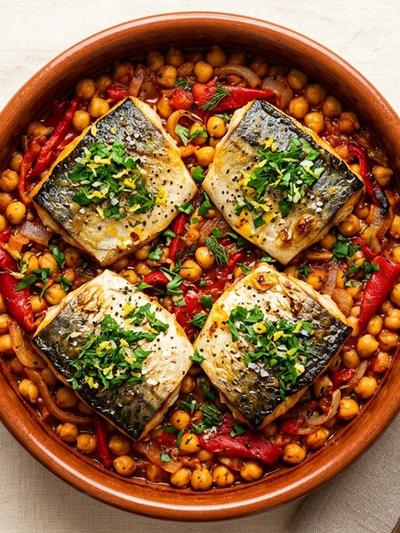
Each serving of this Caribbean mackerel skillet delivers 36 grams of protein from a combination of omega-3-rich mackerel fillets and fiber-dense black beans. Mackerel is one of the most nutrient-complete fish you can buy — rich in vitamin B12, selenium, and EPA/DHA fatty acids that support cardiovascular health during weight loss. The black beans contribute an additional 7 grams of plant protein per serving along with 7 grams of soluble fiber, creating a dish that covers multiple nutritional priorities in a single pan.
The flavor profile draws from classic Caribbean home cooking: warm allspice, fresh thyme, and a hint of scotch bonnet pepper build an aromatic base in sautéed onions and bell peppers before the fish ever touches the pan. Diced tomatoes brighten everything, and a squeeze of fresh lime at the end ties the dish together with that unmistakable island acidity. The mackerel's natural richness stands up beautifully to bold Caribbean seasonings in a way that milder white fish simply cannot.
This one-pan format works particularly well for GLP-1 users because the dish is complete — protein, complex carbs, vegetables, and healthy fats all in one skillet. There is no need to prepare side dishes or worry about assembling a balanced plate. The black beans provide gentle, soluble fiber that supports digestion without the bloating that raw vegetables or cruciferous sides can cause, and the soft-textured fish is easy on a sensitive stomach.
Why This Works on GLP-1
With 36 grams of protein per serving, this skillet delivers more than half of most GLP-1 users' daily protein target in a single meal. Maintaining adequate protein intake is critical during GLP-1-assisted weight loss because the medication reduces overall food volume, making it easy to fall short on protein without intentional planning. Insufficient protein leads to muscle loss alongside fat loss, which can slow metabolism and compromise long-term results. The combination of animal protein from mackerel and plant protein from black beans provides a complete amino acid profile that supports muscle preservation.
The 9 grams of fiber per serving come primarily from black beans, which contain soluble fiber that forms a gel-like consistency during digestion. This type of fiber tends to be well-tolerated even when GLP-1 medications such as Ozempic and Mounjaro are slowing gastric emptying, unlike insoluble fiber from raw vegetables or bran that can worsen bloating and discomfort.
Mackerel is one of the highest food sources of omega-3 fatty acids, providing roughly 2.5 grams of combined EPA and DHA per serving. These fatty acids have documented anti-inflammatory properties and may support insulin sensitivity — both relevant considerations for people using GLP-1 receptor agonists. The fat content of 19 grams per serving is moderate and comes almost entirely from the fish itself, with minimal added cooking oil.
Ingredients (serves 2)
For the spice blend:
- 1 teaspoon ground allspice
- ½ teaspoon smoked paprika
- ½ teaspoon garlic powder
- ¼ teaspoon black pepper
- ¼ teaspoon salt
For the skillet:
- 2 Atlantic mackerel fillets, about 5 oz (140g) each, skin-on, pin bones removed
- 2 teaspoons olive oil
- 1 medium yellow onion, diced
- 1 medium red bell pepper, diced
- 3 cloves garlic, minced
- ½ scotch bonnet pepper, seeded and minced (or ¼ teaspoon cayenne)
- 4 sprigs fresh thyme (or ½ teaspoon dried)
- 1 can (14 oz / 400g) diced tomatoes, drained
- 1 can (15 oz / 425g) black beans, drained and rinsed
- 3 tablespoons light coconut milk
- 1 lime, juiced
- 2 tablespoons fresh cilantro, chopped
Instructions
Prepare the mackerel:
Pat the mackerel fillets thoroughly dry with paper towels — removing surface moisture is essential for achieving a light sear rather than steaming the fish in its own liquid. Season both sides of each fillet with the spice blend, pressing gently so the spices adhere to the flesh.
Heat 1 teaspoon of olive oil in a large nonstick or cast-iron skillet over medium-high heat until the oil shimmers. Place the fillets skin-side down and cook undisturbed for 3 minutes until the skin crisps and releases easily from the pan. Flip carefully and cook for 2 more minutes until just opaque through the center. Transfer to a plate and set aside — the fish will finish cooking when it returns to the pan later.
Build the Caribbean base:
Reduce heat to medium and add the remaining teaspoon of olive oil to the same skillet. Add the diced onion and bell pepper and sauté for 4 to 5 minutes, stirring occasionally, until the onion turns translucent and the pepper softens. The fond left from the fish will lift into the vegetables and deepen the flavor.
Add the minced garlic, scotch bonnet pepper, and fresh thyme sprigs. Stir constantly for 30 seconds until fragrant — garlic burns quickly at this stage, so keep everything moving in the pan.
Pour in the drained diced tomatoes and stir to combine, scraping up any remaining browned bits from the bottom of the skillet. Let the tomatoes cook down for 3 minutes until they begin to break apart and thicken into a loose sauce.
Combine and finish:
Add the drained black beans and light coconut milk to the skillet. Stir gently to distribute the beans evenly through the tomato base. Let everything simmer together for 3 to 4 minutes until the sauce reduces slightly and the beans are heated through.
Nestle the seared mackerel fillets back into the bean mixture, spooning some of the sauce over the top of each fillet. Cover the skillet and cook on low heat for 2 minutes — this finishing step allows the fish to absorb the Caribbean flavors while the residual heat brings it to a perfect flake.
Remove from heat, discard the thyme sprigs, and squeeze the lime juice over everything. Scatter the chopped cilantro on top and serve directly from the skillet.
Nutrition per Serving
| Nutrient | Amount (approx.) |
|---|---|
| Calories | ~410 kcal |
| Protein | ~36g |
| Fat | ~19g |
| Carbohydrates | ~28g |
| Fiber | ~9g |
Estimates based on 5 oz Atlantic mackerel fillets, canned black beans drained, and light coconut milk. Actual values may vary depending on mackerel species and exact brand of canned goods used.
Practical Notes
Use Atlantic mackerel for the best balance. Atlantic (Boston) mackerel is smaller and milder than king mackerel, with lower mercury levels — an important consideration for anyone eating fish regularly. It is also more widely available at standard grocery stores, often sold frozen in vacuum-sealed fillets that thaw quickly under cold running water.
This dish stores well for next-day lunches. Refrigerate leftovers in an airtight container for up to 2 days. Reheat gently in a covered skillet over medium-low heat with a splash of water to prevent the fish from drying out. The flavors actually meld and improve overnight, making this an excellent meal prep option.
Start with less scotch bonnet if heat is a concern. GLP-1 medications can increase sensitivity to spicy foods, and scotch bonnet peppers are intensely hot. Begin with a quarter of a pepper or substitute a pinch of cayenne — you can always add more heat at the table with a few drops of Caribbean hot sauce. Removing all seeds and membranes from the pepper also reduces the capsaicin significantly.
Serve over cauliflower rice for a lower-carb version. If the 28 grams of carbohydrates per serving feels like too much for your current eating plan, skip the black beans and serve the mackerel and vegetable sauté over steamed cauliflower rice instead. This reduces carbs to about 10 grams per serving but also drops the protein to roughly 30 grams since you lose the bean contribution.
Eat slowly and stop at half if needed. A full serving of this dish is satisfying but not oversized. On days when your appetite is particularly suppressed, plate half a serving and save the rest — the protein density means even half a portion still delivers 18 grams of protein, which is better than skipping the meal entirely.
Frequently Asked Questions
Will the richness of mackerel cause nausea on GLP-1 medication?
Can I use canned mackerel instead of fresh fillets?
How long does this keep in the fridge, and can I freeze it?
What if my appetite is too small for a full serving during early GLP-1 treatment?
How do I know when the mackerel is properly cooked?
This article provides general food and nutrition guidance only. It does not constitute medical advice. Always consult your healthcare provider regarding your GLP-1 medication and individual nutritional needs.