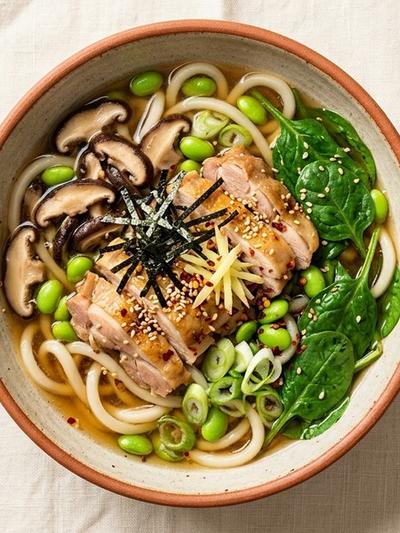
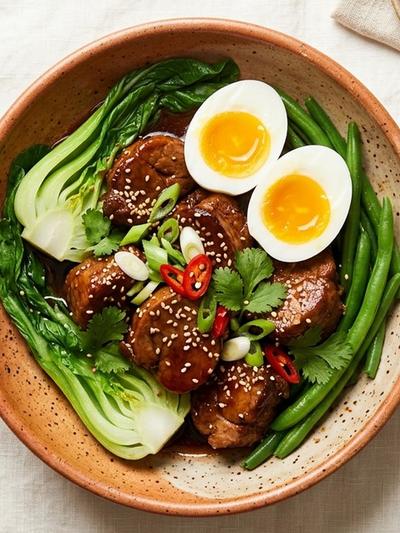
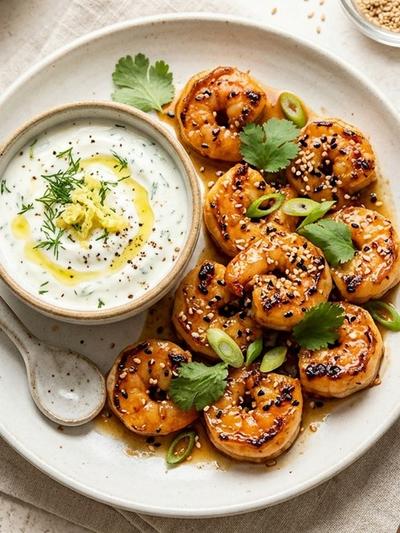
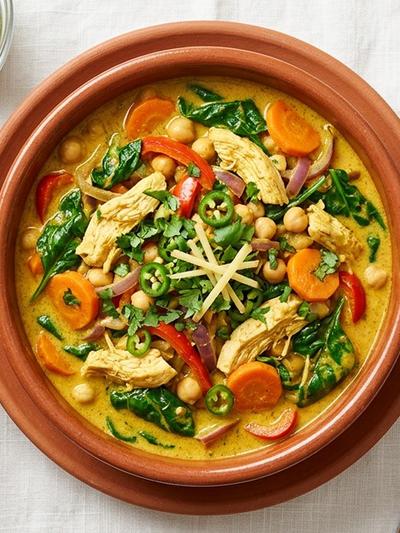
Each serving of this baked ponzu shrimp pot delivers 38 grams of protein primarily from large shrimp, with buckwheat soba noodles contributing an additional 7 grams of plant-based protein. Shrimp is one of the most protein-efficient foods available — 100 grams of raw shrimp provides roughly 24 grams of protein with less than 1.7 grams of fat and virtually zero carbohydrates. The addition of soba noodles made from buckwheat flour also supplies manganese, thiamine, and all eight essential amino acids, making this a more nutritionally complete meal than white rice or standard wheat pasta would provide.
The flavor profile is bright and layered without being heavy. Ponzu — the Japanese citrus-soy sauce — brings a sharp, tangy acidity from yuzu or lemon juice balanced against the salinity of soy sauce, which deepens considerably during baking. Shiitake mushrooms contribute concentrated umami as they roast, their edges crisping slightly while their centers stay tender. Sugar snap peas add a clean, sweet crunch that contrasts with the soft noodles and plump shrimp, and a finish of toasted sesame seeds ties the flavors together with a subtle nuttiness.
This recipe works particularly well for GLP-1 users because everything cooks in a single pot in the oven, producing a complete meal with no multi-step prep. The broth-based sauce keeps the dish light and easy to digest, avoiding the heaviness of stir-fry oils or cream-based Japanese gratins. And because the components are already portioned into individual servings, there is no guessing about how much to eat — a genuine advantage when GLP-1 medications make it harder to gauge fullness in real time.
Why This Works on GLP-1
The 38 grams of protein per serving place this dish squarely in the optimal range for a GLP-1 dinner. Research on semaglutide and tirzepatide consistently shows that people on these medications lose both fat and lean muscle mass, and the primary defense against excessive muscle loss is sufficient protein at each meal — ideally 25–40 grams. The shrimp here provide roughly 31 grams of that total, with soba noodles and vegetables contributing the rest. Shrimp protein is also highly bioavailable, meaning your body absorbs and uses a greater percentage compared to many plant-based sources.
The 5 grams of fiber per serving come from buckwheat soba noodles, shiitake mushrooms, and snap peas — all gentle, low-FODMAP fiber sources unlikely to cause gas or bloating. This matters because GLP-1 medications slow gastric emptying — a hallmark effect of Mounjaro and Zepbound —, meaning food sits in your stomach longer. High-fiber foods that ferment rapidly, like beans or cruciferous vegetables, can cause significant discomfort under these conditions. The fiber here moves through your system more gently while still supporting regularity.
At only 6 grams of fat per serving, this dish avoids the sluggish post-meal feeling that fatty foods amplify on GLP-1 medications. The low fat content also means the 380 calories per serving are mostly working calories — protein for muscle preservation and complex carbohydrates from buckwheat for sustained energy rather than calorie-dense fat that adds little satiety per gram for most GLP-1 users.
Ingredients (serves 4)
For the ponzu-dashi broth:
- 1 cup (240ml) low-sodium chicken broth or dashi stock
- 3 tablespoons (45ml) ponzu sauce
- 1 tablespoon (15ml) mirin
- 1 tablespoon (15ml) low-sodium soy sauce
- 1 teaspoon (5ml) rice vinegar
- 1 teaspoon fresh ginger, finely grated
- 2 cloves garlic, minced
For the pot:
- 1½ lbs (680g) large shrimp (21–25 count), peeled and deveined
- 8 oz (225g) dried buckwheat soba noodles
- 8 oz (225g) shiitake mushrooms, stems removed, caps sliced
- 6 oz (170g) sugar snap peas, trimmed and strings removed
- 4 scallions, sliced (white and green parts separated)
- 1 teaspoon toasted sesame oil
For serving:
- 1 tablespoon toasted sesame seeds
- 1 lemon, cut into wedges
- Fresh cilantro or shiso leaves (optional)
Instructions
Prepare the components:
Preheat your oven to 400°F (200°C). Cook the soba noodles in boiling water for 1 minute less than the package directions — they will finish cooking in the oven. Rinse under cold water to stop the cooking and remove excess starch, which prevents them from becoming gummy during baking. Drain well and set aside.
Whisk together the chicken broth, ponzu, mirin, soy sauce, rice vinegar, grated ginger, and minced garlic in a bowl. The broth needs to be well combined so the ponzu distributes evenly rather than pooling in one spot during baking.
Pat the shrimp thoroughly dry with paper towels. Moisture on the shrimp surface will steam rather than roast, preventing the slight caramelization that makes baked shrimp more flavorful than poached.
Assemble and bake:
Lightly coat the inside of a large Dutch oven or deep oven-safe pot (at least 5-quart capacity) with the sesame oil. Layer the drained soba noodles on the bottom, spreading them out evenly. Scatter the sliced shiitake mushrooms and scallion whites over the noodles.
Arrange the shrimp in a single layer on top of the mushrooms. Pour the ponzu-dashi broth evenly over everything. The liquid will not fully submerge the shrimp — this is intentional. The tops of the shrimp will roast while the bottoms braise, giving you two textures in one dish.
Cover the pot with its lid or a tight layer of aluminum foil. Bake for 15 minutes. The covered phase steams the mushrooms and heats the broth through to the noodles at the bottom.
Remove the lid, scatter the sugar snap peas over the top, and return the pot to the oven uncovered for 8–10 minutes. The shrimp should be pink and opaque, and the snap peas should be bright green and just barely tender. The broth will reduce slightly, concentrating its flavor.
Finish and serve:
- Remove the pot from the oven and let it rest for 2 minutes — this allows the noodles to absorb the last of the broth. Scatter the sliced scallion greens and toasted sesame seeds over the top. Serve directly from the pot with lemon wedges on the side, squeezing the lemon over each portion just before eating for a burst of fresh citrus.
Nutrition per Serving
| Nutrient | Amount (approx.) |
|---|---|
| Calories | ~380 kcal |
| Protein | ~38g |
| Fat | ~6g |
| Carbohydrates | ~42g |
| Fiber | ~5g |
Estimates based on 21–25 count shrimp, 100% buckwheat soba noodles, and low-sodium chicken broth. Using dashi stock instead of chicken broth reduces calories by approximately 10 per serving.
Practical Notes
Soba noodle selection matters for nutrition. Look for soba noodles that list buckwheat flour as the first ingredient — many supermarket brands are mostly wheat flour with a small percentage of buckwheat, which lowers the protein and fiber content. Pure buckwheat soba (juwari soba) offers the highest protein per serving but is more fragile, so handle it gently during parboiling.
Make it a meal prep staple. This dish stores well in the refrigerator for up to 3 days. Portion into individual containers while still warm, as the noodles are easier to separate before they cool completely. Reheat in a microwave with a splash of water or broth to restore moisture — soba noodles absorb liquid as they sit, so they will seem drier on day two.
Frozen shrimp work perfectly here. In fact, most "fresh" shrimp at the seafood counter was previously frozen anyway. Buy frozen, shell-on shrimp and thaw them under cold running water for 5–10 minutes before peeling. This is typically cheaper and fresher than pre-thawed counter shrimp. Pat them very dry after thawing — excess water is the enemy of good roasted shrimp texture.
Adjust the broth if you are salt-sensitive. GLP-1 users sometimes retain water differently as their weight changes. If sodium is a concern, reduce the soy sauce to 1 teaspoon and increase the rice vinegar to 2 teaspoons — the acidity compensates for the lost saltiness without adding sodium. You can also use a reduced-sodium ponzu sauce, which most Asian grocery stores carry.
Time your eating carefully. Many GLP-1 users find that eating slowly and stopping at the first sign of fullness prevents nausea. This dish is easy to pace because you can eat around the pot, picking up shrimp and noodles gradually rather than facing a full plate all at once. If your appetite is particularly low, serve yourself half a portion and refrigerate the rest — it reheats well.
Frequently Asked Questions
Will the citrus in ponzu cause nausea on GLP-1 medications?
Can I use a different noodle if I cannot find soba?
How long does this keep in the fridge and can I freeze it?
What if I can only eat a very small portion right now?
Do I need a Dutch oven or will any oven-safe dish work?
This article provides general food and nutrition guidance only. It does not constitute medical advice. Always consult your healthcare provider regarding your GLP-1 medication and individual nutritional needs.