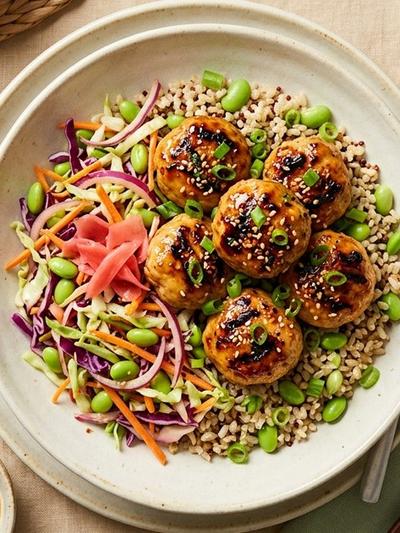
Each serving of these char siu pork bites delivers 38 grams of protein from lean pork tenderloin, one of the lowest-fat cuts available at just 3.5 grams of fat per 100 grams cooked. The edamame in the slaw adds another layer of plant-based protein and fiber, while the entire bowl stays under 400 calories. Iron, B vitamins, and zinc from the pork round out the nutritional profile, supporting energy and recovery during active weight management.
Char siu is the lacquered, sweet-savory roast pork you see hanging in Cantonese barbecue shop windows. This version captures those same flavors — hoisin, honey, five-spice, garlic — but uses the air fryer to get sticky, caramelized edges in minutes instead of hours. The cool crunch of napa cabbage slaw dressed with rice vinegar and sesame oil cuts through the sweetness perfectly, creating a contrast of warm and cold, tender and crisp that makes each bite interesting.
For people on GLP-1 medications, this format works particularly well. The portions are compact but protein-dense, so you feel satisfied without the heaviness of a traditional rice-heavy bowl. The slaw adds volume through low-calorie vegetables rather than starchy fillers, and the gentle aromatics — ginger, garlic, sesame — are flavorful without taxing digestion the way heavily fried or greasy Chinese takeout might.
Why This Works on GLP-1
Pork tenderloin is one of the most underrated proteins for GLP-1 users. At 38 grams of protein per serving, these char siu bites deliver more than half the daily protein target that many nutritionists recommend during Mounjaro- or Ozempic-assisted weight loss. That protein load matters because GLP-1 medications can reduce appetite to the point where total caloric intake drops significantly — and without adequate protein, the body breaks down muscle tissue alongside fat. Each bite-sized piece of pork here concentrates that protein into a small, easy-to-eat format.
The slaw contributes gentle fiber from napa cabbage, carrot, and edamame without the bloating risk of raw cruciferous vegetables like broccoli or cauliflower. Napa cabbage is notably softer and easier to digest than regular cabbage, making it a smarter choice when gastric emptying is already slowed by medication.
Five-spice powder brings trace amounts of compounds from star anise, cloves, and cinnamon that have mild digestive benefits. The ginger in the marinade is a well-documented stomach soother. Neither ingredient is present in large enough quantities to cause irritation, but together they make the dish more comfortable to eat than a comparable amount of heavily spiced food.
Ingredients (serves 2)
For the char siu pork:
- ¾ pound (340g) pork tenderloin, trimmed and cut into 1-inch pieces
- 2 tablespoons (32g) hoisin sauce
- 1 tablespoon (15ml) reduced-sodium soy sauce
- 1 tablespoon (21g) honey
- 1 teaspoon Chinese five-spice powder
- 1 teaspoon toasted sesame oil
- 2 cloves garlic, finely grated
- 1 teaspoon freshly grated ginger
- Cooking spray
For the sesame cabbage slaw:
- 3 cups (210g) thinly sliced napa cabbage
- 1 medium carrot, peeled and julienned
- ½ English cucumber, halved lengthwise and thinly sliced into half-moons
- ⅔ cup (100g) shelled edamame, thawed if frozen
- 2 scallions, thinly sliced
- 1 tablespoon (15ml) unseasoned rice vinegar
- 1 teaspoon toasted sesame oil
- 1 teaspoon toasted sesame seeds
- Pinch of sea salt
Instructions
Make the marinade and coat the pork:
- Whisk the hoisin sauce, soy sauce, honey, five-spice powder, sesame oil, garlic, and ginger together in a medium bowl. The hoisin provides the sticky, lacquered quality that defines char siu — it caramelizes beautifully in the air fryer's concentrated heat.
- Add the pork tenderloin pieces and toss until every piece is evenly coated. Let it sit while you prepare the slaw, at least 5 minutes. The sugars in the honey and hoisin need contact time to develop that characteristic glaze.
Prepare the sesame cabbage slaw:
- Combine the sliced napa cabbage, julienned carrot, cucumber half-moons, thawed edamame, and scallions in a large bowl.
- Drizzle with the rice vinegar and sesame oil, then sprinkle with sesame seeds and a pinch of salt. Toss gently to combine. Set aside — the slaw benefits from sitting while the pork cooks, as the salt and vinegar soften the cabbage slightly without making it limp.
Air fry the pork:
- Preheat your air fryer to 400°F (200°C) for 3 minutes. Lightly coat the basket or tray with cooking spray to prevent sticking.
- Arrange the marinated pork pieces in a single layer with space between each piece. Crowding steams the pork instead of caramelizing it, and you lose the sticky char siu edges that make this recipe worth making. Work in batches if your air fryer is small.
- Air fry for 6 minutes, then flip each piece with tongs. The bottoms should already be starting to darken and glaze. Air fry for another 5 to 6 minutes until the internal temperature reaches 145°F (63°C) and the exterior is deeply caramelized in spots.
- Let the pork rest on a cutting board for 2 minutes. The juices redistribute during this time, keeping the lean tenderloin from drying out when you cut into it.
Assemble the bowls:
- Divide the sesame cabbage slaw between two bowls. Arrange the char siu pork bites on top. Spoon any marinade that collected in the air fryer basket over the pork for extra glaze.
Nutrition per Serving
| Nutrient | Amount (approx.) |
|---|---|
| Calories | ~380 kcal |
| Protein | ~38g |
| Fat | ~12g |
| Carbohydrates | ~22g |
| Fiber | ~5g |
Estimates based on USDA data for pork tenderloin (lean, roasted), standard hoisin sauce, and shelled edamame. Actual values vary by brand and trimming.
Practical Notes
This packs beautifully for weekday lunches. Store the pork bites and slaw in separate compartments of a meal prep container. The slaw holds up well for 2 days refrigerated without wilting because napa cabbage is sturdier than lettuce. Reheat only the pork — 30 seconds in the microwave or eat it cold, which is how char siu is traditionally served in Hong Kong anyway.
Five-spice powder is the non-negotiable ingredient here. It is the warm, anise-scented backbone of char siu flavor, and nothing else replicates it. You can find it in the spice aisle of most supermarkets or any Asian grocery. If your jar has been open for more than a year, replace it — stale five-spice tastes dusty instead of fragrant.
Hoisin brands vary dramatically. Lee Kum Kee is widely available and works well. Avoid brands that list sugar as the first ingredient — you want fermented soybean paste leading the list. The calorie difference is small, but the flavor difference is significant. A good hoisin tastes complex and savory, not like flavored syrup.
Cut the pork into truly uniform pieces. Pork tenderloin tapers at one end, so slice the thick center into 1-inch medallions and cut the narrow tail into slightly longer pieces to equalize the mass. Uneven pieces mean some are overcooked and dry while others are still underdone — a problem that is especially noticeable with tenderloin because it has so little intramuscular fat to buffer against overcooking.
If your appetite is very small, serve half a portion as a snack plate. One serving splits easily into two lighter meals at 190 calories and 19 grams of protein each — still nutritionally meaningful. The slaw and pork keep separately in the fridge for up to 3 days, so you can graze through the week without waste.
Frequently Asked Questions
Can I eat this comfortably during the first weeks on a GLP-1 medication?
What can I use instead of hoisin sauce?
How long do the pork bites keep, and can I freeze them?
I can only eat a few bites at a time on my current dose. How should I portion this?
My air fryer is small. Can I cook the pork in two batches without drying it out?
This article provides general food and nutrition guidance only. It does not constitute medical advice. Always consult your healthcare provider regarding your GLP-1 medication and individual nutritional needs.