 By Gerald
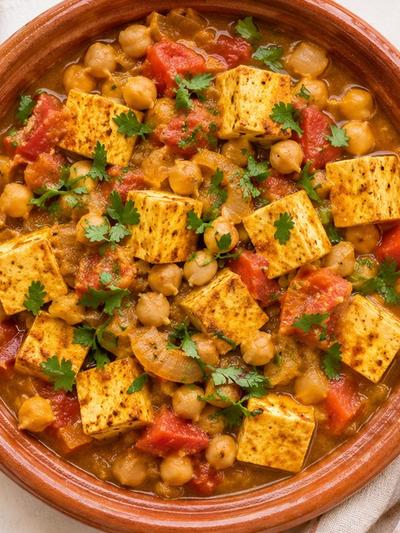
Tempeh goulash delivers 28 grams of complete plant protein and 9 grams of fiber per serving, built around cubed tempeh that soaks up a paprika-rich broth of onions, peppers and tomatoes. Each bowl comes in at roughly 375 calories — nutrient-dense without being heavy. The combination of fermented soy protein and slow-simmered vegetables provides all nine essential amino acids alongside iron, manganese and a meaningful dose of B vitamins.
Hungarian goulash gets its character from layers of sweet and smoked paprika, caraway and marjoram — a warm, savory depth that needs no cream or butter to feel luxurious. The tempeh browns in the pot first, picking up a light crust that holds its shape through the simmer, while potatoes break down just enough to thicken the broth into something that coats the back of a spoon. A spoonful of Greek yogurt stirred in at the table adds the traditional tang that sour cream would, without the saturated fat.
Goulash is one of the best formats for GLP-1 users: a stew that packs protein, vegetables and complex carbs into a manageable bowl that stays satisfying for hours. The soft textures and warm broth are gentle on the slower gastric emptying that comes with these medications. It also reheats beautifully, which matters when appetite arrives on its own schedule rather than the clock's.
Why This Works on GLP-1
Each serving provides 28 grams of complete plant protein from tempeh — enough to support muscle preservation, which is one of the main nutritional priorities during GLP-1-assisted weight loss. Studies consistently show that protein intake of 25–30 grams per meal helps protect lean mass while the body sheds fat, and that threshold matters more as medications like Mounjaro or Wegovy reduce overall food intake. Tempeh's protein is particularly bioavailable because fermentation breaks down the phytic acid that can limit soy protein absorption in other forms. At just 375 calories per bowl, this goulash delivers that protein without excess energy.
The 9 grams of fiber per serving come from a wide base — tempeh, peppers, carrots, tomatoes and potato skin — rather than from one concentrated source, which makes it gentler on the digestive system. GLP-1 medications already slow gastric emptying, so a sudden fiber spike from a single ingredient can cause uncomfortable bloating. Spreading the fiber across the whole dish avoids that.
Caraway seeds are traditional in goulash for a reason beyond flavor: they are a well-known carminative, meaning they help reduce gas and ease digestion. The fermentation of the tempeh itself breaks down the oligosaccharides that cause bloating in unfermented soy, making it one of the most gut-friendly plant proteins available. Both of these help make this a comfortable evening meal even on days when digestion feels sluggish.
Ingredients (serves )
For the goulash:
- 14 oz (400g) tempeh, cut into 3/4-inch cubes
- 1 tablespoon olive oil
- 2 large onions, diced
- 2 red bell peppers, cut into 1-inch pieces
- 2 medium carrots, peeled and sliced into half-moons
- 2 small waxy potatoes (7 oz / 200g total), cut into 3/4-inch cubes
- 3 cloves garlic, minced
- 3 tablespoons sweet Hungarian paprika
- 1 teaspoon smoked paprika
- 1 teaspoon caraway seeds
- 1 teaspoon dried marjoram
- 1 tablespoon tomato paste
- 1 can (14 oz / 400g) diced tomatoes with their juice
- 2 cups (480ml) low-sodium vegetable broth
- 1 teaspoon salt, plus more to taste
- Freshly ground black pepper
To serve:
- 1/2 cup (120g) plain fat-free Greek yogurt
- Fresh flat-leaf parsley, roughly chopped
Instructions
Amounts in the method are for 4 servings.
Brown the tempeh:
- Heat the olive oil in a large Dutch oven or heavy-bottomed pot over medium-high heat. Add the tempeh cubes in a single layer — work in batches if needed — and cook without moving for 3 minutes until golden on the underside. Turn and brown for 2 minutes more. Transfer to a plate. This sear gives the tempeh a firm exterior that holds up during simmering and adds a toasted, almost nutty flavor to the finished stew.
Build the base:
Lower the heat to medium. Add the onions to the same pot and cook for 5 minutes, stirring occasionally, until they soften and turn translucent. If the pot looks dry, add a splash of broth.
Add the garlic, sweet paprika, smoked paprika, caraway seeds and marjoram. Stir constantly for 60 seconds — the paprika blooms quickly in the heat and turns from sweet to bitter if it scorches. The kitchen should smell deeply aromatic at this point.
Stir in the tomato paste and cook for another minute to caramelize it slightly.
Simmer the goulash:
Add the bell peppers, carrots and potatoes. Pour in the diced tomatoes and vegetable broth. Return the browned tempeh to the pot. Stir everything together and bring to a gentle boil.
Reduce the heat to low, cover with the lid slightly ajar, and simmer for 25–30 minutes until the potatoes are tender and the broth has thickened. The potatoes release starch as they cook, which naturally gives the goulash its characteristic body without needing flour or a roux.
Season with salt and pepper to taste. The flavors deepen considerably once the goulash sits for even five minutes off the heat.
Serve:
- Ladle into bowls and top each with 2 tablespoons of Greek yogurt and a scatter of parsley. Stir the yogurt into the stew as you eat — it melts into the broth and adds the cool tanginess that defines Hungarian goulash at the table.
Nutrition per Serving
| Nutrient | Amount (approx.) |
|---|---|
| Calories | ~375 kcal |
| Protein | ~28g |
| Fat | ~14g |
| Carbohydrates | ~37g |
| Fiber | ~9g |
Calculated based on standard USDA values for plain soy tempeh, canned diced tomatoes, fat-free Greek yogurt, and the listed vegetables. Actual values may vary slightly depending on tempeh brand and vegetable sizes.
Practical Notes
This stew improves overnight. Like most paprika-based dishes, goulash tastes noticeably better on day two once the spices have fully permeated the tempeh and vegetables. Make the full batch even if you are eating alone — it stores in airtight containers in the fridge for up to four days and freezes well for up to three months. Reheat gently on the stove with a splash of broth if it has thickened.
Start with half a bowl. GLP-1 medications reduce stomach capacity, and stews can feel heavier than they look. Serve yourself a modest portion — around 1 cup — and wait 15 minutes before going back for more. This recipe makes generous servings, so splitting each portion across two sittings is a perfectly reasonable strategy.
Use good paprika. The entire flavor of goulash depends on paprika quality. Hungarian sweet paprika (édesnemes) from a tin, not the dusty jar that has been in the cupboard for two years, makes a genuine difference. Smoked paprika (pimentón) plays a supporting role — if you only have one, use all sweet and add half a teaspoon of liquid smoke.
Substitute freely within the protein family. Extra-firm tofu works if you press it for 20 minutes and cube it the same way — the browning step is even crispier. For a legume version, replace the tempeh with 2 cans (800g) of drained chickpeas and skip the browning; add them with the broth instead. Either substitution keeps the protein above 25 grams per serving.
Keep the potatoes small. Cut them no larger than 3/4-inch so they partially dissolve and thicken the broth. Larger pieces stay intact and the goulash feels more like a vegetable soup than a stew. If you are watching carbs closely, swap the potatoes for an equal weight of diced turnip or celeriac — both contribute a similar starchy body with about half the carbohydrates.
Frequently Asked Questions
Is tempeh easy to digest on GLP-1 medications?
Can I use extra-firm tofu instead of tempeh?
How should I store and reheat leftovers?
What if my appetite is very small or I am in the early phase of GLP-1 treatment?
Can I make this in a slow cooker?
This article provides general food and nutrition guidance only. It does not constitute medical advice. Always consult your healthcare provider regarding your GLP-1 medication and individual nutritional needs.