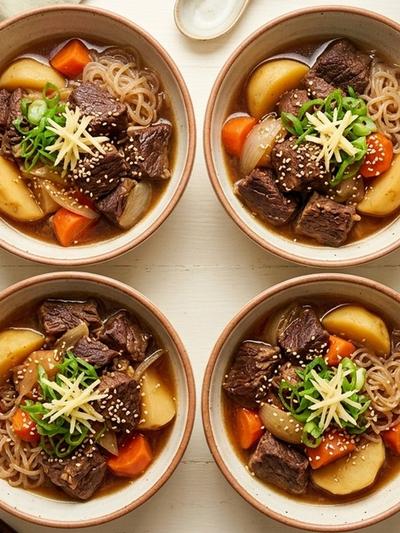
Each serving of this Vietnamese-inspired beef stew delivers 39 grams of protein from slow-braised flank steak, along with iron, zinc, and B12 from the beef and anti-inflammatory compounds from the ginger and star anise. The broth-based format means you get all that nutrition in a bowl that clocks in at just 345 calories, with only 14 grams of fat — far less than coconut-milk-based curries that can easily triple that number. Carrots and daikon radish add natural sweetness and gentle fiber without overwhelming the digestive system.
Bo Kho is one of Vietnam's great slow-cooked stews, built on a backbone of warm spices — star anise, cinnamon, and five-spice powder — layered with the bright, citrusy perfume of bruised lemongrass and the savory depth of fish sauce. The beef softens over hours into fork-tender pieces that absorb the fragrant broth, while the carrots hold their shape and turn silky, and the daikon melts into translucent, almost buttery chunks. A squeeze of fresh lime and a handful of Thai basil and cilantro at the table pulls every element together with a brightness that keeps you reaching for one more spoonful.
The slow cooker format works especially well for GLP-1 users because you set it up in the morning and come home to a complete, portion-controlled dinner without having to summon evening cooking energy — something many people on these medications find in short supply. The warm, aromatic broth is naturally soothing on a slower-emptying stomach, and the tender beef requires minimal chewing effort. Each bowl is satisfying without being heavy, which is exactly what a well-designed GLP-1 dinner should be.
Why This Works on GLP-1
The 39 grams of protein per serving puts this stew firmly in the range needed for muscle preservation during GLP-1-assisted weight loss. Research consistently shows that people on medications like Ozempic and Mounjaro lose both fat and lean mass, and adequate protein at each meal — particularly at dinner, when the day's protein balance gets settled — is one of the strongest levers for tipping that ratio toward fat loss. Flank steak is among the leanest beef cuts available, delivering its protein without the saturated fat burden of rib-eye or short ribs. The slow braising breaks down the connective tissue that makes flank steak chewy when quick-cooked, so you get tenderness without upgrading to a fattier cut.
The broth-based format is gentler on digestion than cream- or coconut-milk-based stews. Because GLP-1 medications slow gastric emptying, rich and heavy sauces can sit uncomfortably, while clear broths move through more easily. Ginger, one of the core aromatics in this recipe, has demonstrated anti-nausea properties — a genuine bonus when nausea is one of the most common side effects during early medication weeks.
Star anise and cinnamon are not just aromatic here. Both contain polyphenols that support healthy blood sugar regulation, which complements the glucose-lowering mechanism of GLP-1 medications. The moderate carbohydrate content — just 12 grams per serving, mostly from the root vegetables — means this dinner pairs well with the metabolic goals most GLP-1 users are pursuing.
Ingredients (serves 4)
For the stew:
- 1½ lbs (680g) flank steak, trimmed and cut into 1½-inch cubes
- 2 medium carrots (200g), roll-cut into 1-inch pieces
- 8 oz (225g) daikon radish, peeled and cut into 1-inch chunks
- 1 medium yellow onion, quartered
- 4 cloves garlic, smashed
- 2-inch piece fresh ginger (25g), sliced into coins
- 2 stalks lemongrass, outer layers removed, trimmed to bottom 4 inches, bruised with the back of a knife
- 3 whole star anise
- 1 cinnamon stick
- 1 tablespoon tomato paste
- 2 tablespoons fish sauce
- 1 tablespoon low-sodium soy sauce
- ½ teaspoon Chinese five-spice powder
- ½ teaspoon freshly ground black pepper
- 2 cups (480ml) low-sodium beef broth
- 1 teaspoon neutral oil (for searing, optional)
For serving:
- Fresh Thai basil leaves
- Fresh cilantro sprigs
- 1 lime, cut into wedges
- 2 scallions, thinly sliced
- Sriracha or sliced fresh chili (optional, for those who tolerate heat)
Instructions
Prep the aromatics and beef:
Trim any visible fat from the flank steak and cut it into roughly 1½-inch cubes. Pat the cubes dry with paper towels — this matters if you choose to sear them, because wet meat steams instead of browning.
Bruise the lemongrass stalks by pressing down firmly with the flat side of a knife along the length, then bend each stalk in half. This cracks open the fibrous layers and releases the essential oils that perfume the entire stew.
Smash the garlic cloves with the side of your knife and slice the ginger into thin coins. No need to mince either one — the long cooking time will extract every bit of flavor, and the large pieces are easy to fish out before serving.
Optional sear (adds depth but not required):
- If you want a deeper, more caramelized flavor base, heat 1 teaspoon of neutral oil in a large skillet over high heat. Sear the beef cubes in a single layer, without moving them, for about 90 seconds per side until a brown crust forms. Work in two batches to avoid crowding the pan, which causes the meat to steam instead of sear. Transfer the browned beef directly to the slow cooker insert. If you prefer a fully hands-off approach, skip this step entirely — the stew will still be richly flavored from the aromatics and fish sauce.
Build the slow cooker:
Place the onion quarters, garlic, ginger coins, lemongrass stalks, star anise, and cinnamon stick in the bottom of the slow cooker. These aromatics form a fragrant bed that infuses the entire broth as it cooks.
Arrange the beef cubes on top of the aromatics. Scatter the carrots and daikon around and between the meat pieces. The root vegetables go in now because they need the full cooking time to become tender without turning to mush — the low, steady heat of a slow cooker softens them gradually rather than blasting them.
In a small bowl, whisk together the tomato paste, fish sauce, soy sauce, five-spice powder, and black pepper with the beef broth until the tomato paste dissolves. Pour this mixture over everything in the slow cooker. The liquid should come about two-thirds of the way up the ingredients — it does not need to cover them completely, as the beef and vegetables will release additional liquid as they cook.
Cook low and slow:
Cover and cook on LOW for 7 to 8 hours, or on HIGH for 4 to 5 hours. The stew is done when the beef breaks apart easily with a fork and the carrots and daikon are tender throughout. Avoid lifting the lid during cooking, as each peek releases heat and can add 20 to 30 minutes to the cooking time.
When the stew is finished, use a slotted spoon to remove and discard the lemongrass stalks, star anise, cinnamon stick, and ginger coins. Taste the broth and adjust with additional fish sauce if it needs more salinity, or a squeeze of lime juice if it tastes flat.
Serve:
- Ladle the stew into deep bowls, making sure each serving gets a generous portion of beef along with carrots and daikon. Top with fresh Thai basil leaves, cilantro sprigs, sliced scallions, and a lime wedge on the side. The fresh herbs are not decorative — they provide a burst of brightness that transforms each spoonful and keeps the warm, spiced broth from tasting one-dimensional.
Nutrition per Serving
| Nutrient | Amount (approx.) |
|---|---|
| Calories | ~345 kcal |
| Protein | ~39g |
| Fat | ~14g |
| Carbohydrates | ~12g |
| Fiber | ~3g |
Estimates based on trimmed flank steak, low-sodium beef broth, and standard USDA values for all vegetables and seasonings. The optional sear oil (1 tsp total, split across 4 servings) is included.
Practical Notes
Trim the flank steak well. Flank steak has a thin membrane of silverskin and exterior fat that should be removed before cubing. This is the single most impactful step for keeping the fat content low. Ask your butcher to trim it if you prefer, or use a sharp thin-bladed knife and work slowly — the membrane peels away easily once you get under an edge.
Make it a meal prep powerhouse. This stew refrigerates beautifully for up to 4 days and actually improves overnight as the spices continue to meld. Portion it into individual containers and reheat gently in a saucepan over medium-low heat. Pack the fresh herbs separately and add them just before eating so they stay vibrant. The stew also freezes well for up to 3 months — thaw overnight in the refrigerator before reheating.
Start with a smaller bowl on early medication weeks. During the first months on GLP-1 medications, appetite can be dramatically reduced. Serve yourself half a portion — about ¾ cup of stew — and wait 15 to 20 minutes before deciding if you want more. The high protein concentration means even a small bowl delivers meaningful nutrition. You can always warm up more, but overeating when your stomach is emptying slowly leads to discomfort that spoils an otherwise easy dinner.
Keep the fresh herb garnish. It is tempting to skip the Thai basil and cilantro, but they do real work here. The aromatic compounds in fresh herbs stimulate appetite gently and aid digestion, and the textural contrast between soft braised beef and crisp leaves makes each bite more interesting. If you cannot find Thai basil, regular Italian basil or even fresh mint works as a substitute — all three belong to the same botanical family and share similar volatile oils.
Use the broth as a standalone sip. If you are having a low-appetite day, strain out a cup of the finished broth and drink it warm on its own. It contains dissolved collagen from the connective tissue, along with the ginger and spice compounds, and provides gentle protein and hydration without requiring you to manage solid food. This is especially useful on nausea-heavy days.
Frequently Asked Questions
Can I eat this stew during the first weeks of starting GLP-1 medication?
Can I use a different cut of beef instead of flank steak?
How should I store and reheat leftovers?
What if I find the portion too large for my current appetite?
I cannot find lemongrass or star anise — what can I substitute?
This article provides general food and nutrition guidance only. It does not constitute medical advice. Always consult your healthcare provider regarding your GLP-1 medication and individual nutritional needs.