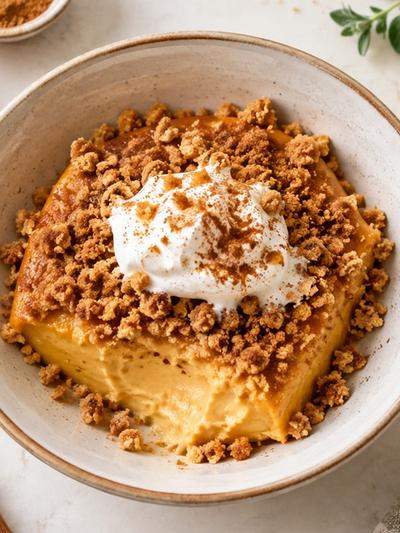
Each serving of this slow cooker pudding delivers 37 grams of protein from three complementary sources: lean ground pork, eggs, and Greek yogurt. The almond flour base adds 3 grams of protein per serving while contributing healthy fats and a tender crumb. At 370 calories per portion, this is one of the most protein-dense desserts you can make — rivaling many dinner entrées for sheer nutritional value.
The flavor here is unmistakably Tunisian: warm cinnamon and cardamom layered with the floral sweetness of orange blossom water. Dried figs provide natural caramel-like sweetness and a soft, jammy texture throughout the pudding. A crown of cold Greek yogurt and crushed pistachios on top creates a temperature and texture contrast that elevates this from simple to truly satisfying.
This pudding is ideal for GLP-1 users who want something sweet without the blood sugar crash of a typical dessert. The slow cooker method produces an incredibly moist, dense texture — a small wedge feels substantial and rich. Because it cooks unattended for three hours, it fits easily into a weekend routine while you handle other meal prep.
Why This Works on GLP-1
The 37 grams of protein per serving comes from a well-balanced trio: lean ground pork provides the bulk at 23 grams, eggs contribute 4.5 grams, and Greek yogurt (both mixed into the batter and served on top) adds another 9.5 grams. This matters because muscle preservation is one of the central challenges during GLP-1-assisted weight loss. People taking Wegovy or Mounjaro often lose muscle alongside fat, and maintaining high protein intake at every eating occasion — including dessert — helps counteract that loss.
The dried figs contribute 4 grams of fiber per serving, which supports the slower gastric emptying already promoted by GLP-1 medications. Unlike very high-fiber additions like raw bran, figs are gentle on the digestive system, especially when slow-cooked until soft. The natural sugars in figs and the small amount of honey mean this pudding needs far less added sweetener than a conventional dessert.
Almond flour replaces traditional wheat flour, lowering the glycemic impact of the carbohydrates in this recipe. The combination of protein, fat, and fiber slows glucose absorption, which works in concert with your medication's blood sugar regulation. At just 25 grams of carbohydrates per serving, this falls well below most desserts while still tasting genuinely sweet.
Ingredients (serves 4)
For the pudding:
- 1 lb (454g) lean ground pork (96% lean)
- 3 large eggs
- 1/2 cup (56g) almond flour
- 1/2 cup (120g) plain nonfat Greek yogurt
- 6 dried figs (about 90g), stems removed, chopped into small pieces
- 2 tablespoons (42g) honey
- 1 teaspoon ground cinnamon
- 1/2 teaspoon ground cardamom
- 1/4 teaspoon ground ginger
- 1 teaspoon orange blossom water
- 1/2 teaspoon vanilla extract
- 1/4 teaspoon fine sea salt
- Nonstick cooking spray
For the topping:
- 1/2 cup (120g) plain nonfat Greek yogurt
- 2 tablespoons (16g) shelled pistachios, roughly crushed
- Light drizzle of honey (optional, about 1 teaspoon total)
Instructions
Prepare the batter:
In a large bowl, combine the lean ground pork, eggs, almond flour, and Greek yogurt. Mix with a fork or your hands until the pork is evenly distributed — think of a meatloaf texture rather than a smooth cake batter. The pork provides structure while the yogurt and eggs keep everything moist during the long cook.
Add the chopped dried figs, honey, cinnamon, cardamom, ground ginger, orange blossom water, vanilla extract, and salt. Fold everything together until the figs are evenly scattered throughout. The figs will soften and release their sweetness as the pudding cooks, so distributing them well ensures every slice has that jammy sweetness.
Set up the slow cooker:
Line the bottom and sides of a 3- to 4-quart slow cooker insert with parchment paper, leaving enough overhang to lift the pudding out later. Spray the parchment lightly with nonstick cooking spray. This step is essential — without the parchment, the dense pudding will stick to the ceramic insert and break apart when you try to serve it.
Transfer the batter into the prepared slow cooker, pressing it into an even layer with a spatula or the back of a spoon. The layer should be about 1.5 to 2 inches thick.
Slow cook:
Place a clean kitchen towel or a few layers of paper towels between the lid and the slow cooker. This absorbs the condensation that would otherwise drip back onto the pudding and make the top soggy. Cook on LOW for 3 hours. The pudding is done when the edges are set and slightly pulling away from the parchment, and the center is firm to the touch — it should feel like pressing a well-done meatloaf, not jiggly.
Turn off the slow cooker and let the pudding rest with the lid off for 15 minutes. This allows it to firm up further and makes slicing much cleaner.
Serve:
Use the parchment overhang to lift the pudding out of the slow cooker and transfer it to a cutting board. Slice into 4 equal wedges or squares.
Top each serving with 2 tablespoons of cold Greek yogurt, a scattering of crushed pistachios, and a tiny drizzle of honey if desired. The cold yogurt against the warm, spiced pudding is the best part — serve immediately for that contrast.
Nutrition per Serving
| Nutrient | Amount (approx.) |
|---|---|
| Calories | ~370 kcal |
| Protein | ~37g |
| Fat | ~14g |
| Carbohydrates | ~25g |
| Fiber | ~4g |
Estimates based on 96% lean ground pork, nonfat Greek yogurt, and standard dried figs. Actual values may vary by brand.
Practical Notes
Meal prep storage. This pudding keeps well in the refrigerator for up to 4 days in an airtight container. Store the yogurt topping separately. Reheat individual portions in the microwave for 45–60 seconds — the texture actually improves slightly as the figs continue to soften overnight.
Substitute the figs. If you cannot find dried figs, dried apricots work well and are equally traditional in North African cooking. Use the same weight (90g) and chop them to the same size. Medjool dates are another option, though they are sweeter — reduce the honey to 1 tablespoon if using dates.
Pork selection matters. Use 96% lean ground pork specifically. Standard ground pork (around 72–80% lean) will release too much fat during the slow cook, leaving the pudding greasy and the nutrition profile significantly different. If your store does not carry extra-lean ground pork, you can mince pork tenderloin in a food processor — pulse in short bursts until it resembles coarse ground meat.
Early GLP-1 phase portions. If you are in your first few weeks on Mounjaro or a similar GLP-1 medication and your appetite is very suppressed, cut servings into 8 instead of 4. Each half-portion still provides about 18 grams of protein, which is meaningful for a small sweet. The smaller pieces also freeze well individually wrapped.
Orange blossom water intensity. Orange blossom water varies dramatically between brands. Start with 1 teaspoon as written, taste the raw batter, and add up to another half teaspoon if the floral note is too subtle. If you have never used it before, it is available at most Middle Eastern grocery stores and increasingly at well-stocked supermarkets. Rose water can substitute at the same quantity for a slightly different but equally authentic North African flavor.
Frequently Asked Questions
Is it safe to use ground pork in a sweet recipe?
Can I make this dairy-free?
How long does this keep in the freezer?
What if my appetite is too small for a full serving on GLP-1?
Why use a towel under the slow cooker lid?
This article provides general food and nutrition guidance only. It does not constitute medical advice. Always consult your healthcare provider regarding your GLP-1 medication and individual nutritional needs.