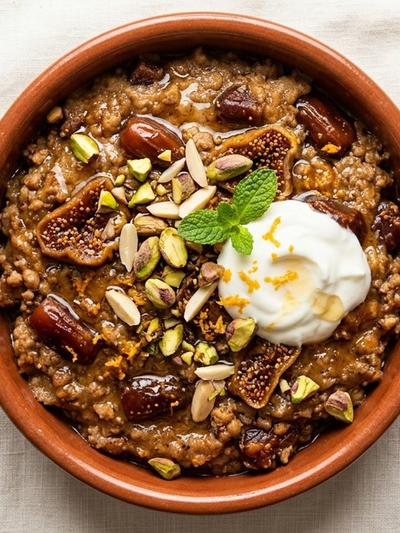
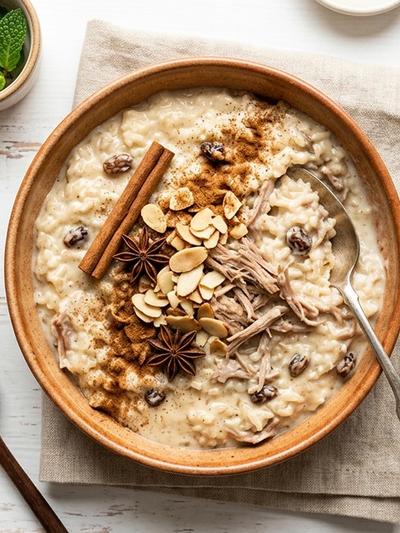
Each slice of this slow-cooked Moroccan protein cake delivers 30 grams of protein primarily from lean ground pork and Greek yogurt, with walnuts adding heart-healthy fats and a satisfying crunch. The semolina base provides slow-release carbohydrates while keeping the texture dense and moist rather than crumbly. Orange zest and a generous amount of Moroccan cinnamon give it the warm, aromatic profile you'd find in traditional North African pastries — without the excess sugar and butter.
The flavor profile draws from Moroccan baking traditions where cinnamon, orange, and nuts meet honey-sweetened semolina dough. Ground pork virtually disappears into the batter during slow cooking, contributing richness and body that mimics the buttery density of traditional basbousa or makroudh. The walnuts toast gently in the low heat, developing a deeper flavor than you'd get from a quick bake.
For GLP-1 users, a sweet that satisfies in a single small slice is exactly what cravings call for. The high protein content and moderate calories mean you can enjoy something genuinely indulgent without derailing your nutrition targets. The slow cooker does all the work — set it up and walk away, which is particularly helpful on days when medication side effects make standing in the kitchen unappealing.
Why This Works on GLP-1
With 30 grams of protein per serving, this cake functions more like a protein-forward snack than a typical dessert. Muscle preservation is a documented concern during GLP-1-assisted weight loss, and distributing protein across meals and snacks — including sweets — helps maintain lean mass throughout your journey. For Mounjaro and Ozempic users who find their appetite significantly reduced, every bite needs to count nutritionally, and this cake ensures your sweet course contributes meaningfully to your daily protein target.
The semolina and ground flaxseed provide gentle fiber that supports digestion without the bloating risk that comes from high-fiber baked goods. The moderate fat content from walnuts slows absorption, helping the cake sit comfortably in a stomach where gastric emptying is already delayed by medication.
Orange zest provides vitamin C, which supports iron absorption from the pork — a practical pairing that matters when you're eating smaller portions overall. The cake is naturally portion-controlled at four thick slices, and its dense texture signals satisfaction more effectively than airy, high-sugar alternatives that leave you reaching for more.
Ingredients (serves 4)
For the cake batter:
- 12 oz (340g) lean ground pork, 93% lean or higher
- 1/3 cup (55g) fine semolina
- 2 tablespoons (14g) ground flaxseed
- 1/4 cup (30g) chopped walnuts
- 1/4 cup (60g) plain Greek yogurt, 2% or nonfat
- 2 large eggs
- 2 tablespoons (40g) honey
- 1 tablespoon (15ml) fresh orange juice
- 1 teaspoon finely grated orange zest
- 1 1/2 teaspoons ground cinnamon
- 1/4 teaspoon ground ginger
- 1/4 teaspoon ground nutmeg
- 1/4 teaspoon fine sea salt
- Nonstick cooking spray
For the orange drizzle:
- 1 tablespoon (20g) honey
- 1 tablespoon (15ml) fresh orange juice
- 1/4 teaspoon ground cinnamon
For garnish:
- 1 tablespoon crushed walnuts
- Pinch of ground cinnamon
Instructions
Prepare the batter:
In a large bowl, combine the lean ground pork, semolina, ground flaxseed, chopped walnuts, Greek yogurt, eggs, honey, orange juice, orange zest, cinnamon, ginger, nutmeg, and salt. Mix thoroughly with a fork or your hands until the batter is uniform — the semolina absorbs moisture and helps bind the pork, so don't be shy about working it together.
Spray the inside of your slow cooker insert generously with nonstick cooking spray, paying extra attention to the bottom and about two inches up the sides. This step prevents the dense batter from bonding to the ceramic during the long cook.
Transfer the batter into the prepared slow cooker and press it into an even layer using the back of a spoon or a spatula. The layer should be roughly 1 to 1.5 inches thick depending on your slow cooker's diameter — a 4-quart oval works best for an even cook.
Slow cook the cake:
Place a double layer of paper towels or a clean kitchen towel under the lid before closing. This absorbs condensation that would otherwise drip back onto the cake, which keeps the top from becoming soggy — an essential trick for any slow cooker baking.
Cook on LOW for 3 hours. The cake is done when the edges pull away slightly from the insert and the center feels firm when pressed gently. Avoid cooking on HIGH, which can dry out the edges before the center sets properly.
Turn off the slow cooker and let the cake rest with the lid off for 15 minutes. This allows residual steam to escape and the structure to firm up before you attempt to remove it.
Make the orange drizzle and serve:
While the cake rests, whisk together the honey, orange juice, and cinnamon in a small bowl until smooth. The drizzle should be thin enough to soak into the surface but thick enough to add visible sheen.
Run a thin spatula or butter knife around the edges of the cake, then carefully invert it onto a cutting board or serving plate. If any pieces stick, gently press them back into place — the drizzle will cover minor imperfections.
Score the top of the cake into 4 equal portions, then spoon the orange drizzle evenly over the surface. Scatter the crushed walnuts and a pinch of cinnamon over the top. Allow 5 minutes for the drizzle to soak in before slicing and serving.
Nutrition per Serving
| Nutrient | Amount (approx.) |
|---|---|
| Calories | ~318 kcal |
| Protein | ~30g |
| Fat | ~11g |
| Carbohydrates | ~26g |
| Fiber | ~3g |
Estimates based on 93% lean ground pork, 2% Greek yogurt, and standard USDA values for semolina, walnuts, eggs, and honey.
Practical Notes
Store for the week ahead. Wrap individual slices tightly in plastic wrap and refrigerate for up to 5 days. The cake actually improves overnight as the semolina fully hydrates and the cinnamon flavor deepens. Reheat slices in the microwave for 20–30 seconds or enjoy cold straight from the fridge.
Freeze for longer storage. Wrap each slice in plastic wrap, then place all slices in a freezer bag. Frozen slices keep well for up to 2 months. Thaw overnight in the refrigerator or microwave from frozen on 50% power for 60–90 seconds.
Choose the right pork grind. Look for 93% lean or higher ground pork — standard ground pork (around 72–80% lean) will release too much fat during the long cook, leaving the cake greasy and the texture unpleasant. If your store only carries regular ground pork, ask the butcher to grind pork tenderloin for you instead.
Adjust sweetness to your tolerance. Zepbound and Wegovy users often report that their taste perception shifts, particularly for sweets. Start with the honey amounts listed, and if the cake tastes too sweet on medication, reduce the drizzle honey to 1 teaspoon or skip it entirely — the orange juice and cinnamon provide plenty of flavor on their own.
Line the slow cooker for easier removal. If you find the cake sticks despite spraying, cut a parchment paper round to fit the bottom of your slow cooker and spray over it. This makes clean removal virtually guaranteed and simplifies cleanup significantly.
Frequently Asked Questions
Can I taste the pork in the finished cake?
Can I substitute the pork with another protein?
How should I store and reheat leftovers?
What if my appetite is very small on GLP-1 medication?
Why use a towel under the slow cooker lid?
This article provides general food and nutrition guidance only. It does not constitute medical advice. Always consult your healthcare provider regarding your GLP-1 medication and individual nutritional needs.