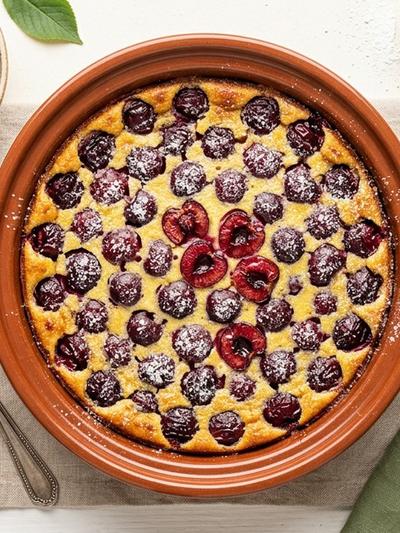
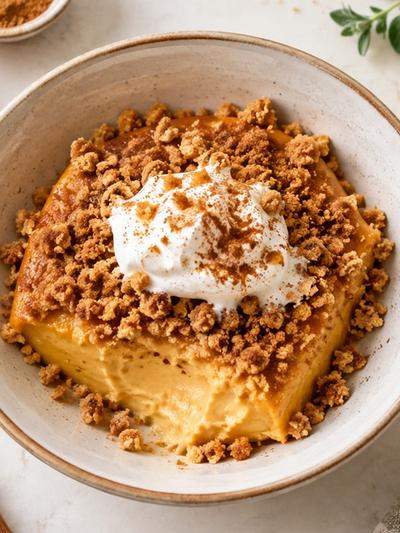
This slow cooker take on Polish sernik — the beloved Eastern European cheesecake — delivers 27 grams of protein per serving from a combination of whole eggs, egg whites, and low-fat cottage cheese. Each portion comes in at just 285 calories with 10 grams of fat, making it one of the most protein-efficient desserts you can prepare with minimal effort. The lemon zest and real vanilla bean provide bright, clean flavor without relying on added sugar for impact.
Traditional sernik is one of Poland's most cherished desserts, a baked cheesecake with a texture somewhere between a dense New York cheesecake and a silky French custard. This version leans into the custard side by blending the cottage cheese until completely smooth and cooking it low and slow. The result is a dessert that trembles slightly on the spoon — rich with vanilla, perfumed with lemon, and remarkably creamy despite having no cream cheese, butter, or heavy cream in sight.
For people on GLP-1 medications, dessert often falls off the menu entirely because heavy sweets sit uncomfortably in a stomach with slowed gastric emptying. This sernik custard avoids that problem completely. The texture is as gentle as yogurt, the portion is naturally small and satisfying thanks to the protein density, and the slow cooker does all the work — no water baths, no oven monitoring, no cracked tops to worry about.
Why This Works on GLP-1
Each serving provides 27 grams of complete protein from two highly bioavailable sources: eggs and cottage cheese. That level of protein in a dessert is significant for anyone on Wegovy or other GLP-1 receptor agonists, where preserving lean muscle mass during weight loss requires distributing protein intake across the entire day — not just at main meals. Research on muscle protein synthesis suggests that spreading protein into four or more daily occasions, including snacks and dessert, supports better outcomes than loading it all at dinner.
The custard texture is inherently easy on digestion. Unlike dense baked cheesecakes that can feel heavy, this slow-cooked version has a mousse-like consistency that requires very little mechanical digestion. There are no tough crusts, no large pieces of fruit, and no high-fat elements that could trigger the nausea or fullness that some GLP-1 users experience during dose titration periods.
At 285 calories and just 19 grams of carbohydrates per serving, this dessert fits comfortably within most GLP-1 nutrition plans without requiring trade-offs elsewhere in the day. The modest fat content — 10 grams — comes primarily from the egg yolks, which also supply choline, vitamin D, and B12, nutrients that are particularly important when overall food intake is reduced.
Ingredients (serves 4)
For the custard base:
- 6 large eggs
- 4 large egg whites
- 2 cups (454g) low-fat cottage cheese (2% or 1%)
- 2 tablespoons (42g) honey
- 1 tablespoon pure vanilla extract
- Zest of 1 large lemon (about 1 tablespoon)
- 2 tablespoons (16g) cornstarch
- 2 tablespoons (14g) almond flour
- 1/4 teaspoon fine sea salt
For the berry compote topping:
- 1 cup (150g) fresh or frozen mixed berries (blueberries, raspberries, or a combination)
- 1 tablespoon (21g) honey
- 1 teaspoon fresh lemon juice
- 1/2 teaspoon vanilla extract
Instructions
Prepare the slow cooker:
Lightly grease the inside of a 4- to 6-quart slow cooker insert with a thin layer of cooking spray or a paper towel rubbed with a drop of neutral oil. This prevents the custard from sticking and makes serving much easier.
If your slow cooker runs hot, line the bottom and sides with parchment paper for extra insurance — the low, even heat is what gives this custard its silky texture, and direct contact with a very hot insert can cause the edges to overcook.
Make the custard:
Add the cottage cheese to a blender or food processor and blend on high for 60 to 90 seconds until completely smooth with no visible curds remaining. This step is essential — any lumps in the cottage cheese will remain in the finished custard, and the smooth texture is what makes sernik feel luxurious rather than rustic.
Add the whole eggs and egg whites to the blender with the cottage cheese and pulse five or six times to combine. You want them incorporated but not whipped to a froth — overaeration creates bubbles that form an uneven surface as the custard sets.
Add the honey, vanilla extract, lemon zest, cornstarch, almond flour, and salt. Blend on low for 15 to 20 seconds until everything is just combined into a smooth, pourable batter. Scrape down the sides once to ensure no pockets of cornstarch remain.
Pour the batter into the prepared slow cooker insert. Tap the insert gently on the counter two or three times to release any trapped air bubbles.
Slow cook the custard:
Place a clean kitchen towel or two layers of paper towel across the top of the slow cooker before setting the lid in place. This absorbs condensation that would otherwise drip back onto the custard surface and create a watery top layer — a classic slow cooker baking technique.
Cook on LOW for 2 to 2.5 hours. The custard is done when the edges are set and pull slightly away from the insert, but the center still has a gentle wobble when you tap the side — similar to panna cotta. It will firm up considerably as it cools. Avoid cooking on HIGH, which can cause the eggs to curdle and produce a grainy texture.
Turn off the slow cooker, remove the lid and towel, and allow the custard to cool in the insert for 30 minutes. Then transfer the insert (or the whole slow cooker if removable) to the refrigerator for at least 2 hours to chill and fully set.
Make the berry compote:
While the custard chills, combine the berries, honey, and lemon juice in a small saucepan over medium-low heat. Cook for 6 to 8 minutes, stirring occasionally, until the berries have softened and released their juices into a loose, syrupy sauce. Some berries should remain whole while others break down — this contrast in texture is intentional.
Remove from heat, stir in the vanilla extract, and let the compote cool to room temperature. It will thicken slightly as it cools. Transfer to a small jar and refrigerate until ready to serve.
Serve:
- Scoop or slice the chilled custard into four portions. Spoon the berry compote over each serving. The custard should be firm enough to hold its shape on a plate but soft enough to eat with a spoon — like a cross between cheesecake and crème caramel.
Nutrition per Serving
| Nutrient | Amount (approx.) |
|---|---|
| Calories | ~285 kcal |
| Protein | ~27g |
| Fat | ~10g |
| Carbohydrates | ~19g |
| Fiber | ~1g |
Estimates based on 6 large eggs, 4 large egg whites, 2 cups low-fat cottage cheese, 3 tablespoons honey total, and 1 cup mixed berries divided into 4 servings.
Practical Notes
Cottage cheese brand matters here. Use a low-fat (1% or 2%) cottage cheese with a fine, small-curd texture for the smoothest results. Brands like Good Culture or Daisy produce a noticeably creamier blend than bargain varieties. Avoid fat-free cottage cheese — it produces a slightly rubbery texture when cooked.
This keeps beautifully for meal prep. Store individual portions in airtight containers in the refrigerator for up to 4 days. The custard actually improves overnight as the flavors meld and the texture firms to the ideal consistency. Keep the berry compote in a separate container and spoon it on just before eating to prevent the custard from getting soggy.
If your appetite is very small, divide into 6 servings instead of 4. Each smaller portion still provides about 18 grams of protein — more than most commercial desserts deliver in a full-size serving. The custard is dense enough in nutrients that even a few spoonfuls contribute meaningfully to your daily protein target.
You can swap the berry compote for other toppings. A tablespoon of sugar-free jam, a few slices of fresh peach, or a light dusting of cinnamon all work well. In traditional Polish sernik, a thin layer of fruit glaze is common — you can approximate this by straining the berry compote through a fine mesh sieve and spooning just the syrup over the top.
The kitchen towel trick is non-negotiable. Slow cookers generate significant condensation on the underside of the lid, and without a towel to absorb it, that water drips directly onto your custard and creates a soggy, uneven surface. Use a cotton towel (not terry cloth, which can shed fibers) and make sure the edges are tucked up so they do not hang near the heating element.
Frequently Asked Questions
Can I eat this custard during the early weeks of GLP-1 medication when my appetite is very low?
Can I substitute Greek yogurt for the cottage cheese?
How should I store and reheat leftovers?
What if I only have a large slow cooker — will the custard still work?
Can I make this without the egg whites for a simpler recipe?
This article provides general food and nutrition guidance only. It does not constitute medical advice. Always consult your healthcare provider regarding your GLP-1 medication and individual nutritional needs.