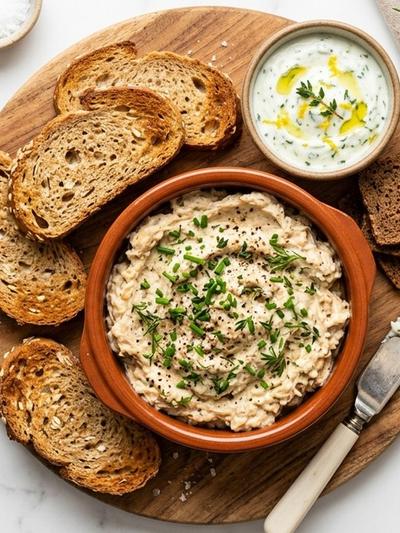
Each snack-sized serving of this Polish-inspired spread delivers 28 grams of protein from a combination of slow-cooked chicken breast and cannellini beans — a pairing that provides all essential amino acids along with steady, slow-digesting energy. The white beans contribute iron and potassium while adding a velvety body that replaces the butter or cream cheese found in traditional Polish smalec-style spreads. At just 195 calories per portion, this is one of the most protein-dense snacks you can pull from a slow cooker.
The flavor here is unmistakably Eastern European: earthy white beans, bright fresh dill, a touch of garlic, and a finish of lemon juice that lifts everything without sharpness. Slow cooking the chicken directly with the beans and aromatics means every element absorbs the same gentle, savory backbone. The texture falls somewhere between a chunky hummus and a French rillette — spreadable but with enough body to scoop onto cucumber rounds or whole-grain crackers.
For GLP-1 users, a high-protein snack that requires zero last-minute effort is invaluable. You set the slow cooker in the morning and come back to a week's worth of grab-and-go protein. The soft, smooth texture is easy on a sensitive stomach, and the modest portion size — about a third of a cup per serving — satisfies without the heaviness that can trigger nausea on appetite-suppressing medications.
Why This Works on GLP-1
Preserving lean muscle mass is one of the most important nutritional goals during GLP-1-assisted weight loss, and it requires consistent protein intake spread across the day — not just at main meals. This spread provides 28 grams of complete protein per snack serving, which is comparable to what many people get at dinner. For those on Mounjaro or Wegovy who find they skip snacks entirely due to reduced appetite, having a small, protein-dense option ready in the fridge prevents the muscle catabolism that can accompany prolonged gaps between meals.
The cannellini beans provide 4 grams of gentle soluble fiber per serving, which slows glucose absorption and supports the blood sugar regulation that GLP-1 medications are already enhancing. Unlike raw vegetable fiber, slow-cooked beans are soft and thoroughly broken down, making them easier to digest for users who experience the gastric slowing common with these medications.
The spread is also notably low in fat at just 3 grams per serving, which matters because high-fat snacks can exacerbate the nausea and reflux that some GLP-1 users experience. The small amount of fat present comes from the chicken itself — no added oils — keeping this snack light in the stomach while remaining deeply satisfying.
Ingredients (serves 4)
For the slow cooker:
- 12 oz (340g) boneless, skinless chicken breast
- 1 can (15 oz / 425g) cannellini beans, drained and rinsed
- 1/2 cup (120ml) low-sodium chicken broth
- 3 cloves garlic, smashed
- 1 small yellow onion, quartered
- 2 bay leaves
- 1/2 teaspoon fine sea salt
- 1/4 teaspoon white pepper
For finishing:
- 3 tablespoons (45g) plain Greek yogurt (2% fat)
- 3 tablespoons fresh dill, finely chopped, plus extra for garnish
- 1 tablespoon fresh lemon juice
- 1/2 teaspoon Dijon mustard
- Salt and white pepper to taste
For serving (not included in nutrition):
- Cucumber rounds, radish slices, or celery sticks
- Whole-grain crackers or dark rye crispbread
Instructions
Prepare the slow cooker:
- Place the chicken breasts in the bottom of a 3- to 4-quart slow cooker. Keeping them in a single layer ensures even cooking and prevents the outer pieces from drying out while the center catches up.
- Scatter the drained cannellini beans around and over the chicken. Add the smashed garlic cloves, quartered onion, and bay leaves.
- Pour the chicken broth over everything. The liquid amount is intentionally small — the beans and chicken will release moisture as they cook, and you want a thick, concentrated result rather than a soupy one.
- Season with salt and white pepper. White pepper is traditional in Polish cooking and gives warmth without the visual speckle of black pepper in the finished spread.
- Cover and cook on LOW for 4 to 5 hours, or on HIGH for 2.5 to 3 hours. The chicken should shred easily with a fork and the beans should be completely soft.
Blend the spread:
- Remove and discard the bay leaves and onion quarters. The onion has given its flavor to the cooking liquid and would add too much moisture if blended in.
- Transfer the chicken, beans, garlic, and about 2 tablespoons of the cooking liquid to a food processor or large bowl. If using a bowl, mash with a fork or potato masher.
- Pulse or mash until you reach your preferred texture — some people like it nearly smooth, others prefer a chunkier, more rustic spread. Add another tablespoon of cooking liquid only if the mixture is too stiff to spread.
- Add the Greek yogurt, chopped dill, lemon juice, and Dijon mustard. Pulse briefly or stir to combine. Taste and adjust salt and pepper.
Portion and store:
- Divide the spread among four small containers (about 1/3 cup each). Garnish with a pinch of fresh dill. Let cool to room temperature before refrigerating.
- Serve chilled or at room temperature with cucumber rounds, radish slices, or dark rye crispbread.
Nutrition per Serving
| Nutrient | Amount (approx.) |
|---|---|
| Calories | ~195 kcal |
| Protein | ~28g |
| Fat | ~3g |
| Carbohydrates | ~14g |
| Fiber | ~4g |
Estimates based on 12 oz raw boneless skinless chicken breast, one 15 oz can cannellini beans (drained), and 3 tablespoons 2% Greek yogurt divided among 4 servings. Crudités for dipping are not included.
Practical Notes
Meal prep storage. This spread keeps beautifully for 5 days in the refrigerator in airtight containers, making it a true set-and-forget weekly snack. It also freezes well for up to 2 months — thaw overnight in the fridge and stir before serving. The texture actually improves after a day in the fridge as the flavors meld.
Texture adjustments. If you prefer an ultra-smooth spread, use a food processor and add cooking liquid one tablespoon at a time. For a chunkier, more rillette-like texture, simply shred the chicken with two forks and mash the beans roughly before stirring everything together.
Protein boost for very small appetites. If you find you can only manage a few bites at snack time, stir in 1 scoop of unflavored collagen peptides when blending. This adds roughly 10 grams of protein per serving without changing the flavor or texture, which can be helpful during the appetite-suppressing early weeks of GLP-1 treatment.
Swap the beans. Great Northern beans or butter beans work equally well if you cannot find cannellini. Navy beans are another option but will yield a slightly grainier texture. Avoid chickpeas here — their stronger flavor competes with the delicate dill profile.
Serving ideas beyond crudités. Spread this on toasted dark rye bread for a Polish-style open sandwich, spoon it into endive leaves for an elegant appetizer, or pack it alongside a small portion of pickled vegetables for a snack plate that feels like a complete mini-meal.
Frequently Asked Questions
I just started Ozempic and can barely eat — is this spread too heavy for me?
Can I use chicken thighs instead of chicken breast?
How long does this last in the fridge, and can I freeze it?
What if I am taking Zepbound and find the portion too large even after weeks of treatment?
Can I make this in an Instant Pot or pressure cooker instead?
This article provides general food and nutrition guidance only. It does not constitute medical advice. Always consult your healthcare provider regarding your GLP-1 medication and individual nutritional needs.