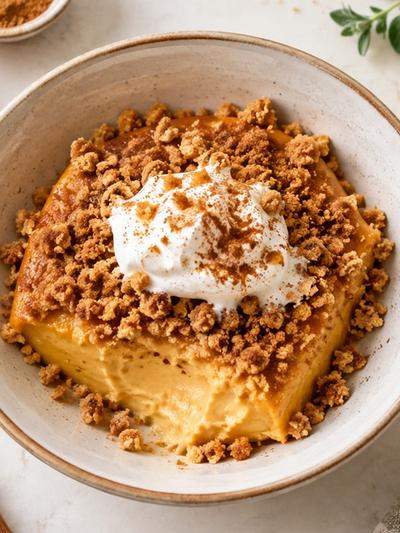
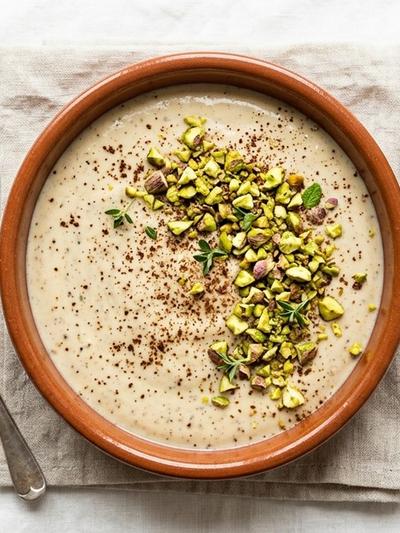
This slow cooker egg pudding delivers 27 grams of protein per serving by combining whole eggs, egg whites, nonfat Greek yogurt, and skim milk powder into a dense, custard-like dessert. Each portion provides a complete amino acid profile while staying well under 300 calories. The saffron and cardamom bring genuine Indian flavor without relying on excess sugar or fat, and the slow cooker method produces an impossibly smooth texture that baking alone cannot match.
The flavor here is unmistakably Indian — warm saffron threads bloom in hot milk, releasing their honey-like fragrance, while crushed green cardamom pods add a floral, almost eucalyptus note that cuts through the richness of the eggs. A restrained amount of jaggery provides caramel-like sweetness without overwhelming the delicate spices. The result tastes like a cross between a traditional anda halwa and a European baked custard, with a texture that is firm enough to slice but melts on the tongue.
For GLP-1 users, this pudding solves a real problem: satisfying a sweet craving without triggering digestive discomfort or blood sugar spikes. The slow cooker's gentle, even heat produces a pudding that is easy on a sensitive stomach, and the high protein content means even a small portion keeps you satisfied for hours. Each serving is naturally portioned for a reduced appetite.
Why This Works on GLP-1
Preserving lean muscle mass is one of the most important nutritional priorities during GLP-1-assisted weight loss, and this pudding contributes meaningfully to daily protein targets with 27 grams per serving. The protein comes from multiple high-quality sources — eggs provide leucine-rich complete protein, while Greek yogurt and milk powder add casein, which digests slowly and extends satiety. For people on Mounjaro or similar medications who find their appetite dramatically reduced, getting adequate protein from a dessert rather than forcing another savory meal can make a real difference in meeting daily targets.
The low fiber content is actually a benefit here. Many GLP-1 users experience slowed gastric emptying, and high-fiber desserts can sit heavily in the stomach. This pudding is gentle and smooth, making it easy to digest even on days when appetite is minimal or nausea is present.
Saffron is not just for flavor — it contains crocin and safranal, compounds studied for their potential mood-supporting properties. Since some GLP-1 users report mood changes during the adjustment period, incorporating saffron into regular cooking is a small but worthwhile step. The modest carbohydrate content from jaggery and milk powder provides just enough energy without causing the kind of blood sugar spike that can worsen medication side effects.
Ingredients (serves 4)
For the saffron milk base:
- 1 cup (240ml) low-fat milk
- 1 generous pinch saffron threads (about 20 threads)
- 4 green cardamom pods, lightly crushed
- 2 tablespoons (25g) jaggery or coconut sugar, grated
For the egg pudding:
- 6 large eggs
- 4 large egg whites
- ¾ cup (180g) nonfat Greek yogurt
- ⅓ cup (35g) skim milk powder
- ½ teaspoon vanilla extract
- Pinch of fine sea salt
For garnish:
- 1 tablespoon (8g) unsalted pistachios, finely chopped
- 4–5 additional saffron threads
Instructions
Prepare the saffron milk base:
Warm the milk in a small saucepan over medium-low heat until steaming but not boiling, about 2 minutes. Add the saffron threads and crushed cardamom pods, then remove from heat and let steep for 10 minutes. The milk will turn a deep golden color as the saffron releases its pigment — this bloom is essential for full flavor.
Strain out the cardamom pods and discard them. Stir the grated jaggery into the warm saffron milk until fully dissolved. Set aside to cool to room temperature, about 15 minutes. The milk must not be hot when added to the eggs or it will scramble them.
Mix the pudding base:
In a large bowl, whisk the whole eggs and egg whites together until evenly combined but not frothy — you want a smooth custard, not an airy one. Over-whisking introduces air bubbles that create an uneven texture.
Add the Greek yogurt and whisk until smooth. Sift in the skim milk powder and whisk again to eliminate any lumps. The milk powder dissolves best when added gradually rather than all at once.
Pour the cooled saffron milk into the egg mixture in a slow stream, whisking constantly. Add the vanilla extract and salt. Whisk until the mixture is completely uniform in color and texture.
Set up the slow cooker:
Lightly grease a 1.5-quart (1.4L) oven-safe baking dish or round cake pan that fits inside your slow cooker. A 7-inch round pan works well in most standard 6-quart slow cookers.
Pour the pudding mixture through a fine-mesh strainer into the prepared dish. Straining removes any chalazae from the eggs and ensures a perfectly smooth result. Tap the dish gently on the counter to release any trapped air bubbles.
Cover the dish tightly with aluminum foil to prevent condensation from dripping onto the pudding surface. Place the dish inside the slow cooker. Carefully pour warm water around the dish until it reaches about halfway up the sides — this water bath ensures even, gentle cooking.
Slow cook the pudding:
Cover the slow cooker and cook on LOW for 2 to 2.5 hours. The pudding is done when the edges are set and the center has a slight jiggle — it will firm up further as it cools. Start checking at the 2-hour mark, as slow cookers vary in temperature. A knife inserted near the center should come out clean.
Carefully remove the dish from the slow cooker using oven mitts and remove the foil. Let the pudding cool at room temperature for 30 minutes, then refrigerate for at least 2 hours or overnight. The pudding sets fully as it chills and tastes best cold or at room temperature.
Serve:
- Slice or scoop into four portions. Garnish each serving with a sprinkle of chopped pistachios and a few saffron threads. Serve chilled or at room temperature.
Nutrition per Serving
| Nutrient | Amount (approx.) |
|---|---|
| Calories | ~285 kcal |
| Protein | ~27g |
| Fat | ~10g |
| Carbohydrates | ~22g |
| Fiber | ~1g |
Estimates based on 6 large eggs, 4 egg whites, nonfat Greek yogurt, skim milk powder, low-fat milk, and jaggery. Actual values may vary based on specific brands used.
Practical Notes
Make it meal prep friendly. This pudding keeps well in the refrigerator for up to 4 days. Slice into individual portions and store in airtight containers. It actually improves overnight as the saffron flavor deepens and the texture firms to the ideal consistency.
Adjust sweetness to your tolerance. GLP-1 medications can change how sweet things taste — many users find their sweet tooth diminishes significantly. Start with 1.5 tablespoons of jaggery and taste the mixture before cooking. You can always drizzle a small amount of honey over individual portions when serving.
Use a thermometer for precision. If your slow cooker runs hot, the pudding can overcook and develop a rubbery texture. An instant-read thermometer inserted into the center should read 170–175°F (77–80°C) when done. If you notice the edges pulling away from the dish before the center is set, your cooker may be running too hot — try propping the lid slightly open with a wooden spoon.
Substitute the milk powder if needed. Whey protein isolate (unflavored or vanilla) can replace the skim milk powder in equal measure by weight. This increases the protein content even further while keeping the texture smooth. Avoid casein protein powder here as it can create a gummy texture in baked custards.
Eat this as a protein-forward dessert or snack. At 27 grams of protein per serving, this pudding works as a post-workout recovery food or a satisfying afternoon snack. For GLP-1 users who struggle with morning appetite, a small portion with tea can serve as a gentle breakfast that provides substantial nutrition without requiring a full savory meal.
Frequently Asked Questions
Can I eat this pudding if I experience nausea on GLP-1 medication?
Can I make this dairy-free?
How long does this pudding keep, and can I freeze it?
What if I can only eat very small portions on my GLP-1 medication?
Why use a water bath in the slow cooker instead of cooking directly?
This article provides general food and nutrition guidance only. It does not constitute medical advice. Always consult your healthcare provider regarding your GLP-1 medication and individual nutritional needs.