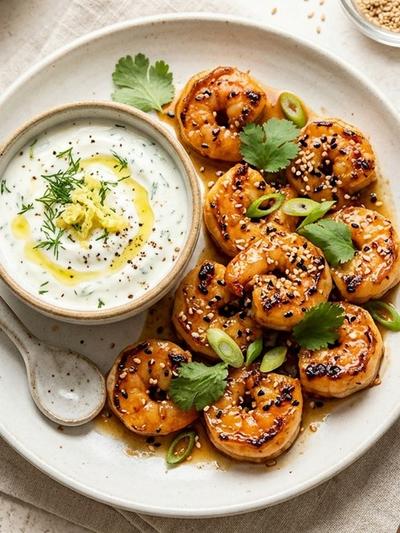
Shrimp is one of the most protein-efficient foods available: about 20g of protein per 100g, under 100 calories, and it cooks in under 4 minutes. For GLP-1 users who need to maximize protein in the smallest possible eating window, shrimp removes almost every obstacle — it's quick, mild in flavor, and easy to eat even when appetite is limited.
Paired with spiralized zucchini instead of pasta, this dish keeps carbohydrates low while dramatically increasing volume. Zucchini noodles (zoodles) have roughly 4 calories per 100g — you can add as much as you want without affecting the nutritional profile meaningfully. On a day when you can eat more, pile on the zucchini. On a day when appetite is minimal, use less and focus on the shrimp.
The white wine pan sauce (or chicken broth, if preferred) brings everything together with a bright, clean flavor that works well on days when richer sauces or heavy cream would be too much. The whole dish comes together in one pan in 15 minutes.
Why This Works on GLP-1
Shrimp's protein-to-calorie ratio is exceptional by any measure, but it has additional properties that make it particularly suited to GLP-1 eating. It is one of the most easily digestible proteins — cooked shrimp is gentle on a GI system that may already be working differently due to medication. Its mild, clean flavor is rarely nausea that Mounjaro or Wegovy users sometimes experienceting, unlike red meat or heavily spiced proteins that can trigger aversion on sensitive days.
Zucchini adds potassium, vitamin C, and a small amount of fiber while contributing almost no calories. The spiralized format means it cooks in under 2 minutes, preserving some crunch and avoiding the waterlogged texture that makes overcooked zucchini unpleasant. The key is keeping the heat high and the cooking time short.
The combination — high protein from shrimp, volume from zucchini, brightness from lemon and garlic — delivers a meal that feels substantial despite being genuinely light.
Ingredients (serves 2)
- 300g (10oz) raw shrimp, peeled and deveined
- 2 medium zucchini (about 400g / 14oz), spiralized or julienned
- 2 garlic cloves, thinly sliced
- 120g (¾ cup) cherry tomatoes, halved
- 80ml (⅓ cup) dry white wine or low-sodium chicken broth
- 2 tablespoons lemon juice
- 1 tablespoon olive oil
- 2 tablespoons fresh flat-leaf parsley, roughly chopped
- Salt and black pepper
- Optional: pinch of chili flakes
Instructions
Prepare the zucchini. Spiralize the zucchini using a spiralizer, or use a vegetable peeler to create wide ribbons. Place in a colander, sprinkle lightly with salt, and let sit for 5 minutes. This draws out excess moisture and prevents the dish from becoming watery. Pat dry with paper towel.
Season the shrimp. Pat shrimp dry with paper towel (this is important for proper searing). Season with salt, pepper, and chili flakes if using.
Cook the shrimp. Heat the olive oil in a large skillet over high heat until shimmering. Add shrimp in a single layer — do not crowd. Cook 1½–2 minutes without touching until pink and slightly golden on one side. Flip and cook 1 minute on the other side. Remove to a plate immediately — overcooked shrimp becomes rubbery and less appetizing.
Build the sauce. In the same pan over medium-high heat, add garlic. Sauté 30 seconds until fragrant. Add cherry tomatoes, pressing them gently with a spoon. Cook 2 minutes until they begin to burst and release juice. Add wine or broth and lemon juice. Simmer 2–3 minutes until reduced by half.
Add the zucchini. Add the zucchini noodles to the pan. Toss with tongs for 1–2 minutes — they should be just tender with some bite remaining. Do not overcook.
Return the shrimp. Add the shrimp back to the pan, toss everything together, and heat for 30 seconds. Taste and adjust seasoning.
Serve. Divide between bowls and scatter fresh parsley over the top. Eat immediately — zucchini noodles release liquid as they sit.
Nutrition per Serving
- Calories: ~220
- Protein: ~30g
- Fat: ~7g
- Carbs: ~9g
- Fiber: ~2g
Practical Notes
Salt and drain the zucchini. This step is non-negotiable for good texture. Skipping it results in a watery, diluted sauce and limp noodles. Five minutes of passive draining makes a significant difference.
Use frozen shrimp confidently. Frozen raw shrimp is often fresher than "fresh" shrimp at the seafood counter (most fresh shrimp was previously frozen anyway). Thaw overnight in the fridge or under cold running water for 5 minutes. Pat extremely dry before cooking.
Broth instead of wine. Chicken or vegetable broth works perfectly well as a substitute and adds its own depth. The dish remains just as flavorful.
Leftover consideration. This dish does not store well — zucchini noodles become waterlogged within hours. Make only what you'll eat. The shrimp alone can be stored and used in a salad or wrap the next day.
When appetite is very limited. Skip the zucchini entirely and serve just the sauced shrimp in a bowl with a drizzle of olive oil and lemon. Four large shrimp = approximately 12g protein in under 60 calories, with almost no effort to eat.
Frequently Asked Questions
Can I use frozen shrimp straight from the freezer?
What if I don't have a spiralizer?
My appetite is very low — how little can I eat and still get a useful protein hit?
Can I substitute the white wine with something non-alcoholic?
Does this dish work for meal prep, or does it have to be eaten fresh?
This article provides general food and nutrition guidance only. It does not constitute medical advice. Always consult your healthcare provider regarding your GLP-1 medication and individual nutritional needs.