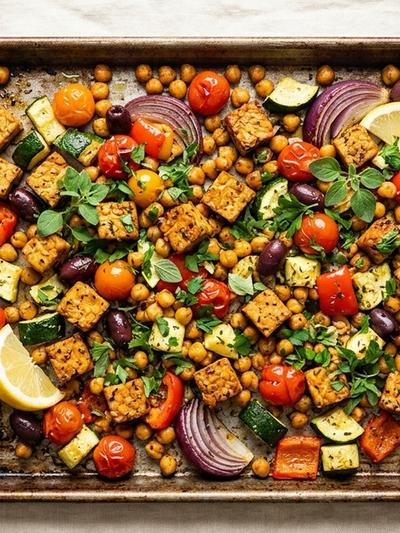
This Greek-inspired sheet pan dinner packs 30 grams of plant-based protein per serving, split between oregano-marinated tempeh and golden chickpeas that crisp up in the oven. Each plate delivers 11 grams of fiber from the chickpeas and tempeh alone, plus a solid dose of iron, manganese, and B vitamins that are often depleted during calorie restriction. The cherry tomatoes burst in the heat, forming a natural sauce that coats everything on the pan without a drop of added sugar.
Dried oregano, smoked paprika, and raw garlic give the tempeh an earthy, almost smoky depth that stands up to the sweetness of the roasted tomatoes and caramelized red onion. The chickpeas develop a thin, crunchy shell while staying creamy inside, and the zucchini softens just enough to melt against the firmer tempeh slabs. A light crumble of feta and a squeeze of fresh lemon tie it all together with the bright, salty finish that defines Aegean home cooking.
For people on GLP-1 medication, this is the kind of dinner that works on every level. The protein density means each moderate-sized serving satisfies, so you are not pushing past your appetite. The sheet-pan format keeps hands-on time to fifteen minutes, which matters on evenings when reduced appetite already makes cooking feel like a chore.
Why This Works on GLP-1
Muscle preservation is one of the biggest nutritional priorities during GLP-1-assisted weight loss, and this recipe addresses it directly with 30 grams of complete protein per serving. Tempeh provides all essential amino acids because it is made from whole fermented soybeans, and the chickpeas add complementary plant protein that rounds out the amino acid profile. For anyone on Ozempic or Wegovy noticing that they are losing weight quickly, hitting a 25-to-40-gram protein target at dinner is one of the most effective ways to protect lean mass while the medication suppresses appetite.
The 11 grams of fiber per serving come from tempeh and chickpeas, both of which contain primarily soluble fiber that is gentler on digestion than raw cruciferous vegetables. This matters because GLP-1 medications slow gastric emptying, and high-insoluble-fiber meals can compound that effect, leading to bloating. The fermented nature of tempeh also introduces beneficial bacteria that may support gut health during medication use.
The fat content sits at 22 grams per serving, mostly unsaturated from the tempeh and olive oil. This moderate fat level provides satiety without the heaviness that can trigger nausea, a common side effect in the first weeks of GLP-1 therapy. The low glycemic load of the meal also avoids the blood sugar spikes that can undermine the medication's metabolic benefits.
Ingredients (serves 2)
For the tempeh marinade:
- 7 oz (200g) tempeh, cut into 1/2-inch (1.25 cm) thick slabs
- 1 1/2 tablespoons fresh lemon juice (about half a lemon)
- 2 teaspoons extra-virgin olive oil
- 2 teaspoons dried oregano
- 3 cloves garlic, minced
- 1/4 teaspoon smoked paprika
- 1/4 teaspoon fine sea salt
- Pinch of black pepper
For the sheet pan:
- 1 cup (160g) drained and rinsed canned chickpeas, patted very dry
- 1 1/2 cups (225g) cherry or grape tomatoes, halved
- 1 small zucchini (about 4 oz / 120g), cut into 1/2-inch half-moons
- 1/2 medium red onion (about 2 oz / 60g), cut into thin wedges
- 1 teaspoon extra-virgin olive oil
- 1/2 teaspoon dried oregano
- 1/4 teaspoon salt
For finishing:
- 1 oz (28g) feta cheese, crumbled
- 6 Kalamata olives, halved (optional)
- Fresh flat-leaf parsley or oregano leaves
- Lemon wedges for serving
Instructions
Marinate the tempeh:
- Cut the tempeh block crosswise into slabs roughly 1/2 inch thick — you should get six to eight pieces. Thinner slabs develop more crust and absorb more marinade per bite than cubes, which matters for flavor when you are using a modest amount of oil.
- In a shallow bowl, whisk together the lemon juice, olive oil, dried oregano, minced garlic, smoked paprika, salt, and pepper. Add the tempeh slabs and turn to coat both sides. Set aside while you prepare the vegetables — even ten minutes of contact makes a noticeable difference.
Prepare the sheet pan:
- Preheat your oven to 425°F (220°C) and line a large rimmed sheet pan with parchment paper. The parchment prevents sticking and makes cleanup easier.
- Spread the patted-dry chickpeas on one side of the pan and the zucchini half-moons alongside them. Scatter the red onion wedges in the gaps. Drizzle with the teaspoon of olive oil, sprinkle with the dried oregano and salt, and toss everything directly on the pan until evenly coated.
- Place the halved cherry tomatoes cut-side up on the opposite side of the pan. Keeping them separate prevents their juice from making the chickpeas soggy during roasting.
- Nestle the marinated tempeh slabs in the center of the pan, leaving a small gap between each piece for airflow. Pour any remaining marinade over the tempeh.
Roast:
- Slide the pan onto the middle oven rack and roast for 15 minutes. At the 15-minute mark, flip the tempeh slabs with a spatula and give the chickpeas a gentle shake. The tomatoes should be starting to collapse and bubble.
- Return the pan to the oven for another 8 to 10 minutes, until the tempeh edges are golden brown, the chickpeas are firm and lightly crunchy, and the tomatoes have fully burst. The zucchini should be tender with light char on the edges.
Finish and serve:
- Remove the pan from the oven. Scatter the crumbled feta and Kalamata olives (if using) over everything while it is still hot so the feta softens slightly. Tear fresh parsley or oregano leaves over the top and serve with lemon wedges on the side. A generous squeeze of lemon right before eating brightens all the roasted flavors.
Nutrition per Serving
| Nutrient | Amount (approx.) |
|---|---|
| Calories | ~445 kcal |
| Protein | ~30g |
| Fat | ~22g |
| Carbohydrates | ~35g |
| Fiber | ~11g |
Estimates based on standard USDA values for tempeh, canned chickpeas, and feta cheese. Includes optional Kalamata olives.
Practical Notes
Pat the chickpeas completely dry. This is the single most important step for crispy chickpeas on a sheet pan. After draining and rinsing, spread them on a clean kitchen towel and roll them gently back and forth. Any lingering moisture will steam instead of roast, leaving you with soft chickpeas rather than crunchy ones.
Store leftovers separately if possible. The tempeh and chickpeas reheat well in a 375°F oven for 8 to 10 minutes, but the tomatoes release more juice as they sit. If you are meal prepping, keep the burst tomatoes in a separate container and spoon them over when you reheat. Everything keeps in the refrigerator for up to three days.
Eat protein first at the meal. Many dietitians advising GLP-1 patients recommend starting your plate with the tempeh and chickpeas before the vegetables. When your stomach empties slowly, getting protein in early ensures you absorb the most important macronutrient even if you cannot finish the full serving.
Swap the tempeh for extra-firm tofu if bloating is a concern. Tempeh is fermented and higher in fiber, which some GLP-1 users find causes discomfort early in treatment. Extra-firm tofu pressed for 15 minutes and marinated the same way works perfectly on this sheet pan and is lighter on the gut. Protein drops by about 3 grams per serving but remains above 25 grams.
Use this base for different Greek variations. The oregano-lemon-garlic marinade works equally well on thick slices of halloumi or on cubed seitan. You can also swap the zucchini for bell pepper strips or diced eggplant without changing the cooking time. Keep the chickpeas and burst tomatoes as your constant — they anchor the flavor profile.
Frequently Asked Questions
I am in my first month on GLP-1 medication and can barely eat half a serving — is that normal?
Can I use a different plant-based protein instead of tempeh?
How should I reheat this for meal prep lunches?
What if I find the fiber content too high for my stomach on GLP-1?
Do I need to steam or boil the tempeh before roasting it?
This article provides general food and nutrition guidance only. It does not constitute medical advice. Always consult your healthcare provider regarding your GLP-1 medication and individual nutritional needs.