Each serving of this Greek-inspired sheet pan bake delivers roughly 30 grams of complete protein from three eggs and a generous layer of crumbled feta, plus 9 grams of fiber from roasted eggplant and chickpeas. The dish supplies meaningful amounts of choline, iron, and folate — nutrients that sometimes fall short when appetite is reduced. At 475 calories per serving, it hits the sweet spot between satisfying and restrained, with enough substance to carry you through an afternoon without feeling heavy.
Roasted eggplant turns silky and almost caramelized at high heat, while chickpeas pick up crispy edges that contrast with the soft-set eggs. Cherry tomatoes burst into a natural sauce that pools around the wells, and salty feta ties everything together with a sharp tang. Dried oregano and thinly sliced garlic infuse the vegetables as they roast, and a squeeze of lemon juice at the end lifts the whole pan with brightness.
For anyone on GLP-1 medication, this recipe checks two practical boxes: everything cooks on a single sheet pan with minimal hands-on work, and the protein-to-volume ratio is high enough that even a smaller portion feels complete. The vegetables are gentle on digestion — eggplant is soft and low in fermentable fiber, and canned chickpeas are easier to tolerate than dried ones cooked from scratch. You can plate as much or as little as your appetite allows without the math falling apart.
Why This Works on GLP-1
Preserving lean muscle mass is one of the most important nutritional goals during GLP-1-assisted weight loss, and adequate protein at every meal is the simplest way to support it. This sheet pan delivers about 30 grams per serving — roughly two-thirds from eggs, which provide all nine essential amino acids in highly bioavailable form, and the rest from feta and chickpeas. For people on Ozempic or other semaglutide medications, hitting 25 to 35 grams of protein per meal helps offset the muscle loss that can accompany rapid weight reduction. Three eggs per serving makes that target achievable without relying on protein powder or supplements.
The 9 grams of fiber per serving come from two gentle sources. Eggplant provides mostly soluble fiber, which forms a gel-like consistency during digestion and tends to be well tolerated even when GLP-1 medications slow gastric emptying. Canned chickpeas contribute resistant starch and additional soluble fiber without the bloating that sometimes accompanies raw legumes or very high-fiber grains.
Eggs are also one of the richest dietary sources of choline, a nutrient involved in liver function and fat metabolism. Each serving of this bake provides roughly 450 milligrams of choline — close to the daily adequate intake for most adults. The moderate fat content, primarily from egg yolks and feta, supports absorption of fat-soluble vitamins without tipping the meal into territory that feels heavy or triggers the nausea some Mounjaro users experience with very rich foods.
Ingredients (serves 2)
For the roasted vegetables:
- 1 medium eggplant (about 10 oz / 280g), cut into 3/4-inch cubes
- 3/4 cup (120g) canned chickpeas, drained and rinsed
- 1 cup (150g) cherry tomatoes, halved
- 1/2 medium red onion (about 2 oz / 55g), thinly sliced
- 2 cloves garlic, thinly sliced
- 2 teaspoons extra-virgin olive oil
- 1 teaspoon dried oregano
- 1/4 teaspoon kosher salt
- 1/4 teaspoon black pepper
For the eggs and finish:
- 6 large eggs
- 2 oz (57g) crumbled feta cheese
- 1 tablespoon fresh lemon juice (about half a lemon)
- 2 tablespoons fresh dill, roughly chopped
- Pinch of red pepper flakes (optional)
Instructions
Prepare the sheet pan:
Preheat your oven to 425°F (220°C) and line a rimmed half-sheet pan with parchment paper. Parchment prevents the eggplant from sticking and makes cleanup simple — foil works too, but eggplant tends to stick to it even when oiled.
Spread the cubed eggplant, chickpeas, halved cherry tomatoes, sliced red onion, and garlic on the prepared pan. Drizzle with the olive oil, then sprinkle with oregano, salt, and pepper. Toss everything together with your hands or a spatula until evenly coated, then spread into a single layer with some space between pieces. Crowding the pan steams the vegetables instead of roasting them.
Roast the vegetables:
- Roast for 15 minutes, stirring once at the halfway mark. The eggplant should be golden and tender, the chickpeas lightly crisped at the edges, and the tomatoes collapsed and juicy. If the eggplant still looks pale, give it another 3 to 4 minutes — well-browned eggplant has a much deeper, sweeter flavor.
Add the eggs and feta:
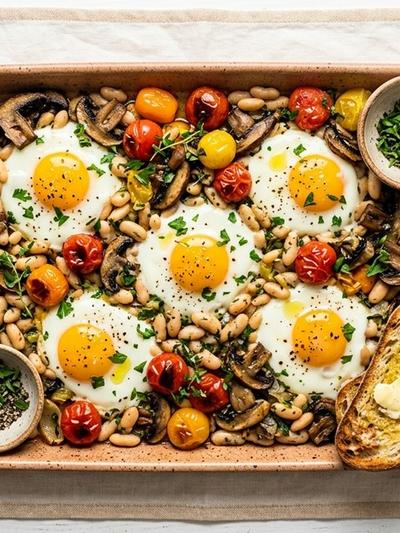
Remove the pan from the oven. Use the back of a spoon to create six shallow wells in the roasted vegetables, spacing them roughly evenly across the pan. Crack one egg into each well. Work carefully so the whites stay mostly contained — a slight overflow into the vegetables is fine and actually helps bind everything together.
Scatter the crumbled feta evenly over the entire pan, letting some fall on the eggs and some on the vegetables.
Return the pan to the oven and bake for 8 to 10 minutes. Check at 8 minutes — the whites should be fully set and opaque while the yolks remain soft and slightly runny. If you prefer fully set yolks, leave the pan in for an additional 2 minutes.
Finish and serve:
- Remove the pan from the oven and squeeze lemon juice over everything. Scatter the fresh dill and red pepper flakes, if using. Serve directly from the pan, portioning three eggs and half the vegetables per plate. A piece of crusty bread or warm pita on the side is optional but very welcome for scooping.
Nutrition per Serving
| Nutrient | Amount (approx.) |
|---|---|
| Calories | ~475 kcal |
| Protein | ~30g |
| Fat | ~26g |
| Carbohydrates | ~26g |
| Fiber | ~9g |
Estimates based on 6 large eggs, canned chickpeas, full-fat feta, and 2 teaspoons olive oil. Actual values will vary slightly with produce size and brand.
Practical Notes
The vegetable base is meal-prep friendly. Roast a double batch of the eggplant-chickpea-tomato mixture on Sunday and store it in airtight containers for up to 4 days. When you are ready to eat, spread a portion on a small sheet pan or oven-safe skillet, crack fresh eggs on top, add feta, and bake at 425°F for 10 minutes. Fresh eggs make a significant difference in texture compared to reheating already-cooked ones.
Salt the eggplant if you have the time. Tossing the cubes with a half teaspoon of salt and letting them sit in a colander for 10 minutes draws out excess moisture. Pat dry before roasting. This extra step produces noticeably better browning and a creamier interior, and it actually reduces the amount of oil the eggplant absorbs during roasting.
Swap the cheese to suit your taste or pantry. Goat cheese crumbles are the closest substitute — slightly tangier and a bit lower in sodium. Shaved Pecorino Romano works if you want a sharper, nuttier flavor. For a creamier result, spoon small dollops of part-skim ricotta into the wells alongside the eggs before baking.
Start with two eggs if your appetite is small. During the first weeks on GLP-1 medication, three eggs plus a full portion of vegetables can feel like too much. Plate two eggs with a generous scoop of the roasted base — that still provides roughly 22 grams of protein. Wrap the third egg in foil and refrigerate it for a snack later.
Add a side starch for hungrier days. Half a whole-wheat pita, a quarter cup of cooked orzo, or a small portion of quinoa pairs well and adds staying power without fundamentally changing the macros. Tuck the starch under the vegetables so it soaks up the tomato juices and lemon dressing.
Frequently Asked Questions
I'm on GLP-1 medication and eggs sometimes feel heavy — can I still make this?
What can I use instead of chickpeas?
How should I store and reheat leftovers?
Can I eat a smaller portion if my appetite is very low?
How do I keep the eggs from spreading all over the pan?
This article provides general food and nutrition guidance only. It does not constitute medical advice. Always consult your healthcare provider regarding your GLP-1 medication and individual nutritional needs.