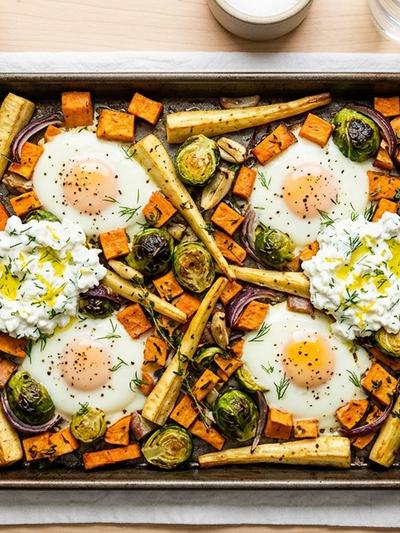
Each serving of this sheet pan egg bake packs 27 grams of protein from a one-two punch of whole eggs and low-fat cottage cheese, all for about 355 calories. Roasted corn, bell peppers, cherry tomatoes, and zucchini provide a base of vitamins A, C, and potassium alongside nearly 4 grams of fiber per portion. Sharp cheddar melted on top adds richness without tipping the fat balance, keeping each serving at a moderate 18 grams. Everything cooks on a single pan — no flipping, no juggling multiple pots.
The real joy here is textural. The corn kernels caramelize in the oven's heat, turning nutty-sweet against the smokiness of paprika-dusted peppers. Cherry tomatoes burst and concentrate their juices into a natural sauce that pools around the baked eggs. And the eggs themselves set into a custardy layer thanks to the cottage cheese folded into the batter — firmer around the edges, tender and just barely creamy in the center, with threads of melted cheddar running through every bite.
For a GLP-1 lunch, this format makes practical sense. The bake is substantial enough to keep you full through an afternoon but not so heavy that it overwhelms a smaller appetite. The vegetables cook at a gentle 400°F, producing soft, digestible textures rather than the tough char of higher-heat roasting. And since everything comes off one pan, cleanup is minimal — a real advantage on busy weekdays when cooking energy is limited.
Why This Works on GLP-1
Preserving lean muscle mass during GLP-1-assisted weight loss requires consistent protein intake at every meal, and this bake delivers 27 grams per serving — roughly a third of the daily target most dietitians recommend for people on Mounjaro or similar medications. The protein comes from two complementary sources: eggs provide all nine essential amino acids in a highly bioavailable form, while cottage cheese adds casein protein, which digests slowly and extends the feeling of satiety between meals. That slow-digestion quality is especially valuable for GLP-1 users whose reduced appetite can make it easy to accidentally skip meals and fall short on protein.
The vegetables here are chosen for gentle digestibility. Roasted zucchini and bell peppers soften significantly in the oven, making them easy on a stomach affected by the delayed gastric emptying that Wegovy and other GLP-1 agonists cause. Corn adds natural sweetness and a mild crunch, contributing fiber without the bloating risk of heavier legumes. The cherry tomatoes offer lycopene and vitamin C, both of which support the immune function that can sometimes dip during rapid weight loss.
The calorie density of this bake — about 355 per generous serving — hits a practical sweet spot. It is enough to fuel an active afternoon without the sluggishness that heavier lunches produce, and the moderate fat content (18 grams, mostly from the eggs and a small amount of olive oil) ensures that fat-soluble vitamins from the vegetables are properly absorbed. If you are in the early weeks of your GLP-1 journey and eating smaller volumes, a half serving still delivers a respectable 13–14 grams of protein.
Ingredients (serves 4)
For the roasted vegetables:
- 1½ cups (240g) corn kernels, thawed if frozen (or cut from 2 ears fresh)
- 2 medium bell peppers (1 red, 1 green), diced into ½-inch pieces
- 1 cup (150g) cherry tomatoes, halved
- 1 medium zucchini (200g), quartered lengthwise and sliced ½ inch thick
- 1 small red onion (70g), diced
- 1 tablespoon (15ml) extra-virgin olive oil
- 1 teaspoon smoked paprika
- ½ teaspoon garlic powder
- ½ teaspoon onion powder
- ½ teaspoon fine sea salt
- ¼ teaspoon black pepper
For the egg bake:
- 8 large eggs
- 1 cup (226g) low-fat (2%) cottage cheese
- ¼ cup (28g) sharp cheddar cheese, shredded
- Pinch of salt
For the chive yogurt:
- ½ cup (120g) plain Greek yogurt (2%)
- 2 tablespoons fresh chives, finely chopped
- 1 teaspoon fresh lemon juice
- Pinch of fine sea salt
Instructions
Prepare and roast the vegetables:
Preheat your oven to 400°F (200°C) and line a half sheet pan (18×13 inches) with parchment paper. Parchment prevents the egg mixture from sticking and makes cleanup nearly effortless.
Spread the corn, diced bell peppers, cherry tomatoes, zucchini, and red onion across the prepared pan. Drizzle with the olive oil, then sprinkle the smoked paprika, garlic powder, onion powder, salt, and pepper over everything. Toss directly on the pan until the vegetables are evenly coated.
Arrange the vegetables in a single layer, giving the cherry tomatoes a gentle press cut-side down so they make good contact with the pan. Roast for 12 minutes, until the corn starts to turn golden at the edges and the peppers soften. The tomatoes should be just beginning to burst.
Build and bake the egg layer:
While the vegetables roast, crack the eggs into a large bowl. Add the cottage cheese and a pinch of salt. Whisk vigorously for about 30 seconds — the cottage cheese curds will break down partially, and that is exactly what you want. Small bits of cottage cheese in the batter create pockets of protein-rich creaminess throughout the finished bake.
Remove the pan from the oven. Use a spatula to nudge the roasted vegetables into a roughly even layer, filling any gaps. Pour the egg-cottage cheese mixture evenly over the vegetables. It should spread into a layer about half an inch thick. Sprinkle the shredded cheddar over the top.
Return the pan to the oven and bake for 12–14 minutes, until the eggs are fully set in the center (they should not jiggle when you gently shake the pan) and the cheddar is melted and lightly golden.
Make the chive yogurt and serve:
While the bake finishes, stir together the Greek yogurt, chives, lemon juice, and salt in a small bowl. The lemon brightens the yogurt and balances the richness of the eggs and cheese.
Let the bake cool on the pan for 3–4 minutes — this rest makes it easier to slice into clean portions. Cut into 4 equal pieces and serve each with a generous spoonful of the chive yogurt on top or alongside.
Nutrition per Serving
| Nutrient | Amount (approx.) |
|---|---|
| Calories | ~355 kcal |
| Protein | ~27g |
| Fat | ~18g |
| Carbohydrates | ~25g |
| Fiber | ~4g |
Estimates calculated using USDA data for large eggs, 2% cottage cheese, frozen corn kernels, and 2% plain Greek yogurt. Actual values may vary slightly with brand and vegetable size.
Practical Notes
Meal prep storage. This bake refrigerates beautifully for up to 4 days. Slice into portions, let them cool completely, and store in airtight containers. Reheat individual portions in a 350°F oven for 8–10 minutes or in a microwave for 90 seconds. The chive yogurt keeps separately in the fridge for up to 5 days — add it fresh after reheating.
Swap the corn for what you have. If corn is out of season or you want to lower the carbohydrate count, substitute diced sweet potato (cut small, about ¼ inch, so it roasts in the same time), edamame, or diced butternut squash. Each swap slightly changes the macros but keeps the overall balance intact. Avoid very watery vegetables like raw spinach, which release too much liquid during baking.
Boost the protein higher. For an even more protein-forward version, swap in egg whites for four of the eight eggs. This adds roughly 4 grams of protein per serving while cutting about 3 grams of fat. The texture will be slightly firmer and less custardy, but still satisfying. You can also increase the cottage cheese to 1¼ cups without changing the texture noticeably.
Cut portions smaller if appetite is low. Early in a GLP-1 regimen, appetite suppression can be strong. Cut the bake into 6 pieces instead of 4 — each smaller portion still provides about 18 grams of protein. Pair it with a few crackers or a small piece of fruit if you can manage it, to round out the meal.
Use a rimmed sheet pan, not a flat cookie sheet. The egg mixture is liquid and will run off a flat pan. A standard half sheet pan with its raised edges contains the batter perfectly. If you only have a quarter sheet pan, halve the recipe and use that — the layer will be slightly thicker, so add 2–3 minutes to the egg-baking time.
Frequently Asked Questions
Can I eat this if I experience nausea on my GLP-1 medication?
Can I make this dairy-free?
How long does this keep, and can I freeze it?
What if I can only eat very small amounts right now?
Why whisk the cottage cheese into the eggs instead of layering it on top?
This article provides general food and nutrition guidance only. It does not constitute medical advice. Always consult your healthcare provider regarding your GLP-1 medication and individual nutritional needs.