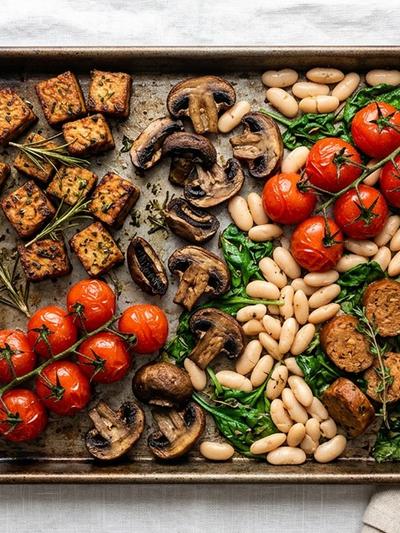
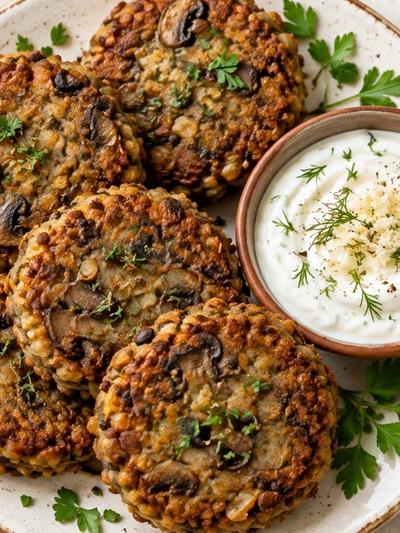
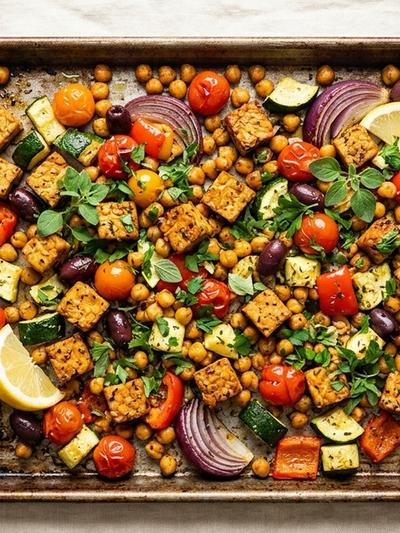
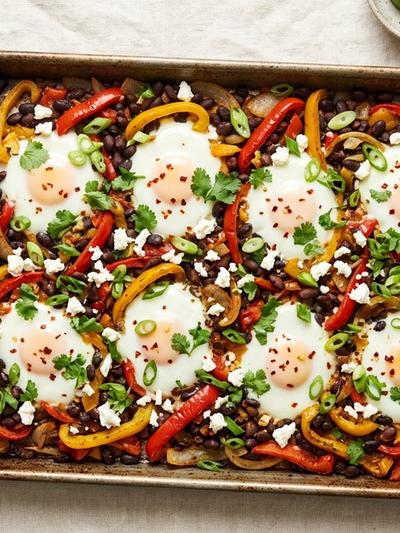
This hearty plant-based breakfast delivers 33 grams of protein and 11 grams of fiber per serving from a single sheet pan. Extra-firm tofu provides the protein backbone while cooked green lentils round out the amino acid profile and add slow-digesting carbohydrates that sustain energy through the morning. The entire meal roasts in 25 minutes with almost no hands-on effort beyond the initial chopping.
Smoked paprika and crushed caraway seeds give this hash a distinctly German character — warm, savory, and slightly earthy. Quartered cremini mushrooms develop deep umami as they caramelize, while red bell pepper brings a touch of natural sweetness that balances the assertive spicing. The whole-grain mustard yogurt ties everything together with a sharp, tangy note that cuts through the richness of the roasted tofu.
Sheet pan breakfasts work particularly well for GLP-1 users because the hands-off cooking time means less fatigue in the kitchen, and the single-pan format naturally creates portioned, complete meals. The combination of plant protein, fiber-rich lentils, and roasted vegetables produces a nutrient-dense plate that satisfies even at smaller serving sizes.
Why This Works on GLP-1
Each serving packs 33 grams of complete plant protein by pairing tofu with green lentils — a combination that covers all essential amino acids without relying on animal sources. Maintaining adequate protein intake is critical during GLP-1-assisted weight loss because medications like Mounjaro and Wegovy suppress appetite so effectively that protein consumption often drops below the threshold needed for muscle preservation. This breakfast front-loads your daily protein, giving your body the building blocks it needs before appetite naturally wanes later in the day.
The 11 grams of fiber per serving come primarily from the lentils, with additional contributions from bell pepper, mushrooms, and potatoes. This fiber is predominantly soluble, which works with rather than against GLP-1 medications by supporting steady blood sugar levels without adding uncomfortable bulk to a slower-moving digestive system. If you find high-fiber meals challenging early in your treatment, start with a slightly smaller portion and work up as your body adjusts.
Smoked paprika contains capsanthin, a carotenoid antioxidant that supports metabolic health, while caraway seeds have a long traditional use in German cuisine specifically because they aid digestion and reduce bloating. The moderate fat content of 17 grams per serving — coming almost entirely from the tofu and a tablespoon of olive oil — keeps the meal satisfying without the heaviness that can trigger nausea on GLP-1 therapy.
Ingredients (serves 2)
For the sheet pan hash:
- 14 oz (400g) extra-firm tofu, pressed and cut into 3/4-inch cubes
- 1 cup (180g) cooked green or brown lentils (or half a 15-oz can, drained and rinsed)
- 4 oz (115g) baby potatoes, quartered
- 1 medium red bell pepper, cut into 1/2-inch pieces
- 5 oz (140g) cremini mushrooms, quartered
- 1/2 medium yellow onion, diced
- 1 tablespoon (15ml) extra-virgin olive oil
- 1 teaspoon smoked paprika
- 1/2 teaspoon caraway seeds, lightly crushed with the flat of a knife
- 1/2 teaspoon garlic powder
- 1/2 teaspoon fine sea salt
- 1/4 teaspoon freshly ground black pepper
For the mustard yogurt:
- 1/4 cup (60g) plain Greek yogurt, nonfat or 2%
- 1 tablespoon whole-grain mustard
- 1 teaspoon fresh lemon juice
- Pinch of salt
To finish:
- 2 tablespoons fresh chives, finely sliced
- Fresh flat-leaf parsley, roughly chopped (optional)
Instructions
Press and prepare the tofu:
Wrap the tofu block in a clean kitchen towel and set it on a cutting board. Place a heavy skillet or a couple of canned goods on top and let it press for 10 minutes while you prepare the vegetables. Pressing removes excess moisture so the tofu develops crisp, golden edges in the oven rather than steaming.
Cut the pressed tofu into roughly 3/4-inch cubes. Smaller pieces create more surface area for browning, but going too small risks crumbly tofu — three-quarter inch is the sweet spot.
Season and arrange the sheet pan:
Preheat your oven to 425°F (220°C) and line a large rimmed sheet pan with parchment paper. Parchment prevents sticking and makes cleanup effortless.
In a large mixing bowl, combine the tofu cubes, quartered potatoes, diced bell pepper, quartered mushrooms, and diced onion. Add the olive oil, smoked paprika, crushed caraway seeds, garlic powder, salt, and black pepper. Toss gently with your hands or a spatula until every piece is evenly coated in the spiced oil.
Spread the seasoned tofu and vegetables in a single layer on the prepared sheet pan. Give everything room — crowding the pan traps steam and prevents the browning that makes this hash satisfying. If your pan feels tight, use two pans on separate oven racks.
Roast and add the lentils:
Roast for 15 minutes on the center rack. The potatoes will be starting to soften and the tofu edges should be turning golden.
Remove the pan, scatter the cooked lentils evenly over the tofu and vegetables, and use a spatula to gently redistribute everything. The lentils only need to warm through and pick up a slight crust on their edges. Return the pan to the oven for 10 more minutes.
Make the mustard yogurt and serve:
While the pan finishes roasting, stir together the Greek yogurt, whole-grain mustard, lemon juice, and a pinch of salt in a small bowl. Taste and adjust the mustard level — some brands are milder than others.
Divide the hash between two plates or shallow bowls. Spoon the mustard yogurt over the top in generous dollops and scatter the sliced chives and parsley across each serving. Serve immediately while the tofu edges are still crisp.
Nutrition per Serving
| Nutrient | Amount (approx.) |
|---|---|
| Calories | ~425 kcal |
| Protein | ~33g |
| Fat | ~17g |
| Carbohydrates | ~44g |
| Fiber | ~11g |
Estimates based on extra-firm tofu (400g total), cooked green lentils, and nonfat Greek yogurt. Exact values vary by brand and pressing efficiency.
Practical Notes
Store and reheat for weekday mornings. This hash keeps well in airtight containers in the refrigerator for up to four days. Reheat portions on a sheet pan at 400°F (200°C) for 8 to 10 minutes to restore crispness, or microwave for 2 minutes if you prioritize speed over texture. Pack the mustard yogurt separately and add it fresh after reheating.
Double the batch for true meal prep. Use two sheet pans side by side and roast the full double recipe. Four servings of a high-protein breakfast ready to grab from the fridge dramatically reduces the temptation to skip morning protein — something especially important when Zepbound or similar GLP-1 medications are suppressing your appetite before you have had a chance to eat.
Swap the lentils if needed. Canned lentils work perfectly here and save the step of cooking them from dry. If you cannot find green or brown lentils, canned chickpeas (drained and rinsed) are a solid substitute — they will get slightly crispier on the sheet pan and add a nuttier flavor. Avoid red lentils as they break down into mush during roasting.
Press the tofu properly for the best texture. If you own a tofu press, use it — the results are more consistent than the towel-and-skillet method. Super-firm or high-protein tofu varieties skip the pressing step entirely and tend to have even higher protein per gram, which is worth seeking out if your grocery store stocks them.
Start small if your appetite is limited. Plate one-third of the total recipe instead of half if you are in an early dose-adjustment phase. The remaining portion refrigerates well, so nothing goes to waste. Even a smaller serving of this hash still delivers over 20 grams of protein, which meaningfully contributes to your daily target.
Frequently Asked Questions
Can I eat this breakfast if I experience nausea on my GLP-1 medication?
What can I use instead of tofu to keep this plant-based?
How long does this keep in the fridge and can I freeze it?
I can only eat very small portions right now — is this still worth making?
Why crush the caraway seeds instead of using them whole?
This article provides general food and nutrition guidance only. It does not constitute medical advice. Always consult your healthcare provider regarding your GLP-1 medication and individual nutritional needs.