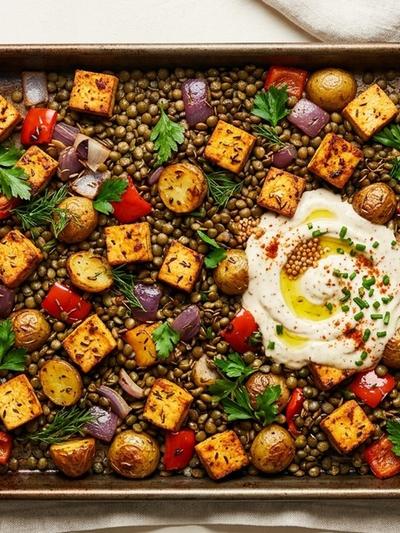
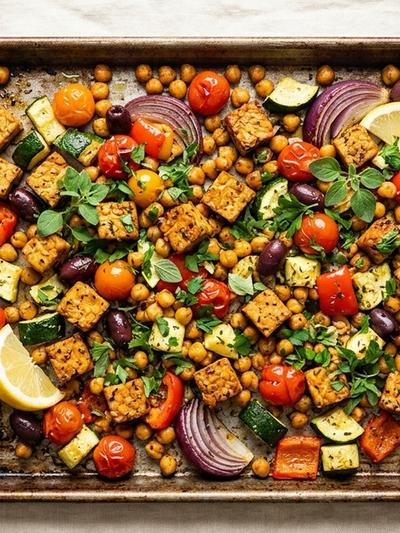
This plant-based sheet pan breakfast delivers 30 grams of protein and 9 grams of fiber per serving by combining two complementary protein sources — tempeh and white beans — with roasted mushrooms and vine tomatoes. The combination provides all essential amino acids along with iron, B vitamins, and manganese, nutrients that can become harder to maintain when appetite is reduced. Everything roasts together on a single pan, which means minimal morning effort and easy cleanup.
The flavor profile draws directly from a traditional British cooked breakfast. Cremini mushrooms caramelize in the oven's dry heat, developing deep umami richness. Tempeh, sliced thin and brushed with a light Worcestershire-style glaze, crisps at the edges while staying tender inside. Cherry tomatoes burst and create a natural sauce that pools around the cannellini beans, tying the whole tray together with bright acidity.
For GLP-1 users, this breakfast is designed around satisfaction in smaller portions. The dense protein from tempeh and beans creates lasting satiety, while the roasted vegetables add volume without excess calories. Sheet pan cooking requires no added fat beyond a light brush of oil, keeping the dish lean at just 355 calories per serving.
Why This Works on GLP-1
Each serving provides 30 grams of complete protein from the tempeh and white bean combination, which is critical for preserving lean muscle mass during GLP-1-assisted weight loss. Research consistently shows that people on medications like Mounjaro or Wegovy lose both fat and muscle, and adequate protein intake — particularly at breakfast — helps shift that ratio toward fat loss. The 30-gram threshold at each meal is often cited by dietitians as the minimum needed to stimulate meaningful muscle protein synthesis, and this dish hits it without any animal products.
The 9 grams of fiber per serving come primarily from the cannellini beans and tempeh's fermented soybean base. This is a moderate, gut-friendly amount — enough to support digestive regularity without the bloating that high-fiber meals can cause when gastric emptying is already slowed by GLP-1 medications. The fermented nature of tempeh also provides beneficial probiotics that support the gut microbiome.
Tempeh is one of the most nutrient-dense plant proteins available, providing manganese, phosphorus, and riboflavin alongside its protein content. The iron from both tempeh and white beans is enhanced by the vitamin C in the roasted tomatoes, which can increase non-heme iron absorption by up to three times — an important consideration for anyone eating less food overall on Zepbound or Ozempic.
Ingredients (serves 4)
For the tempeh:
- 14 oz (400g) tempeh, sliced into 1/2-inch (1cm) strips
- 1 tablespoon (15ml) reduced-sodium soy sauce
- 1 teaspoon (5ml) Worcestershire sauce (use vegan version if preferred)
- 1 teaspoon (5ml) olive oil
- 1/2 teaspoon smoked paprika
- 1/4 teaspoon freshly ground black pepper
For the roasted vegetables and beans:
- 10 oz (300g) cremini mushrooms, halved
- 12 oz (340g) cherry tomatoes on the vine
- 1 can (15 oz / 400g) cannellini beans, drained and rinsed
- 4 cups (120g) fresh baby spinach
- 2 teaspoons (10ml) olive oil
- 1/2 teaspoon garlic powder
- 1/2 teaspoon dried thyme
- 1/4 teaspoon fine sea salt
- Freshly ground black pepper to taste
For serving:
- 1 tablespoon fresh flat-leaf parsley, roughly chopped
- 1 teaspoon flaky sea salt (optional)
- Hot sauce or brown sauce (optional)
Instructions
Prepare the tempeh and preheat the oven:
Preheat your oven to 425°F (220°C) and line a large rimmed sheet pan with parchment paper. This high temperature is key — it creates caramelization on the tempeh and mushrooms rather than steaming them.
In a shallow bowl, whisk together the soy sauce, Worcestershire sauce, olive oil, smoked paprika, and black pepper. Lay the tempeh strips in the mixture and turn to coat both sides. Let them sit while you prepare the vegetables — even five minutes of marinating makes a noticeable difference in flavor penetration.
Arrange the sheet pan:
Toss the halved mushrooms with 1 teaspoon of olive oil, the garlic powder, dried thyme, salt, and pepper in a bowl. Spread them cut-side down on one section of the prepared sheet pan. Placing them cut-side down maximizes the surface area touching the hot pan, which drives better browning.
Place the cherry tomatoes (still on the vine if possible) on another section of the pan. Drizzle with the remaining teaspoon of olive oil.
Arrange the marinated tempeh strips in a single layer on the remaining space, leaving small gaps between pieces so air can circulate and crisp the edges.
Roast in stages:
Roast for 15 minutes. The mushrooms should be golden on the bottom and the tempeh should be firming up and darkening at the edges.
Remove the pan and carefully flip the tempeh strips. Scatter the drained cannellini beans around the pan in any open spaces. Return to the oven for another 10 minutes. The beans will warm through and develop a slight crust on their surface, which adds texture.
Remove the pan from the oven. Scatter the baby spinach over the hot beans and vegetables — the residual heat will wilt the spinach in about 2 minutes without overcooking it. Use tongs to gently toss the spinach with the beans.
Serve:
- Divide the roasted tempeh, mushrooms, tomatoes, bean-and-spinach mixture evenly among four plates. Sprinkle with fresh parsley and flaky sea salt if using. Serve immediately while the tempeh is still crisp.
Nutrition per Serving
| Nutrient | Amount (approx.) |
|---|---|
| Calories | ~355 kcal |
| Protein | ~30g |
| Fat | ~14g |
| Carbohydrates | ~29g |
| Fiber | ~9g |
Estimates based on standard USDA values for tempeh, canned cannellini beans, cremini mushrooms, cherry tomatoes, and baby spinach with measured oil quantities.
Practical Notes
Meal prep storage. This breakfast stores well in airtight containers for up to 4 days in the refrigerator. Reheat in a 375°F (190°C) oven for 8–10 minutes to restore crispness to the tempeh — microwaving works but softens the texture. Pack the components snugly together so the tempeh can absorb some of the tomato juices during storage, which actually improves the flavor.
Steam the tempeh first if it tastes bitter. Some brands of tempeh have a slightly bitter edge that not everyone enjoys. If yours does, steam the whole block for 10 minutes before slicing and marinating. This opens the pores of the tempeh to absorb more marinade while mellowing any bitterness. Most European-brand tempeh is already quite mild.
Boost protein if needed. If you are targeting more than 30 grams of protein per serving, add two scrambled or poached eggs alongside the finished tray — this lifts each serving to approximately 43 grams of protein and adds only 140 calories. For GLP-1 users in a maintenance phase eating slightly larger portions, this is an easy upgrade.
Adapt for very small appetites. During the first weeks on GLP-1 medication, even a quarter of this tray might feel like too much. Plate a half portion and save the rest — the recipe holds up beautifully as leftovers. Prioritize eating the tempeh and beans first for their protein content, then the vegetables.
Swap mushrooms for other vegetables. If you dislike mushrooms or want variety, diced courgette (zucchini) or sliced bell peppers work well with the same timing. Asparagus spears can also be added in the second roasting stage — they need only 10 minutes at this temperature. Keep the tomatoes regardless, as their juices create the natural sauce that ties the dish together.
Frequently Asked Questions
Is this breakfast easy to digest on GLP-1 medication?
Can I use tofu instead of tempeh?
How should I reheat leftovers for the best texture?
What if I can only eat a very small portion in the morning?
Can I prepare this the night before and bake it in the morning?
This article provides general food and nutrition guidance only. It does not constitute medical advice. Always consult your healthcare provider regarding your GLP-1 medication and individual nutritional needs.