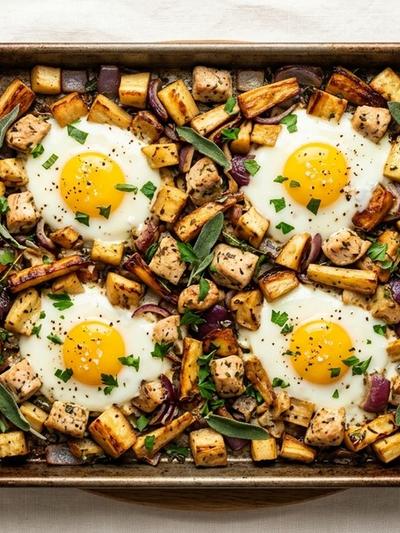
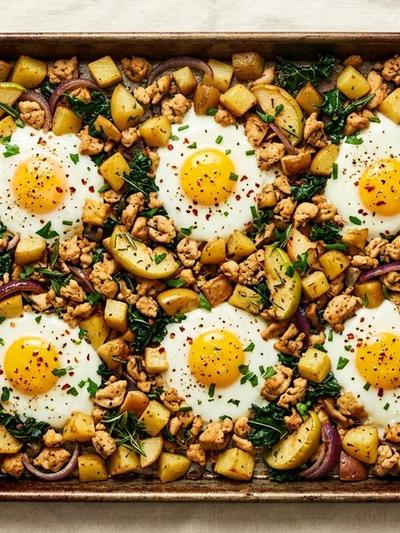
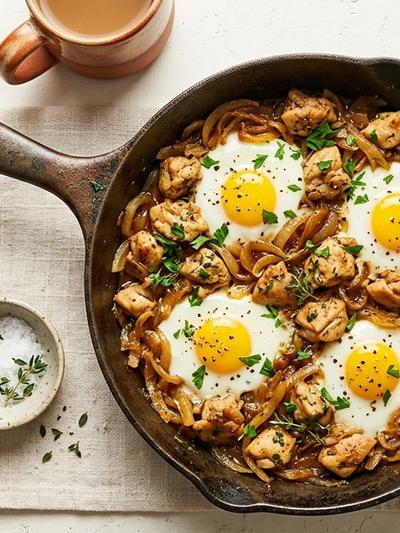
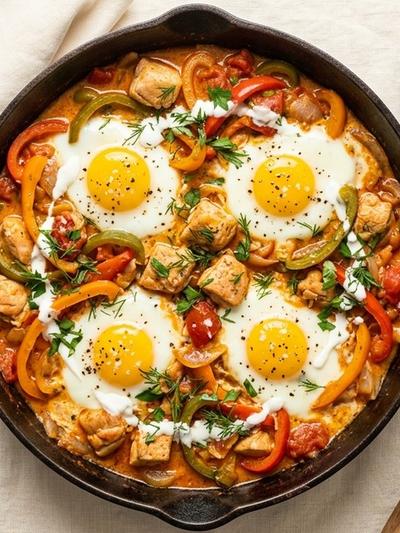
With 38 grams of protein and only 360 calories per serving, this French-inspired sheet pan breakfast proves that eating well on GLP-1 medication doesn't require sacrificing flavor or elegance. Lean chicken breast cubes deliver the protein backbone, while baked eggs add richness and a complete amino acid profile. Roasted asparagus contributes folate and vitamins A and K alongside baby potatoes that provide sustained morning energy. Everything cooks together on a single pan, which means no pots to wash and no complicated timing to manage before your first cup of coffee.
The flavor here borrows from the French tradition of pairing eggs with spring vegetables and restrained herbs. Shallots caramelize alongside the chicken during the first roast, developing a subtle sweetness that complements the earthy asparagus and bright cherry tomatoes added in the second stage. A quick drizzle of Dijon mustard whisked with lemon juice finishes the pan with a clean, herby sharpness that feels unmistakably morning-appropriate without any heaviness.
For GLP-1 users, this sheet pan format delivers perfectly portioned protein with minimal effort. The combination of chicken and egg provides complete nutrition in a volume that satisfies without triggering the overfull sensation that many users experience with richer, heavier breakfasts. Staging the cook in two rounds ensures every component hits the table at the right texture rather than becoming a pan of uniformly soft mush.
Why This Works on GLP-1
Each serving provides 38 grams of protein, primarily from chicken breast and whole eggs, two of the most bioavailable protein sources in the kitchen. This matters significantly during GLP-1-assisted weight loss, where adequate protein intake helps preserve lean muscle mass that might otherwise be lost alongside fat. Research consistently shows that people taking medications like Wegovy benefit from targeting at least 25 to 30 grams of protein per meal to protect muscle tissue and maintain metabolic rate. This breakfast exceeds that threshold comfortably while keeping the total calorie count at just 360.
The asparagus and cherry tomatoes deliver gentle fiber and micronutrients without the bloating risk of raw cruciferous vegetables or dense bean dishes, which can be uncomfortable for GLP-1 users dealing with slowed gastric emptying. Baby potatoes offer slow-release carbohydrates that sustain energy through the morning without causing blood sugar spikes, and their mild flavor makes them easy on a sensitive stomach.
The balanced macronutrient profile, with moderate carbohydrates, adequate fat, and high protein, supports the metabolic improvements that Mounjaro and similar GLP-1 receptor agonists promote. By keeping this breakfast under 400 calories, you leave room for the remaining meals and snacks that round out a well-structured daily intake without any sense of restriction.
Ingredients (serves 4)
For the sheet pan:
- 1 lb (454g) boneless, skinless chicken breast, cut into 1-inch (2.5cm) cubes
- 12 oz (340g) baby potatoes, halved
- 1 bunch asparagus, about 1 lb (400g), woody ends trimmed, cut into 2-inch (5cm) pieces
- 1 cup (150g) cherry tomatoes, halved
- 3 medium shallots (120g), quartered
- 4 large eggs
- 1 tablespoon (15ml) extra-virgin olive oil
- 1 teaspoon dried herbes de Provence
- ½ teaspoon fine sea salt
- ¼ teaspoon freshly ground black pepper
For the Dijon-lemon finish:
- 2 teaspoons Dijon mustard
- 1 tablespoon fresh lemon juice
- 2 tablespoons fresh chives, finely snipped
- Flaky sea salt, to taste
Instructions
Prepare and season the pan:
Preheat your oven to 425°F (220°C) and line a large rimmed sheet pan with parchment paper. Parchment prevents sticking and saves you from scrubbing a pan before work, which is the difference between a recipe you make once and one you make every week.
In a large bowl, toss the chicken cubes, halved baby potatoes, and quartered shallots with the olive oil, herbes de Provence, salt, and pepper until evenly coated. The herbes de Provence blend, with its thyme, rosemary, oregano, and savory, seasons everything in a single step.
Roast in two stages:
Spread the seasoned chicken, potatoes, and shallots in a single layer across the prepared sheet pan. Leave small gaps between the pieces so they roast rather than steam. Slide the pan into the oven for 15 minutes. The potatoes and chicken get this head start because they take longer to cook through and develop golden edges than the quicker-cooking asparagus.
Remove the pan from the oven. Scatter the asparagus pieces and halved cherry tomatoes across the pan, tucking them between the chicken and potatoes. Gently stir once to redistribute everything in an even layer.
Using a spatula, push the ingredients aside to create four small wells. Crack one egg into each well. Return the pan to the oven and bake for 8 to 10 minutes, until the egg whites are fully set but the yolks remain slightly soft and runny. For fully set yolks, add 2 more minutes.
Finish and serve:
While the eggs finish baking, whisk the Dijon mustard and lemon juice together in a small bowl. This bright, tangy drizzle replaces butter or hollandaise, providing flavor without the calorie load.
Remove the pan from the oven and immediately drizzle the mustard-lemon mixture across the top in a thin zigzag. Scatter the snipped chives over the entire surface and finish with a small pinch of flaky sea salt directly on each egg yolk. Serve straight from the pan, giving each person one egg and a quarter of the chicken and vegetables.
Nutrition per Serving
| Nutrient | Amount (approx.) |
|---|---|
| Calories | ~360 kcal |
| Protein | ~38g |
| Fat | ~11g |
| Carbohydrates | ~27g |
| Fiber | ~5g |
Estimates based on USDA values for raw boneless skinless chicken breast, large eggs, and fresh vegetables roasted with 1 tablespoon total olive oil.
Practical Notes
This works on a weekday morning. Active prep takes about 15 minutes, mostly dicing chicken and trimming asparagus. Once the pan goes into the oven, you have 25 minutes of completely hands-off time to shower, dress, pack a bag, or drink coffee. The only interruption is opening the oven once to add the asparagus and eggs.
Store and reheat thoughtfully. Refrigerate leftovers in airtight containers for up to 3 days. Reheat at 300°F (150°C) for 8 to 10 minutes. The eggs will cook through fully when reheated, so if you plan to meal-prep, pull the pan when the whites are barely set. That residual softness compensates for the second round of heat.
Swap asparagus by season. When asparagus is out of season or overpriced, green beans or trimmed broccolini cook in the same timeframe and pair naturally with the herbes de Provence profile. Avoid broccoli florets here as they tend to char before the potatoes finish roasting.
Start small if you're in early GLP-1 weeks. Many people in their first month on medication find half a serving is a full breakfast. Wrap the remaining portion for a mid-morning snack when appetite returns. Splitting one serving across two smaller meals still delivers 19 grams of protein each time, which keeps muscle-protective benefits intact.
Scale up for the full week. Run two sheet pans simultaneously to produce eight servings. Skip the eggs when batch-prepping and add a freshly baked egg each morning for better texture. The roasted chicken, potatoes, and vegetables reheat beautifully, and a fresh egg takes only 3 minutes in a hot skillet if you prefer to finish on the stovetop.
Frequently Asked Questions
Can I eat this breakfast if I feel nauseous in the morning on GLP-1?
Can I use chicken thighs instead of breast?
How long do leftovers last, and can I freeze this?
What if a full serving is too much food for me right now?
Can I prep the vegetables the night before?
This article provides general food and nutrition guidance only. It does not constitute medical advice. Always consult your healthcare provider regarding your GLP-1 medication and individual nutritional needs.