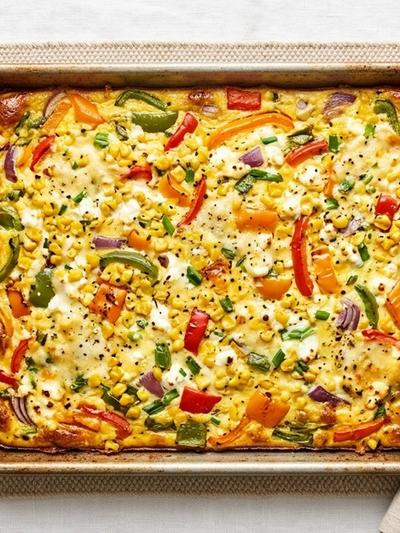
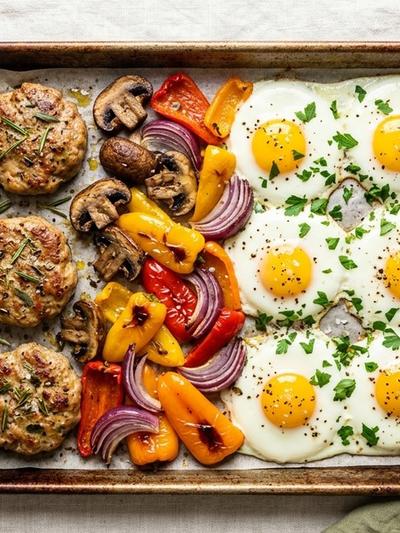
This sheet-pan farmhouse dinner packs 32 grams of protein per serving by combining whole eggs, egg whites, and fiber-rich cannellini beans with roasted vegetables. Each portion delivers a complete amino acid profile alongside nearly a third of your daily iron needs from the spinach and beans alone. The cottage cheese stirred into the egg mixture adds casein protein, which digests slowly and extends the feeling of fullness well past the meal. At just 390 calories, this is a nutrient-dense dinner that respects your reduced appetite without leaving you short on essential macros.
Smoked paprika and fresh thyme give the roasted mushrooms and bell pepper a deep, savory warmth that pairs naturally with the creamy eggs and mild cannellini beans. The mushrooms caramelize on the hot pan, concentrating their umami flavor into each bite. A modest sprinkle of sharp cheddar melts across the top during the final minutes, adding richness without tipping the fat balance.
This recipe works particularly well for GLP-1 users because everything cooks on a single pan with minimal hands-on effort. The vegetables roast first to develop flavor, then the egg mixture goes on top for the final stretch, so nothing sits around getting cold while you finish other components. Leftovers reheat gently in a low oven, making this a practical option for anyone whose appetite arrives unpredictably.
Why This Works on GLP-1
Muscle preservation is one of the most important nutritional priorities during GLP-1-assisted weight loss, and this dinner addresses it directly with 32 grams of protein per serving. The combination of whole eggs, egg whites, cottage cheese, and white beans provides a sustained amino acid release that supports muscle protein synthesis over several hours. For people taking Mounjaro or similar GLP-1 medications, hitting adequate protein at dinner matters because the appetite-suppressing effects can make it easy to fall short across the day. Two servings of this dish would cover roughly half the daily protein target most dietitians recommend during active weight loss.
The cannellini beans contribute 7 grams of fiber per serving — gentle, soluble fiber that supports digestion without the bloating that raw cruciferous vegetables can cause. This matters because GLP-1 medications slow gastric emptying, and overly fibrous meals can compound that effect uncomfortably. The spinach wilts down to almost nothing on the hot pan, adding nutrients without adding bulk.
The fat content sits at 18 grams per serving, most of it coming from the egg yolks themselves. Egg yolks are one of the best dietary sources of choline, a nutrient that supports liver function during periods of fat metabolism. Keeping added fats minimal — just two teaspoons of olive oil for the entire pan — lets you benefit from the eggs' natural fats without overloading a digestive system that is already working on a slower timeline.
Ingredients (serves 4)
For the roasted vegetables:
- 10 oz (283g) cremini mushrooms, quartered
- 1 large red bell pepper, diced (about 150g)
- 1 medium yellow onion, diced (about 150g)
- 3 cloves garlic, minced
- 2 tsp olive oil
- 1 tsp smoked paprika
- 1/2 tsp dried thyme
- 1/4 tsp salt
- 1/4 tsp black pepper
For the egg bake:
- 8 large eggs
- 4 large egg whites
- 1/2 cup (113g) low-fat cottage cheese
- 1 can (15 oz / 425g) cannellini beans, drained and rinsed
- 4 cups (120g) baby spinach
- 1/2 tsp garlic powder
- 1/4 tsp salt
For topping:
- 2 oz (57g) sharp cheddar cheese, shredded
- 2 scallions, thinly sliced
- Hot sauce for serving (optional)
Instructions
Preheat and prepare the vegetables:
- Position an oven rack in the center and preheat to 400°F (200°C). Line a large rimmed sheet pan (18×13 inches) with parchment paper for easy cleanup.
- Spread the quartered mushrooms, diced bell pepper, and diced onion across the sheet pan. Drizzle with the olive oil and scatter the minced garlic over the top. Sprinkle with smoked paprika, dried thyme, salt, and black pepper. Toss everything together with your hands or a spatula until the vegetables are evenly coated.
- Roast for 15 minutes, stirring once halfway through. The mushrooms should be golden at the edges and the onion should be softened. The initial roast drives off moisture from the mushrooms so they caramelize rather than steam, which concentrates their flavor.
Build and bake the egg layer:
- While the vegetables roast, whisk together the whole eggs, egg whites, cottage cheese, garlic powder, and the remaining 1/4 teaspoon of salt in a large bowl. The cottage cheese will leave small curds in the mixture — that is fine and adds pockets of extra protein throughout the finished bake.
- Remove the sheet pan from the oven. Scatter the drained cannellini beans and baby spinach over the hot vegetables. The residual heat will begin wilting the spinach immediately. Use a spatula to gently toss everything together and spread it into an even layer.
- Pour the egg mixture evenly over the vegetables and beans. Tilt the pan slightly if needed to distribute the liquid into the corners. Sprinkle the shredded cheddar evenly across the top.
- Return the pan to the oven and bake for 12 to 15 minutes, until the eggs are fully set in the center and the cheese is melted and lightly golden. The eggs should not jiggle when you shake the pan gently. If the center still looks wet after 15 minutes, give it another 2 to 3 minutes.
Serve:
- Let the pan rest on a wire rack for 3 to 4 minutes before cutting. This brief rest makes slicing much cleaner. Cut into 4 equal portions, scatter sliced scallions over the top, and serve with hot sauce on the side if desired.
Nutrition per Serving
| Nutrient | Amount (approx.) |
|---|---|
| Calories | ~390 kcal |
| Protein | ~32g |
| Fat | ~18g |
| Carbohydrates | ~27g |
| Fiber | ~7g |
Estimates based on USDA data for large eggs, low-fat cottage cheese, canned cannellini beans, and sharp cheddar cheese. Actual values may vary by brand.
Practical Notes
Cut it like a brownie pan. Score the bake into 4 equal rectangles while it is still on the sheet pan. A bench scraper or long spatula works better than a knife here — it keeps the portions clean without dragging the toppings. If you are eating smaller GLP-1 portions, cut into 6 pieces instead and save the extras.
Storage and reheating. Wrap individual portions in foil or store in airtight containers in the refrigerator for up to 4 days. Reheat in a 300°F (150°C) oven for 8 to 10 minutes — the low temperature keeps the eggs from turning rubbery. Microwaving works in a pinch at 50% power for 90 seconds, but the texture will not be as good.
Swap the beans if you prefer. Great northern beans or navy beans work identically in this recipe. Black beans change the visual contrast but taste fine. If you want to skip beans entirely, increase the cottage cheese to 1 cup and add an extra egg white per serving to maintain the protein count.
Use mushroom variety for deeper flavor. A mix of cremini, shiitake, and oyster mushrooms gives the roasted base more complexity than cremini alone. Whichever variety you choose, make sure to quarter them into similar-sized pieces so they cook evenly and do not release excess water.
Pair it with something light. A simple side salad dressed with lemon juice and a pinch of salt is enough alongside this dish. Avoid heavy bread or starchy sides — the beans and eggs already provide sustained energy, and GLP-1 users on Wegovy or similar medications often find that adding starch to a protein-rich meal increases post-meal heaviness.
Frequently Asked Questions
Can I eat this if I just started my GLP-1 medication and have very little appetite?
Can I make this dairy-free?
How well does this freeze?
What if I find the portion too filling to finish?
Why do the vegetables roast before the eggs go on?
This article provides general food and nutrition guidance only. It does not constitute medical advice. Always consult your healthcare provider regarding your GLP-1 medication and individual nutritional needs.