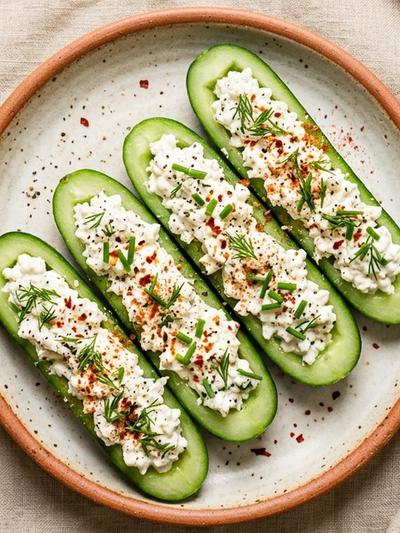
Texture tolerance is one of the most underappreciated aspects of GLP-1 eating. When medication increases GI sensitivity, certain textures become difficult: very crunchy foods can feel abrasive, chewy foods require too much effort, and anything dry can be hard to swallow comfortably. Creamy, soft foods — yogurt, cottage cheese, ricotta, soft-cooked eggs — tend to be well-tolerated across the widest range of appetite and sensitivity states.
Ricotta stuffed celery combines two things that seem to work in opposition — the firm crunch of celery and the soft creaminess of ricotta — in a way that actually resolves the tension. The celery provides just enough structural crunch to make the snack interesting and satisfying, while the ricotta filling does most of the work texturally. Each bite is more creamy than crunchy. On days when even this small amount of crunch feels like too much, you can eat just the ricotta filling off a spoon and still have your snack.
The five-minute preparation, zero cooking, and 5-day refrigerator life make this one of the most practical snacks in the GLP-1 repertoire.
Why This Works on GLP-1
Whole-milk ricotta is not as protein-dense as Greek yogurt or cottage cheese per 100g, but at about 200g per snack serving, it delivers approximately 12g of protein while being exceptionally gentle in texture and flavor. Ricotta has no tanginess, no graininess, and no overwhelming flavor — it is a clean, mild, slightly sweet protein source that is easy to eat even on the most sensitive days.
Celery contributes fiber, water, and potassium with essentially no calories (approximately 6 calories per stalk). It functions as a vessel here more than a nutritional hero — but the fiber it provides contributes to the satiety signal alongside the protein in the ricotta.
The seasoning — lemon zest, fresh herbs, black pepper — elevates the ricotta from bland to genuinely appealing. For GLP-1 users — including those on Mounjaro or Ozempic — who need food to be interesting enough to motivate eating, this seasoning step is the difference between a snack you'll reach for and one you won't.
Ingredients (serves 2)
- 6 celery stalks, trimmed and cut to 10cm (4 inch) lengths
- 200g (¾ cup) whole-milk ricotta
- 1 tablespoon fresh chives, finely chopped
- 1 tablespoon fresh flat-leaf parsley, finely chopped
- Zest of ½ lemon
- ¼ teaspoon fine salt
- ¼ teaspoon black pepper
Optional toppings (choose one):
- 4–6 pieces sun-dried tomato, thinly sliced
- Everything bagel seasoning, sprinkled on top
- Thin slices of smoked salmon laid over the ricotta
- Finely diced roasted red pepper
Instructions
Prepare the celery. Wash and dry the celery stalks. Trim the ends and cut into manageable lengths (10–12cm / 4–5 inches works well). The natural concave channel in the stalk holds the filling.
Season the ricotta. In a bowl, combine ricotta with chives, parsley, lemon zest, salt, and pepper. Mix well. Taste and adjust — it should be noticeably seasoned, not bland. Bland ricotta is the most common reason this snack feels underwhelming.
Fill the celery. Using a small spoon or a piping bag (even a zip bag with the corner snipped works), fill each celery channel generously with the seasoned ricotta. Don't be stingy — a well-filled piece is more satisfying and easier to eat than a sparsely filled one.
Add optional toppings. Place a piece of sun-dried tomato or a pinch of bagel seasoning on each filled stalk if using.
Serve immediately or refrigerate in a sealed container for up to 4 hours. The ricotta will stay firm and the celery will stay crisp.
Nutrition per Serving (3 stuffed stalks)
- Calories: ~130
- Protein: ~12g
- Fat: ~8g
- Carbs: ~5g
- Fiber: ~2g
Practical Notes
Season the ricotta properly. This cannot be overstated. Unseasoned ricotta tastes like nothing. Well-seasoned ricotta — with real herbs, lemon zest, and sufficient salt — tastes like a proper food. The herbs don't need to be precise; use whatever fresh herbs you have.
Pre-fill for the week. Fill a batch of 12 stalks on Sunday, place in a container lined with paper towel, cover tightly, and refrigerate. They hold well for 3 days before the celery begins to soften slightly. This means Monday through Wednesday snacking requires zero effort.
Smoked salmon variation. Layer a thin piece of smoked salmon over the ricotta filling for an elevated version that adds an extra 4–5g of protein per stalk. The combination of ricotta and smoked salmon is a classic for good reason.
When celery is too crunchy. On very sensitive days, skip the celery entirely and serve the seasoned ricotta in a small bowl with a teaspoon. Eat as a dip or just straight as a protein hit. The nutrition is unchanged; the texture is entirely soft.
Cottage cheese substitution. Full-fat cottage cheese blended smooth can replace ricotta exactly. The flavor is slightly tangier but the protein is higher (~16g per serving). Blend thoroughly to remove all curd texture before filling the celery.
Frequently Asked Questions
How far in advance can I prep these, and how do I store them?
The celery crunch is too much for me on sensitive days — what should I do?
Can I substitute cottage cheese for the ricotta to boost protein?
What are the best optional toppings for GLP-1 users specifically?
Is this snack appropriate during dose escalation when GI side effects are most noticeable?
This article provides general food and nutrition guidance only. It does not constitute medical advice. Always consult your healthcare provider regarding your GLP-1 medication and individual nutritional needs.