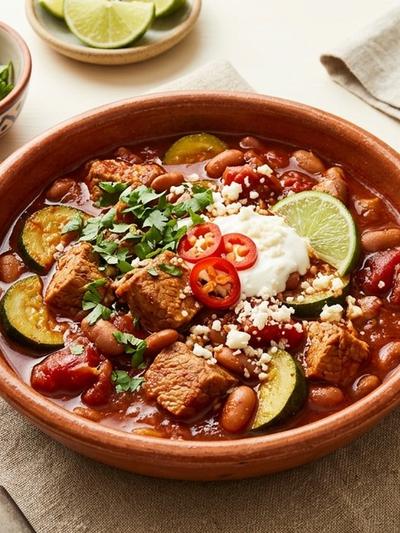
This one-pot chipotle pork stew packs 33 grams of protein and 8 grams of fiber into a 380-calorie bowl. Lean pork tenderloin provides the protein backbone while pinto beans and butternut squash contribute slow-digesting complex carbohydrates and prebiotic fiber. Each serving also delivers a solid dose of vitamin A from the squash, iron from the beans, and anti-inflammatory compounds from the cumin and oregano. Toasted pepitas on top add crunch and an extra 3 grams of plant protein.
The flavor here comes from chipotle peppers in adobo — smoky, warm, and gently spicy rather than scorching. They meld with fire-roasted tomatoes and cumin into a rich, brick-red broth that coats every piece of pork and squash. The butternut squash softens just enough to thicken the stew naturally, creating a velvety texture without any cream or roux, while the pinto beans hold their shape and add earthy body to each spoonful.
For GLP-1 users, this is a dinner designed around how your appetite actually works now. The combination of lean protein, fiber-rich beans, and slow-digesting squash keeps you satisfied without the heaviness that a traditional Mexican stew might bring. One-pot cooking means minimal cleanup on evenings when energy is low, and the stew reheats beautifully the next day — often tasting even better as the chipotle flavor deepens overnight.
Why This Works on GLP-1
Each bowl of this stew delivers 33 grams of complete protein from pork tenderloin, one of the leanest cuts available at just 3 grams of fat per 4-ounce serving. Maintaining adequate protein intake is critical during GLP-1-assisted weight loss — medications like Mounjaro and Wegovy reduce appetite significantly, and without deliberate protein targeting, the body can lose muscle mass alongside fat. This stew makes it easy to hit your protein goals in a single sitting without feeling overly full, because the protein is distributed between the pork and the beans rather than coming from one massive piece of meat.
The 8 grams of fiber per serving come primarily from pinto beans and butternut squash — both gentle on digestion when cooked until soft. Unlike raw cruciferous vegetables or very high-fiber supplements that can worsen the bloating some GLP-1 users experience, these ingredients break down smoothly during the simmer. The chipotle heat is moderate and can be dialed down easily, keeping this stew in the comfort zone for sensitive stomachs.
Butternut squash brings over 100% of your daily vitamin A needs per serving, supporting immune function and skin health — areas that can be affected during rapid weight change. The pinto beans provide meaningful amounts of folate and magnesium, while the pepitas contribute zinc and healthy monounsaturated fats. This is a nutritionally dense meal, not just a protein delivery vehicle.
Ingredients (serves 4)
For the stew:
- 1 lb (454g) pork tenderloin, trimmed and cut into 3/4-inch (2cm) cubes
- 3 cups (420g) butternut squash, peeled and cut into 3/4-inch (2cm) cubes
- 1 can (15 oz / 425g) pinto beans, drained and rinsed
- 1 can (14.5 oz / 411g) fire-roasted diced tomatoes, undrained
- 1 medium yellow onion, diced
- 3 cloves garlic, minced
- 2 chipotle peppers in adobo, finely chopped, plus 1 tablespoon adobo sauce
- 1 cup (240ml) low-sodium chicken broth
- 1 teaspoon ground cumin
- 1 teaspoon dried Mexican oregano (or regular oregano)
- 1 tablespoon olive oil
- 1/2 teaspoon salt, plus more to taste
- 1/4 teaspoon black pepper
For serving:
- 4 tablespoons (32g) raw pepitas (pumpkin seeds), lightly toasted
- 1/4 cup fresh cilantro leaves, roughly chopped
- 1 lime, cut into 4 wedges
Instructions
Brown the pork:
- Pat the pork cubes dry with a paper towel — surface moisture prevents browning and causes steaming instead. Season with salt and pepper. Heat the olive oil in a large, heavy-bottomed pot or Dutch oven over medium-high heat until the oil shimmers.
- Add the pork in a single layer, working in two batches if needed to avoid crowding. Sear without stirring for 2 minutes until a golden crust forms on the bottom, then turn and cook 1 minute more. The pork does not need to be cooked through — it will finish in the broth. Transfer to a plate and set aside.
Build the base:
- Reduce heat to medium. Add the diced onion to the same pot, scraping up any browned bits from the pork with a wooden spoon — those caramelized fond bits carry most of the stew's depth. Cook for 3 minutes until the onion softens and turns translucent.
- Add the garlic, chopped chipotle peppers, adobo sauce, cumin, and oregano. Stir constantly for 30 seconds until the spices bloom and the kitchen smells smoky and warm. Blooming the spices in fat activates their volatile oils and distributes flavor more evenly through the stew.
Simmer the stew:
- Pour in the fire-roasted tomatoes with their juices and the chicken broth. Stir to combine, then add the butternut squash cubes. Bring to a boil, then reduce heat to medium-low. Cover and simmer for 15 minutes, stirring once halfway through, until the squash is fork-tender but not falling apart.
- Add the drained pinto beans and the seared pork along with any juices from the plate. Stir gently to combine. Simmer uncovered for 5 minutes to let the pork finish cooking through and the broth reduce slightly. The squash will break down at the edges and naturally thicken the liquid — this is what you want.
- Taste and adjust salt. Remove from heat.
Finish and serve:
- Ladle the stew into four bowls. Top each with 1 tablespoon toasted pepitas, a scattering of cilantro, and a lime wedge. Squeeze the lime over the stew just before eating — the acid brightens the smoky, earthy flavors and aids iron absorption from the beans.
Nutrition per Serving
| Nutrient | Amount (approx.) |
|---|---|
| Calories | ~380 kcal |
| Protein | ~33g |
| Fat | ~11g |
| Carbohydrates | ~36g |
| Fiber | ~8g |
Estimates based on 1 lb pork tenderloin, 1 can each of pinto beans and fire-roasted tomatoes, 3 cups butternut squash, and 1 tablespoon pepitas per serving. Actual values may vary by brand and exact portion size.
Practical Notes
This stew is a meal prep star. Divide into four airtight containers and refrigerate for up to 4 days. The chipotle flavor intensifies overnight as the spices continue to permeate the pork and squash. Reheat gently on the stovetop over medium-low, adding a splash of broth if the stew has thickened too much. Add the pepitas, cilantro, and lime fresh at serving time to keep their textures alive.
Adjust the heat to your tolerance. Two chipotle peppers plus adobo sauce gives a moderate warmth — noticeable but not punishing. For a milder stew, use just one chipotle and 1 teaspoon of adobo sauce. For more heat, add a third pepper. GLP-1 medications can increase sensitivity to spicy food in some people, so start conservative and add heat at the table with extra adobo sauce on the side.
Swap the squash seasonally. Sweet potato works as a direct substitute with a nearly identical cook time and comparable nutrition. In summer, try zucchini added during the last 8 minutes of cooking instead of 15 to prevent it from turning mushy. Acorn squash or kabocha also work well, though kabocha may need an extra 3 to 4 minutes to soften.
Toast the pepitas in the same pot. Before you start cooking, dry-toast the pepitas over medium heat in the empty pot for 2 to 3 minutes, shaking frequently, until they puff and start to pop. Transfer them to a small bowl immediately — they burn quickly. Then proceed with the olive oil and pork. This saves a pan and gives the pepitas a nuttier, more complex flavor.
Freeze individual portions for emergency meals. This stew freezes well for up to 3 months. Use freezer-safe containers and leave half an inch of headspace. Thaw overnight in the refrigerator, then reheat on the stovetop. Frozen portions are invaluable on days when GLP-1-related nausea makes cooking unappealing but your body still needs protein.
Frequently Asked Questions
I find my appetite is very small on GLP-1 medication — is a full bowl too much?
Can I use a different cut of pork or substitute another protein?
How should I store and reheat leftovers?
What if I cannot find chipotle peppers in adobo?
Can I make this stew in a slow cooker instead?
This article provides general food and nutrition guidance only. It does not constitute medical advice. Always consult your healthcare provider regarding your GLP-1 medication and individual nutritional needs.