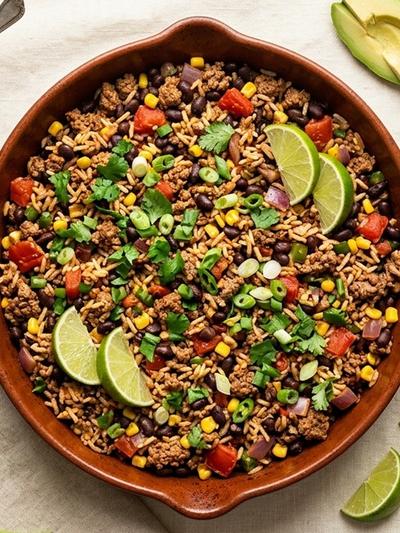
Each serving of this beef fideo delivers roughly 35 grams of protein and 8 grams of fiber from a combination of 93% lean ground beef, black beans, and toasted vermicelli. The charred Roma tomatoes add a layer of smoky depth without extra fat, and the entire pot comes together in about 30 minutes. It is a complete, balanced lunch with no side dishes required.
Fideo is one of Mexico's most beloved one-pot comfort foods — thin vermicelli noodles toasted golden in the pan, then simmered in a rich tomato broth until they absorb every bit of flavor. The beef adds savory weight, while cumin, oregano, and a single jalapeño round out the seasoning with warmth rather than raw heat. Black beans bring a creamy contrast to the noodles and a quiet earthiness that ties everything together.
GLP-1 medications slow gastric emptying, so a meal that is moderate in volume but nutritionally dense works well for midday energy. The combination of lean protein and soluble fiber from the beans promotes steady satiety without the heavy, overstuffed feeling that can trigger nausea. And because everything cooks in one skillet, there is almost no cleanup — a genuine advantage on days when appetite and energy are both running low.
Why This Works on GLP-1
Lean ground beef provides the bulk of the protein here at roughly 23 grams per four-ounce portion, with the black beans and vermicelli contributing another 12 grams combined. That 35-gram total supports muscle preservation, which is one of the most important nutritional goals during GLP-1-assisted weight loss. Medications like Wegovy and Mounjaro can reduce overall food intake significantly, so every meal needs to pull its weight in the protein department. Spreading protein across lunch and dinner — rather than loading it all into one evening meal — also supports better absorption and sustained energy.
Black beans contribute most of the fiber at roughly 6 grams per serving, primarily soluble fiber that moves gently through the digestive system without creating excess gas. The toasted vermicelli adds a small additional fiber contribution and, because it partially breaks down during simmering, creates a softer texture that is easier on a GLP-1-affected stomach than al dente pasta.
At around 420 calories per generous bowl, this fideo sits in the practical range for a GLP-1 lunch — enough to fuel the afternoon without tipping into excess. The fat content stays moderate at 12 grams because the 93% lean beef renders very little grease, and the only added cooking fat is two teaspoons of oil for toasting the noodles and building the base.
Ingredients (serves 4)
For the fideo:
- 1 lb (454g) 93% lean ground beef
- 4 oz (113g) fideo or thin vermicelli, broken into 2-inch (5cm) pieces
- 1 can (15 oz / 425g) black beans, drained and rinsed
- 4 Roma tomatoes, halved lengthwise
- 1 medium yellow onion, diced
- 3 cloves garlic, minced
- 1 jalapeño, seeded and minced
- 2 tsp (10ml) avocado oil or neutral oil
- 1½ tsp ground cumin
- 1 tsp dried Mexican oregano
- ½ tsp smoked paprika
- ½ tsp fine salt, plus more to taste
- ¼ tsp black pepper
- 2½ cups (600ml) low-sodium chicken broth
For serving:
- 1 oz (28g) cotija cheese, crumbled
- ¼ cup (4g) fresh cilantro, roughly chopped
- 1 lime, cut into wedges
Instructions
Char the tomatoes:
- Heat a large skillet or deep sauté pan (12-inch / 30cm works best) over medium-high heat. Place the Roma tomato halves cut-side down in the dry pan and let them cook undisturbed for 3 to 4 minutes until the cut surfaces develop dark, blistered spots. This charring builds a smoky sweetness that replaces the need for added sugar or excess oil in the broth. Transfer the tomatoes to a cutting board, let them cool for a minute, then chop them roughly. Set aside.
Brown the beef and build the base:
In the same skillet, add the ground beef over medium-high heat. Break it into small crumbles with a wooden spoon and cook for 5 to 6 minutes until browned through and no pink remains. The 93% lean beef will release very little fat — if there is more than a tablespoon of liquid in the pan, tilt the skillet and spoon off the excess.
Push the beef to one side of the skillet. Add the oil to the cleared space, then scatter in the broken fideo. Stir the noodles constantly in the oil for 1 to 2 minutes until they turn a deep golden brown. Toasting the vermicelli before simmering gives it a nutty flavor and helps it hold its structure in the broth rather than turning to mush. Mix the beef back into the noodles.
Add the diced onion, garlic, and jalapeño to the skillet. Cook for 2 minutes, stirring frequently, until the onion starts to soften and the garlic becomes fragrant.
Stir in the cumin, oregano, smoked paprika, salt, and pepper. Cook for 30 seconds until the spices bloom and coat everything evenly — this brief toasting in the fat intensifies their flavor.
Simmer the fideo:
Pour in the chicken broth and add the chopped charred tomatoes along with any juices from the cutting board. Stir well, scraping up any browned bits from the bottom of the skillet. Bring the liquid to a boil.
Add the drained black beans. Reduce the heat to medium-low, cover the skillet, and simmer for 10 to 12 minutes, stirring once at the halfway mark. The fideo is done when the noodles are tender and have absorbed most of the broth, leaving a saucy — not soupy — consistency. If the noodles are still firm and the liquid has been absorbed, add a splash of broth or water (2 to 3 tablespoons) and cook for another minute.
Taste and adjust the salt. Remove from heat and let the skillet rest uncovered for 2 minutes — the fideo will continue to thicken as it sits.
Serve:
- Divide the fideo among four bowls. Top each with crumbled cotija, chopped cilantro, and a squeeze of lime. Serve immediately.
Nutrition per Serving
| Nutrient | Amount (approx.) |
|---|---|
| Calories | ~420 kcal |
| Protein | ~35g |
| Fat | ~12g |
| Carbohydrates | ~41g |
| Fiber | ~8g |
Estimates based on USDA data for 93% lean ground beef, canned black beans (drained), dry vermicelli, Roma tomatoes, and cotija cheese. Actual values may vary with specific brands and draining.
Practical Notes
Meal prep and storage. This fideo stores well in airtight containers for up to 4 days in the refrigerator. The noodles will absorb remaining liquid overnight and thicken considerably — add a tablespoon or two of broth or water when reheating to restore the saucy consistency. Microwave in 90-second intervals, stirring between each.
Fideo substitution. If you cannot find fideo (the coiled or cut thin vermicelli sold in the Mexican aisle), break regular angel hair or thin spaghetti into short pieces. The toasting step works identically. Avoid thicker pasta like linguine or penne — it will not absorb the broth properly and the texture will be wrong.
Adjusting heat for sensitive stomachs. If you are in the early weeks of GLP-1 treatment and experiencing nausea, remove the jalapeño entirely and reduce the smoked paprika to a pinch. The charred tomatoes and cumin provide plenty of flavor on their own. You can always pass hot sauce at the table for anyone who wants more heat.
Smaller portions for reduced appetite. This recipe divides easily into 6 smaller servings of about 280 calories and 23 grams of protein each. On days when a full bowl feels like too much, serve a half portion alongside a few bites of fresh avocado — the healthy fat will help you feel satisfied without adding volume.
Protein boost without extra bulk. If you want to push the protein higher without increasing the portion size, stir 2 tablespoons of plain Greek yogurt into each bowl just before serving. It adds roughly 4 grams of protein, melts into the warm broth, and creates a subtle creaminess similar to crema.
Frequently Asked Questions
I get nauseous after eating on GLP-1 medication — will this dish be too heavy?
Can I make this with ground turkey or chicken instead of beef?
How long does leftover fideo last, and does it freeze well?
What if my appetite is very small and I can only eat a few bites at a time?
Why do you toast the fideo before adding liquid?
This article provides general food and nutrition guidance only. It does not constitute medical advice. Always consult your healthcare provider regarding your GLP-1 medication and individual nutritional needs.