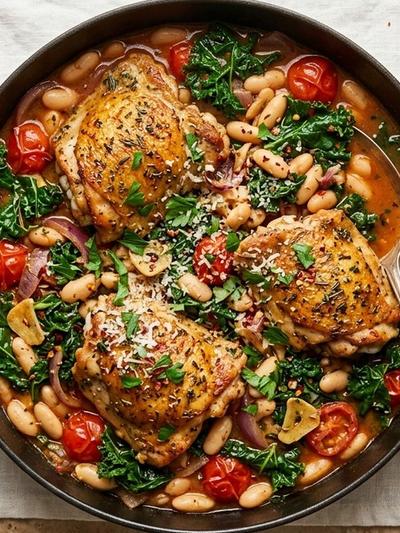
Each serving of this French-inspired one-pot dinner delivers 38 grams of protein from a combination of boneless skinless chicken thighs and cannellini beans. The dish also provides meaningful iron from the white beans and B vitamins from the mushrooms, two nutrients that can run low during active weight loss. With only 372 calories per bowl, the nutrition is concentrated into a deeply satisfying portion that feels far more substantial than its calorie count suggests.
Chasseur, meaning "hunter's style" in French, is one of the foundational sauces of home cooking across rural France. The combination of mushrooms, shallots, tomatoes, and tarragon creates layers of earthy, bright, and herbaceous flavor that develop in the pan as everything simmers together. The white beans absorb the sauce as they warm through, turning creamy and rich without any added cream or butter, while the mushrooms contribute a meaty depth that makes each bite surprisingly complex.
For people on GLP-1 medications, this style of one-pot braise is ideal. The liquid-rich format is gentle on a slower-moving digestive system, and the soft textures of braised chicken and beans require less mechanical work from the stomach. Everything cooks in a single skillet or Dutch oven, which means less time standing in the kitchen and less cleanup afterward.
Why This Works on GLP-1
The 38 grams of protein per serving come from two complementary sources. The chicken thighs provide 34 grams of complete animal protein containing all essential amino acids, while the cannellini beans contribute another 5 grams of plant protein along with slow-digesting complex carbohydrates. This dual-source approach supports muscle preservation during weight loss, a priority for anyone on Ozempic, Wegovy, or similar GLP-1 receptor agonists, since rapid weight loss without adequate protein can lead to disproportionate muscle loss.
The 6 grams of fiber per serving is a moderate, gut-friendly amount. The beans and tomatoes provide soluble fiber that supports steady blood sugar, while the mushrooms add prebiotic compounds. This is enough fiber to promote satiety without the bloating or discomfort that very high-fiber meals can cause when gastric emptying is already slowed by medication.
The fat content stays at 11 grams per serving, almost entirely from the naturally occurring fat in skinless chicken thighs and a single tablespoon of olive oil used for browning. No cream, no butter, no cheese. The tomato-based sauce keeps everything moist and flavorful without caloric density, and the white wine adds acidity and depth with negligible calories once the alcohol cooks off.
Ingredients (serves 4)
For the chicken:
- 1 1/2 lbs (680g) boneless, skinless chicken thighs, trimmed of visible fat
- 1/2 teaspoon fine sea salt
- 1/4 teaspoon freshly ground black pepper
- 1 tablespoon (15ml) extra-virgin olive oil
For the chasseur sauce:
- 8 oz (225g) cremini mushrooms, quartered
- 2 medium shallots, finely diced (about 1/3 cup / 50g)
- 3 cloves garlic, minced
- 2 tablespoons (30g) tomato paste
- 1/4 cup (60ml) dry white wine (or substitute chicken broth)
- 1 can (14 oz / 400g) crushed tomatoes
- 1/2 cup (120ml) low-sodium chicken broth
- 1 can (15 oz / 425g) cannellini beans, drained and rinsed
- 1 tablespoon fresh tarragon leaves, chopped (or 1 teaspoon dried)
- 1 teaspoon fresh thyme leaves (or 1/2 teaspoon dried)
- 1 bay leaf
To finish:
- 2 tablespoons fresh flat-leaf parsley, chopped
- 1 teaspoon red wine vinegar
Instructions
Brown the chicken:
- Pat the chicken thighs dry with paper towels and season both sides with salt and pepper. Dry surfaces brown properly, which creates the fond (the caramelized bits stuck to the pan) that gives the sauce its depth.
- Heat the olive oil in a large skillet or Dutch oven over medium-high heat until it shimmers. Add the chicken thighs in a single layer without crowding, working in two batches if necessary. Cook undisturbed for 4 minutes per side until golden brown. Transfer to a plate and set aside. The chicken will finish cooking in the sauce.
Build the sauce:
- Reduce the heat to medium. Add the quartered mushrooms to the same pan and cook for 4 to 5 minutes, stirring occasionally, until they release their moisture and begin to brown at the edges. The mushrooms will pick up flavor from the chicken fond as they cook.
- Add the diced shallots and cook for 2 minutes until softened and translucent. Stir in the garlic and tomato paste and cook for 1 minute, stirring constantly, until the paste darkens slightly and becomes fragrant. This brief toasting removes the raw, tinny taste from the tomato paste.
- Pour in the white wine and scrape the bottom of the pan with a wooden spoon to lift any remaining browned bits. Let the wine simmer for 1 minute until mostly evaporated.
- Add the crushed tomatoes, chicken broth, tarragon, thyme, and bay leaf. Stir to combine and bring to a gentle simmer.
Simmer and finish:
- Nestle the browned chicken thighs back into the sauce, spooning some of it over the top. Add any juices that collected on the plate. Reduce heat to medium-low, cover, and simmer for 12 minutes.
- Add the drained cannellini beans around the chicken, pressing them gently into the sauce so they absorb flavor. Cover and cook for another 5 minutes until the beans are warmed through and the chicken reaches an internal temperature of 165°F (74°C).
- Remove the bay leaf. Stir in the red wine vinegar, which brightens the entire dish and balances the richness of the tomatoes. Taste and adjust salt if needed.
- Serve in shallow bowls, spooning the sauce and beans around the chicken. Scatter the chopped parsley over the top.
Nutrition per Serving
| Nutrient | Amount (approx.) |
|---|---|
| Calories | ~372 kcal |
| Protein | ~38g |
| Fat | ~11g |
| Carbohydrates | ~24g |
| Fiber | ~6g |
Estimates based on USDA data for boneless skinless chicken thighs, canned cannellini beans, cremini mushrooms, canned crushed tomatoes, and measured olive oil. Actual values may vary with specific brands and trimming.
Practical Notes
Meal prep and storage. This chasseur reheats exceptionally well because braised dishes improve as the flavors meld. Portion into individual airtight containers and refrigerate for up to 4 days. Reheat gently in a covered saucepan over medium-low heat, adding a splash of broth if the sauce has thickened. The beans will become even creamier on the second day, which most people prefer.
Chicken breast substitution. You can use boneless skinless chicken breast instead of thighs. Cut each breast horizontally into two thinner pieces so they cook evenly in the sauce. Reduce the simmering time in step 7 to 8 minutes to prevent the breast from drying out. The calorie count drops slightly, and the fat drops to about 6 grams per serving.
Skip the wine if needed. If you prefer to cook without alcohol or simply do not have wine on hand, replace the 1/4 cup of white wine with an equal amount of chicken broth plus 1 teaspoon of white wine vinegar added at the end. The acidity serves the same brightening purpose in the finished sauce.
Serving size for smaller appetites. If your appetite is particularly reduced, this recipe divides easily into 5 or 6 smaller portions. At 5 servings, each bowl still delivers over 30 grams of protein and about 298 calories, which is enough to constitute a proper meal without overwhelming a smaller stomach. Pair a half-portion with a small piece of crusty bread if you want something to soak up the sauce.
Freezing for later. This stew freezes well for up to 3 months in airtight containers. Let it cool completely before freezing. Thaw overnight in the refrigerator and reheat on the stovetop. The texture holds up better than many other chicken preparations because the braising liquid protects the meat from drying out during reheating.
Frequently Asked Questions
Can I eat this during the early weeks of GLP-1 medication when my appetite is very low?
What can I use instead of cannellini beans?
How should I reheat this if I meal-prepped it?
I can only eat very small amounts right now. Is it still worth making this?
Can I make this in a Dutch oven versus a skillet?
This article provides general food and nutrition guidance only. It does not constitute medical advice. Always consult your healthcare provider regarding your GLP-1 medication and individual nutritional needs.