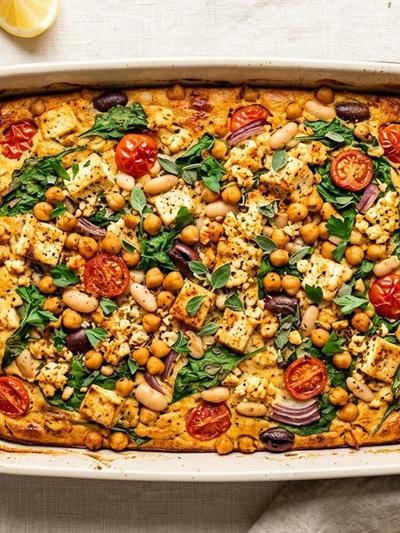
Each serving of this Tunisian-inspired breakfast bake delivers 28 grams of plant protein from two complementary sources: crumbled tempeh and soft-cooked red lentils, bound together with a chickpea flour batter. With 9 grams of fiber and under 400 calories per square, it ranks among the most nutrient-dense plant-based breakfasts you can pull from your refrigerator on a busy morning. The warm spice profile — caraway, cumin, and coriander — along with smoky harissa paste brings genuine North African flavor to your weekday routine.
The caraway-cumin-coriander trinity is the backbone of Tunisian cooking, and these three spices transform what could be a bland protein bake into something genuinely worth looking forward to at 7 AM. Harissa adds a slow-building warmth without overwhelming heat, while the red lentils cook down into a soft, almost custard-like interior that contrasts with the slightly chewy, golden-edged tempeh crumbles. Spinach folded throughout adds color and a subtle earthiness that rounds out the tomato-spice base.
For GLP-1 users, the portion-controlled square format solves a real weekday problem: when your appetite is unpredictable, having a pre-portioned protein source ready to reheat in two minutes eliminates the morning guesswork. The bake is dense enough to be satisfying in a small portion, gentle on digestion thanks to the hull-free red lentils, and holds up well in the refrigerator for four full days.
Why This Works on GLP-1
The 28 grams of protein per serving comes from two complementary plant sources that together cover a broad amino acid profile. Tempeh, a fermented whole soybean product, provides all essential amino acids needed for muscle preservation — a critical concern during GLP-1-assisted weight loss, since medications like Wegovy can cause lean mass loss alongside fat loss when protein intake falls short. Red lentils contribute additional protein along with slow-digesting complex carbohydrates, creating a more sustained energy release than toast or cereal. Together, these two sources deliver the amino acid diversity that single-source plant meals often lack.
The 9 grams of fiber per serving comes primarily from the red lentils, chickpea flour, and spinach. This level supports healthy digestion without the bloating that very high-fiber meals can trigger when gastric emptying is already slowed by GLP-1 medications. Red lentils are among the gentlest legumes on the digestive system because their outer hulls are removed during processing, making them significantly easier to break down than whole brown or green varieties.
Tempeh's fermentation process produces beneficial compounds that may support gut health — particularly relevant for GLP-1 users adjusting to changes in their digestive patterns. The bake is also naturally low in added fats, with only two teaspoons of olive oil for the entire four-serving batch. Total fat lands at 11 grams per serving, most of which comes from the tempeh's inherent unsaturated fats rather than added cooking oils.
Ingredients (serves 4)
For the red lentil base:
- 3/4 cup (150g) dried red lentils, rinsed
- 1 3/4 cups (420ml) water
- 1/2 teaspoon ground turmeric
For the seasoned tempeh:
- 10 oz (280g) tempeh, crumbled into small pieces
- 1 teaspoon ground cumin
- 1 teaspoon ground coriander
- 1/2 teaspoon caraway seeds, lightly crushed
- 1/2 teaspoon smoked paprika
- 1/4 teaspoon ground cinnamon
- 2 teaspoons olive oil
For the bake:
- 1 medium yellow onion, finely diced
- 1 large red bell pepper, diced
- 3 cloves garlic, minced
- 2 tablespoons (30g) tomato paste
- 1–2 tablespoons harissa paste (adjust to heat preference)
- 1 cup (150g) frozen spinach, thawed and squeezed dry
- 1/2 cup (about 50g) chickpea flour (besan)
- 1/3 cup (80ml) water
- 3/4 teaspoon fine sea salt
- Freshly ground black pepper
Instructions
Cook the red lentils:
- Rinse the red lentils under cold water until the water runs clear. Combine them with 1 3/4 cups water and the turmeric in a small saucepan. Bring to a boil, then reduce heat and simmer for 12–15 minutes, stirring occasionally, until the lentils are completely soft and most of the water is absorbed. The mixture should be thick and porridge-like — not soupy. This starchy consistency is what helps bind the bake together. Remove from heat and set aside.
Season and brown the tempeh:
While the lentils cook, crumble the tempeh into small, roughly even pieces about the size of cooked ground meat. Toss with the cumin, coriander, crushed caraway seeds, smoked paprika, and cinnamon until evenly coated.
Heat the olive oil in a large nonstick skillet over medium-high heat. Add the seasoned tempeh and cook for 5–7 minutes, stirring occasionally, until the edges are golden and the spices are fragrant. Browning the tempeh before baking develops a nutty depth that steaming alone cannot achieve. Transfer to a large mixing bowl.
Build the bake:
Preheat the oven to 375°F (190°C). Line an 8×8-inch (20×20 cm) baking dish with parchment paper, leaving overhang on two sides for easy removal later.
In the same skillet over medium heat (no need to wash it), add the onion and bell pepper. Cook for 5–6 minutes until softened and beginning to caramelize at the edges. Add the garlic and cook for 30 seconds until fragrant. Stir in the tomato paste and harissa paste, cooking for another minute until the paste darkens slightly and becomes aromatic. Scrape the sautéed vegetables into the bowl with the tempeh.
Fold in the cooked lentils and the squeezed-dry spinach. In a small bowl, whisk the chickpea flour with 1/3 cup water until smooth — this acts as the binding agent that holds the squares together once baked. Pour into the tempeh-lentil mixture and fold everything until evenly combined. Season with salt and pepper.
Transfer the mixture to the prepared baking dish, pressing it down firmly and evenly with a spatula or the back of a damp spoon. The surface should be level and compact — air pockets will cause the squares to crumble.
Bake and portion:
Bake for 28–32 minutes until the top is firm to the touch and the edges are pulling slightly away from the sides of the pan. The center should feel set when pressed gently, not soft or wobbly.
Let the bake cool in the dish for at least 15 minutes — it firms up considerably as it rests. Lift out using the parchment overhang and cut into 4 equal squares. Serve warm, or let cool completely before storing for the week.
Nutrition per Serving
| Nutrient | Amount (approx.) |
|---|---|
| Calories | ~385 kcal |
| Protein | ~28g |
| Fat | ~11g |
| Carbohydrates | ~47g |
| Fiber | ~9g |
Calculated using USDA values for red lentils, soy tempeh, chickpea flour, and fresh vegetables. Actual values will vary with specific brands and preparation.
Practical Notes
Meal prep storage. Wrap each square individually in parchment paper, then store in an airtight container in the refrigerator for up to 4 days. To freeze, wrap squares tightly in plastic wrap followed by foil — they keep for up to 2 months. Thaw overnight in the refrigerator before reheating.
Reheating for the best texture. Microwave a single square for 60–90 seconds until heated through. For a crisper exterior, reheat in a dry skillet over medium heat for 2–3 minutes per side, or in a toaster oven at 350°F (175°C) for 8–10 minutes. The skillet method gives the best results, producing a lightly crisp crust on the outside while keeping the center soft.
If you cannot find caraway seeds. Caraway is the signature spice in Tunisian cooking, but if it is unavailable, substitute with an equal amount of fennel seeds or add an extra half teaspoon of cumin. The flavor will not be authentically Tunisian, but the overall spice balance will still work well with the harissa and coriander.
Harissa heat level matters. GLP-1 medications can increase sensitivity to spicy foods because of slowed gastric emptying, which means the capsaicin stays in your stomach longer. Start with 1 tablespoon of harissa and taste the raw mixture before baking — you can always stir in more, but you cannot remove heat once it is baked in. Mild or rose harissa is a good starting point.
Top it off for extra protein. A poached or fried egg on your reheated square adds roughly 6 grams of protein, bringing the total to 34 grams per breakfast. A spoonful of plain Greek yogurt or a squeeze of fresh lemon juice adds brightness without significant extra calories. Both pair naturally with the Tunisian spice profile.
Frequently Asked Questions
Will this bake stay filling on GLP-1 medication when my appetite is very low?
Can I substitute the tempeh with another plant protein?
How well does this bake freeze and reheat after freezing?
What if I am in the early weeks of GLP-1 treatment and can only eat very small amounts?
Can I make this in a muffin tin instead of a baking dish?
This article provides general food and nutrition guidance only. It does not constitute medical advice. Always consult your healthcare provider regarding your GLP-1 medication and individual nutritional needs.