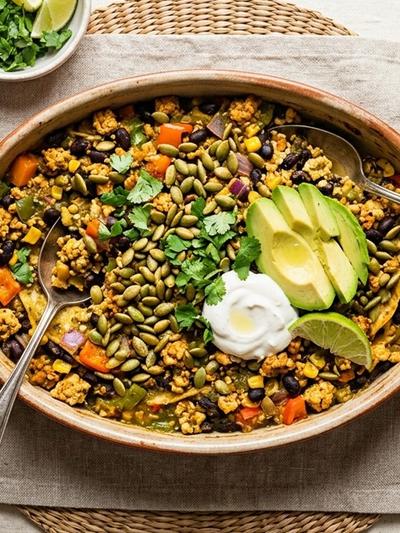
Each bowl of this slow cooker Mexican tempeh chorizo delivers 28 grams of complete plant protein and 11 grams of fiber from just a handful of whole ingredients. Pinto beans and tempeh form a complementary amino acid profile, while sweet potato adds slow-releasing complex carbohydrates and beta-carotene. The entire recipe yields four generous breakfast portions at only 345 calories each, making it one of the most nutrient-dense plant-based breakfasts you can prepare with almost no active effort.
The flavor here is deeply savory and genuinely morning-appropriate. Ancho chili powder and smoked paprika give the crumbled tempeh a rich, smoky warmth that mimics traditional Mexican chorizo without the excess fat. Fire-roasted tomatoes break down overnight into a thick, slightly sweet sauce that coats the beans and sweet potato, while a touch of cinnamon and Mexican oregano adds the aromatic depth that makes you forget this is entirely plant-based.
Set this up before bed and wake up to a complete breakfast that requires nothing more than a spoon and a squeeze of lime. The slow cooker keeps everything at a gentle temperature that breaks down the tempeh into tender, flavorful crumbles without the mushiness that stovetop cooking can cause. For GLP-1 users who struggle with morning appetite, the compact serving size packs maximum nutrition into a bowl you can eat slowly over thirty minutes as your hunger catches up.
Why This Works on GLP-1
With 28 grams of protein per serving, this breakfast provides roughly half the daily protein target that most Mounjaro and Wegovy users need to preserve lean muscle mass during weight loss. Tempeh is fermented soy, which means it delivers all nine essential amino acids in a form that is easier to digest than unfermented soy products. The pinto beans contribute additional lysine and fiber, creating a protein profile comparable to an egg-and-meat breakfast at a fraction of the saturated fat. Starting the day with this level of protein also helps stabilize blood sugar through the morning, reducing the spike-and-crash pattern that can worsen nausea.
The 11 grams of fiber per bowl come from a mix of soluble and insoluble sources: pinto beans provide most of the soluble fiber that feeds beneficial gut bacteria, while sweet potato and tempeh contribute gentle insoluble fiber that supports regularity without the bloating that raw cruciferous vegetables or high-bran cereals can trigger. This matters because GLP-1 medications slow gastric emptying, and overly fibrous meals can amplify feelings of fullness to the point of discomfort.
The slow cooking process itself is a nutritional advantage. Long, low-heat braising breaks down the phytic acid in beans and tempeh, improving mineral absorption of iron, zinc, and magnesium — three nutrients that GLP-1 users commonly fall short on when eating reduced volumes. The ancho chili powder also provides capsaicin in a mild, stomach-friendly dose that supports thermogenesis without irritating a sensitive digestive system.
Ingredients (serves 4)
For the tempeh chorizo base:
- 1 lb (454g) tempeh, crumbled into small pieces
- 1 can (15 oz / 425g) pinto beans, drained and rinsed
- 1 medium sweet potato (about 6 oz / 170g), peeled and diced into ½-inch cubes
- 1 can (14.5 oz / 411g) fire-roasted diced tomatoes, undrained
- 1 medium yellow onion, diced
- 1 poblano pepper, seeded and diced
- 2 cloves garlic, minced
- 1 cup (240ml) low-sodium vegetable broth
For the chorizo seasoning:
- 2 tsp ancho chili powder
- 1 tsp ground cumin
- 1 tsp smoked paprika
- ½ tsp dried Mexican oregano
- ¼ tsp ground cinnamon
- ½ tsp fine sea salt
- ¼ tsp freshly ground black pepper
- 1 tbsp apple cider vinegar
For serving:
- 1 medium lime, cut into wedges
- 2 tbsp fresh cilantro, roughly chopped
- Hot sauce of choice (optional)
Instructions
Prepare the tempeh and vegetables:
Crumble the tempeh by hand into irregular pieces roughly the size of ground meat — some smaller crumbles and some pea-sized chunks give the best texture after slow cooking. The uneven sizes mean some pieces absorb more sauce while others hold a bit of bite, which keeps the bowl interesting.
Combine the ancho chili powder, cumin, smoked paprika, oregano, cinnamon, salt, and pepper in a small bowl. Toss the crumbled tempeh with the spice mixture and the apple cider vinegar in a medium bowl, using your hands or a spoon to coat every piece evenly. The vinegar helps the spices adhere and begins to tenderize the tempeh before it even hits the slow cooker.
Dice the sweet potato into ½-inch cubes — keeping them small ensures they cook through completely at the low temperature without turning to mash. Dice the onion and poblano pepper to roughly the same size for even cooking.
Layer the slow cooker:
Spread the diced onion and garlic across the bottom of the slow cooker insert — placing the aromatics on the bottom ensures they sit in the most liquid and release their flavor into the sauce as it develops overnight.
Add the seasoned tempeh in an even layer over the onions. Scatter the diced sweet potato and poblano pepper on top.
Pour the entire can of fire-roasted diced tomatoes (with their juices) over the top, then add the drained pinto beans. Pour the vegetable broth along the inside edge of the slow cooker so it reaches the bottom without washing the spices off the tempeh.
Give the top layer one gentle stir to distribute the liquid, but avoid mixing everything down to the bottom — keeping loose layers allows the tempeh to steam-braise rather than boil.
Cook and serve:
Cover and cook on low for 6 to 8 hours, or on high for 3 to 4 hours. The dish is done when the sweet potato is completely tender and the liquid has reduced to a thick, saucy consistency. If you set this up at 10 PM on low, it will be ready between 4 and 6 AM — perfect for an early breakfast with no morning effort.
Stir gently from the bottom up, taste, and adjust salt if needed. The flavors will have deepened considerably overnight, so you may find it needs nothing more.
Divide among four bowls. Squeeze a lime wedge over each serving, scatter with fresh cilantro, and add hot sauce if you like heat. Serve immediately, or portion into containers for the week.
Nutrition per Serving
| Nutrient | Amount (approx.) |
|---|---|
| Calories | ~345 kcal |
| Protein | ~28g |
| Fat | ~13g |
| Carbohydrates | ~33g |
| Fiber | ~11g |
Estimates based on 1 lb tempeh, 1 can pinto beans, 1 medium sweet potato, and fire-roasted diced tomatoes divided into 4 servings. Optional toppings like avocado are not included.
Practical Notes
Overnight setup is the whole point. Layer everything in the slow cooker before bed, set it to low, and breakfast is waiting when your alarm goes off. This is one of the few breakfast recipes where the slow cooker format genuinely makes your morning easier rather than just being a novelty.
Refrigerate portions in single-serve containers for the week. These bowls keep well in the refrigerator for up to 5 days. Reheat in the microwave for 90 seconds to 2 minutes, adding a splash of broth if the mixture has thickened overnight. The flavors actually improve after a day as the spices continue to meld, making day-two portions the best ones.
Scale down for smaller appetites. If you are in the early weeks of GLP-1 treatment and eating half portions, this recipe effectively becomes eight servings at about 172 calories and 14 grams of protein each. Freeze the extras in individual portions — they hold up beautifully for up to three months and defrost overnight in the refrigerator.
Swap the tempeh for extra-firm tofu if you prefer a softer texture. Press a 14 oz block of extra-firm tofu for 15 minutes, then crumble it the same way. The protein count stays nearly identical, though tofu absorbs the chorizo spices a bit more aggressively, so reduce the ancho chili powder to 1½ teaspoons if you are sensitive to heat.
Add a fried or poached egg on top for an extra protein boost. A single egg adds 6 grams of protein and turns the bowl into a 34-gram-protein breakfast. This is especially useful during the maintenance phase when your appetite returns slightly and you need more fuel to support an active routine.
Frequently Asked Questions
I have very little appetite in the morning on GLP-1 — can I eat this later in the day?
Can I use a different bean instead of pinto beans?
How long does this last in the refrigerator and freezer?
What if I find the portions too large during early GLP-1 treatment?
Can I cook this on high instead of low, and does it affect the result?
This article provides general food and nutrition guidance only. It does not constitute medical advice. Always consult your healthcare provider regarding your GLP-1 medication and individual nutritional needs.