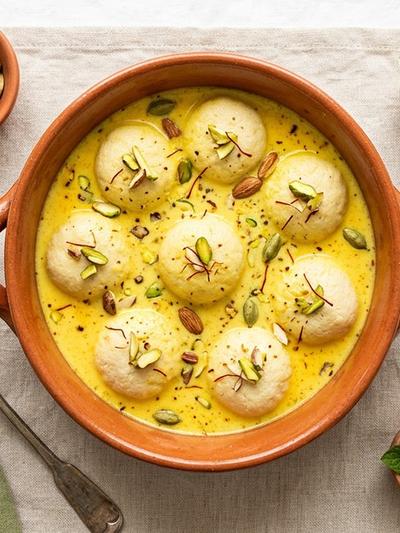
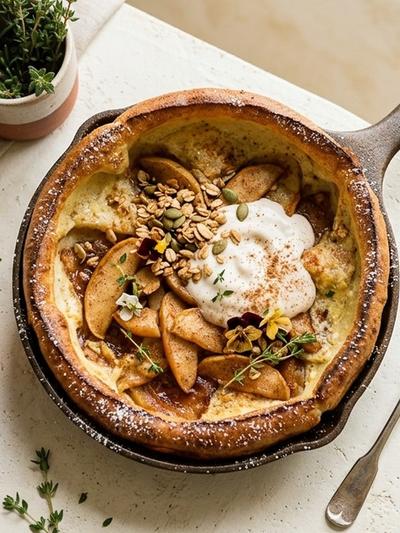
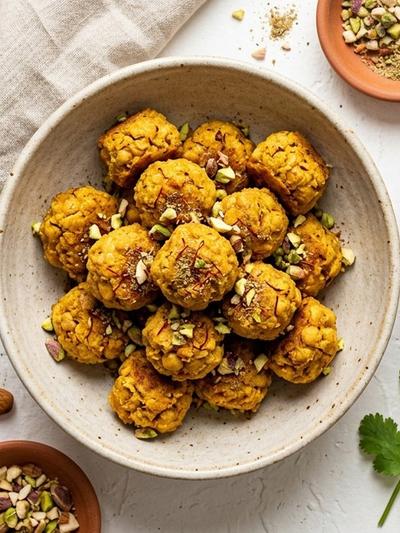
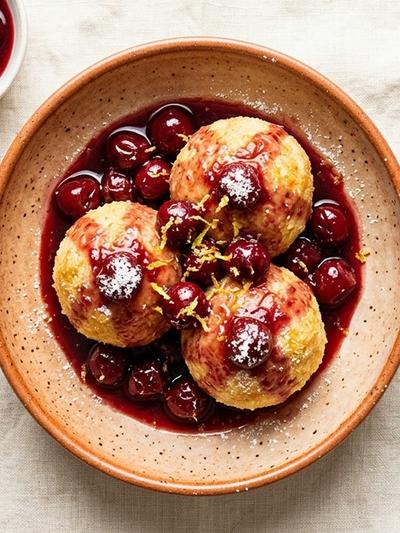
Each serving of this saffron-laced turkey phirni delivers 28 grams of protein and just 295 calories, making it one of the most protein-dense Indian sweets you can prepare. The lean ground turkey breast dissolves into the slow-simmered milk base, creating a creamy pudding with the satisfying heft that most traditional sweets lack. Ground rice thickens everything naturally, while almond flour adds body and a subtle nuttiness that rounds out the dish.
Phirni is a North Indian ground rice pudding traditionally served chilled in shallow clay bowls. This version layers warm saffron and crushed green cardamom over a milk base that has been gently simmered with finely crumbled turkey until the meat essentially disappears into the texture. The rose water, added right at the end, lifts the entire pudding with its floral brightness. Chopped pistachios scattered on top provide crunch against the silky custard beneath.
For GLP-1 users, this phirni works as a satisfying sweet that won't overwhelm a reduced appetite. Each serving is modest in volume — roughly half a cup — but dense with protein that keeps you satiated well beyond what a typical dessert offers. The slow-cooked milk base is inherently gentle on digestion, and the absence of heavy cream or butter keeps the fat content moderate enough to avoid the gastric discomfort that richer sweets can trigger.
Why This Works on GLP-1
The 28 grams of protein per serving come primarily from lean ground turkey breast, one of the most efficient protein sources available at just 1 gram of fat per 3-ounce serving. For people taking Mounjaro or other GLP-1 medications, preserving lean muscle mass during weight loss is a genuine clinical concern. Meeting protein targets becomes more difficult when your appetite is suppressed, so packing this much protein into a small, appealing sweet means you can satisfy a craving and hit your macros simultaneously.
The ground rice and almond flour provide a modest amount of fiber and slow-digesting carbohydrates, which helps prevent the blood sugar spikes that can accompany traditional sweets loaded with refined sugar. The honey is used sparingly — just two tablespoons for four servings — keeping the added sugar well below what you would find in commercial desserts or even most homemade Indian sweets.
Low-fat milk contributes additional calcium and vitamin D, both of which matter during the rapid weight-loss phase that GLP-1 medications can produce. Saffron has documented anti-inflammatory properties, and cardamom is traditionally used in Ayurvedic cooking specifically to aid digestion — a practical benefit when gastric emptying is already slowed by medication.
Ingredients (serves 4)
For the phirni base:
- 12 oz (340g) lean ground turkey breast (99% fat-free)
- 2 cups (480ml) low-fat milk
- 3 tablespoons (25g) rice flour
- 2 tablespoons (14g) almond flour
- 1 tablespoon (7g) ground flaxseed
- 2 tablespoons (40g) honey
- 1/4 teaspoon saffron threads, lightly crushed
- 1/2 teaspoon ground cardamom
- 1/4 teaspoon ground cinnamon
- Pinch of fine sea salt
For finishing:
- 1 teaspoon rose water
- 2 tablespoons (16g) shelled pistachios, finely chopped
- Extra saffron threads for garnish (optional)
Instructions
Cook the turkey into the milk base:
- Warm the saffron threads in 2 tablespoons of the milk in a small bowl and set aside to bloom — this extracts the color and flavor far more effectively than adding dry saffron directly to the pot.
- Place a medium heavy-bottomed saucepan over medium heat. Add the ground turkey and break it apart with a wooden spoon or spatula, crumbling it as finely as possible. Cook for 4–5 minutes, stirring frequently, until the meat is fully cooked through and broken into very small pieces. There should be minimal fat rendered from 99% lean turkey, but if any liquid pools, let it cook off.
- Pour in the low-fat milk and stir well, scraping up any bits from the bottom of the pan. Bring the mixture to a gentle simmer — do not let it boil rapidly, as this can cause the milk to scorch or separate.
Build the pudding:
- In a small bowl, whisk the rice flour and almond flour with 3 tablespoons of cold water until smooth. This slurry prevents lumps when you add it to the hot milk.
- Slowly pour the flour slurry into the simmering milk-turkey mixture, stirring constantly. Add the ground flaxseed, ground cardamom, cinnamon, and pinch of salt.
- Reduce the heat to medium-low and cook, stirring every 30 seconds, for 12–15 minutes. The phirni will thicken gradually — you want it to coat the back of a spoon and hold a brief trail when you draw a line through it. The turkey pieces will have softened and become nearly indistinguishable within the creamy base.
- Add the bloomed saffron milk and the honey. Stir well and cook for another 2 minutes to incorporate everything evenly.
Finish and chill:
- Remove from heat and stir in the rose water. Be conservative — rose water is potent, and you can always add more. Taste and adjust sweetness with a small drizzle of additional honey if desired.
- Divide the phirni among four small bowls or ramekins. Press a sheet of plastic wrap directly onto the surface of each to prevent a skin from forming.
- Refrigerate for at least 2 hours, or until fully chilled and set. The phirni will continue to thicken as it cools.
- Just before serving, top each bowl with chopped pistachios and a few extra saffron threads if desired.
Nutrition per Serving
| Nutrient | Amount (approx.) |
|---|---|
| Calories | ~295 kcal |
| Protein | ~28g |
| Fat | ~8g |
| Carbohydrates | ~27g |
| Fiber | ~2g |
Estimates based on 99% lean ground turkey breast, low-fat milk, and measured honey. Actual values vary with specific brands used.
Practical Notes
This phirni tastes best truly cold. The flavors of saffron, cardamom, and rose water become more distinct and aromatic after chilling. Resist the temptation to eat it warm from the pot — it will be significantly better the next day, making it an ideal make-ahead sweet.
Use the finest grind of turkey you can find. If your ground turkey has a coarser texture, pulse it briefly in a food processor before cooking. The goal is for the meat to virtually disappear into the pudding, creating creaminess rather than a recognizable meat texture.
Store in individual portions for GLP-1 portion control. Dividing into four ramekins or small jars before chilling eliminates the temptation to overeat from a larger bowl. Each portion is roughly half a cup, which is usually the right sweet-craving volume for GLP-1 users. Covered portions keep well in the refrigerator for up to 4 days.
Swap honey for maple syrup or monk fruit if managing blood sugar. The honey contributes about 10 grams of sugar per serving. If you are monitoring carbohydrate intake closely, monk fruit sweetener works well in this recipe without affecting the texture. Reduce maple syrup quantity slightly as it has a stronger flavor.
Ground chicken breast works as a direct substitute. If you prefer chicken or cannot find lean ground turkey, 99% lean ground chicken breast behaves identically in this recipe. The protein and calorie counts remain essentially the same. Avoid using dark meat ground turkey or chicken, as the higher fat content changes both the nutrition profile and the texture of the finished phirni.
Frequently Asked Questions
Can I taste the turkey in the finished phirni?
Can I make this dairy-free?
How long does this keep, and can I freeze it?
What if I can only eat a very small amount on my GLP-1 medication?
Why rice flour instead of regular rice or cornstarch?
This article provides general food and nutrition guidance only. It does not constitute medical advice. Always consult your healthcare provider regarding your GLP-1 medication and individual nutritional needs.