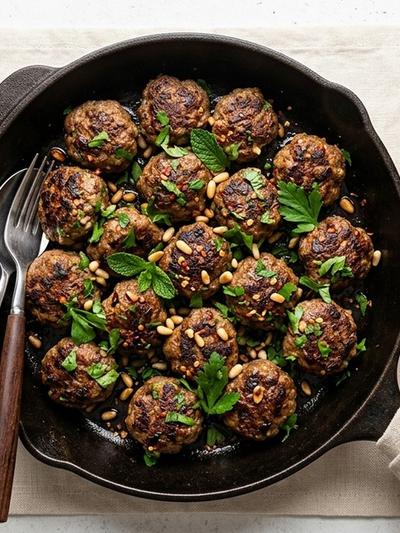
Each serving of these grilled Turkish köfte bites delivers 29 grams of complete protein from lean ground beef, with just 245 calories and 11 grams of fat. The addition of grated onion and fresh parsley keeps the meat tender and moist without relying on breadcrumbs or excess fat. A cool sumac yogurt dip on the side adds another 5 grams of protein while rounding out the plate with probiotics and calcium.
The flavor here is unmistakably Turkish — warm cumin, mild Aleppo pepper flakes, and a background note of allspice give these bites a fragrant, smoky depth that belies their simplicity. The exterior chars quickly on a hot grill or grill pan, creating a crust that contrasts with the juicy, herb-flecked interior. A squeeze of lemon and the sour tang of sumac in the yogurt tie everything together with the bright acidity that defines good Turkish mezze.
As a snack for GLP-1 users, these köfte bites hit a sweet spot: they are small enough to eat in two or three bites, making it easy to stop at a comfortable portion. The high protein content promotes satiety without heaviness, and the lean beef is easier to digest than fattier ground meat. Preparing them as bite-sized pieces rather than full patties means you can eat one or two at a time throughout the day if your appetite is unpredictable.
Why This Works on GLP-1
Preserving lean muscle mass is one of the most important nutritional priorities during GLP-1-assisted weight loss. These köfte bites provide 29 grams of high-quality animal protein per serving, supplying all essential amino acids in a highly bioavailable form. Research consistently shows that distributing protein across meals and snacks — rather than loading it all at dinner — supports better muscle protein synthesis throughout the day. A protein-rich snack like this bridges the gap between meals when appetite may be too low for a full plate.
The recipe uses 93% lean ground beef, which keeps saturated fat moderate at around 4 grams per serving. This leaner cut is gentler on digestion than fattier beef, reducing the risk of the nausea or discomfort that GLP-1 users sometimes experience with high-fat foods. The grated onion adds moisture to compensate for the lower fat content, so tenderness is not sacrificed.
Beef is also one of the richest dietary sources of iron, zinc, and vitamin B12 — nutrients that can become harder to get in adequate amounts when overall food intake decreases on GLP-1 medications. Even a snack-sized portion of these köfte contributes meaningfully to daily micronutrient needs, particularly for users who find it difficult to eat large meals.
Ingredients (serves 4)
For the köfte:
- 1 lb (450g) lean ground beef (93% lean)
- 1 small yellow onion, finely grated
- 1/4 cup (15g) fresh flat-leaf parsley, finely chopped
- 1 clove garlic, minced
- 1 teaspoon ground cumin
- 1/2 teaspoon Aleppo pepper flakes (or 1/4 teaspoon red pepper flakes)
- 1/4 teaspoon ground allspice
- 1/2 teaspoon fine sea salt
- 1/4 teaspoon black pepper
For the sumac yogurt dip:
- 3/4 cup (180g) plain Greek yogurt (2% fat)
- 1 teaspoon ground sumac
- 1 tablespoon fresh lemon juice
- 1 small clove garlic, finely grated
- 1 tablespoon fresh mint, finely chopped
- Pinch of salt
For serving:
- Lemon wedges
- A few fresh mint leaves
- Optional: thinly sliced red onion rings soaked in sumac water
Instructions
Make the sumac yogurt dip:
- Stir together the Greek yogurt, sumac, lemon juice, grated garlic, mint, and salt in a small bowl. Cover and refrigerate while you prepare the köfte — letting it sit for at least 10 minutes allows the sumac to bloom and the flavors to meld.
Shape the köfte:
- Squeeze the grated onion over a bowl to remove excess moisture, then add it to a large mixing bowl with the ground beef. Removing excess liquid prevents the meat from becoming too wet, which would cause steaming instead of charring on the grill.
- Add the parsley, garlic, cumin, Aleppo pepper, allspice, salt, and black pepper to the beef mixture. Mix with your hands until the seasonings are evenly distributed, but avoid overworking the meat — about 30 seconds of mixing is enough. Overworked beef becomes dense and tough.
- Divide the mixture into 16 equal portions (about 1 ounce / 28g each). Roll each into a small oval shape, slightly flattened — roughly the size of a walnut. Flattening them slightly ensures even cooking and maximizes the grilled surface area.
Grill the köfte:
- Heat a grill, grill pan, or cast-iron skillet over high heat. If using a grill pan, lightly brush it with a thin layer of oil using a paper towel — just enough to prevent sticking.
- Cook the köfte bites for 2 to 3 minutes per side, turning once, until they develop a dark char on the outside and reach an internal temperature of 160°F (71°C). The high heat is important — it creates the characteristic crust that gives Turkish köfte their smoky flavor without overcooking the interior.
- Transfer to a plate and let rest for 2 minutes. The internal temperature will continue to rise slightly, finishing the cooking gently.
Assemble and serve:
- Arrange 4 köfte bites per serving alongside a generous spoonful of sumac yogurt dip. Garnish with lemon wedges and fresh mint leaves. If using the optional sumac onion rings, tuck a few alongside each portion.
Nutrition per Serving
| Nutrient | Amount (approx.) |
|---|---|
| Calories | ~245 kcal |
| Protein | ~29g |
| Fat | ~11g |
| Carbohydrates | ~7g |
| Fiber | ~1g |
Based on 4 köfte bites per serving using 93% lean ground beef and 2% Greek yogurt. Nutrition will vary slightly with yogurt brand and exact beef fat percentage.
Practical Notes
Make a double batch for the week. These köfte freeze beautifully — spread cooked and cooled bites on a sheet pan, freeze until solid, then transfer to a zip-top bag. They reheat well in a skillet over medium heat for 3 to 4 minutes or in the microwave for 60 seconds. Having a stash of high-protein snacks ready to grab from the freezer is invaluable on days when cooking feels like too much effort.
If you cannot find Aleppo pepper, substitute carefully. Regular red pepper flakes are about twice as hot, so use half the amount. Aleppo pepper has a mild, fruity heat with a slight oiliness that is distinctive in Turkish cooking. Sweet paprika mixed with a tiny pinch of cayenne is another reasonable stand-in.
Grate the onion, do not dice it. This is not a shortcut suggestion — it is a technique specific to Turkish köfte. Grated onion releases its juice into the meat, flavoring it from within and keeping the texture smooth. Diced onion creates pockets that can cause the köfte to break apart on the grill.
Eat slowly and assess your fullness. For those on Mounjaro or Wegovy, appetite suppression can make it hard to gauge when you have eaten enough. Start with two or three bites and the yogurt dip, wait 10 minutes, then decide if you want more. The protein density means even half a serving delivers meaningful nutrition.
The sumac yogurt dip works as a standalone condiment. Keep a batch in the fridge for up to 5 days. It pairs well with raw vegetables, grilled chicken, or as a spread in wraps. Sumac is rich in antioxidants and adds bright, lemony flavor without extra sodium — a useful seasoning when you are trying to make smaller portions more satisfying.
Frequently Asked Questions
Will these köfte bites cause nausea on GLP-1 medications?
Can I use a different type of ground meat instead of beef?
How long do these keep in the fridge, and how should I reheat them?
What if my appetite is very small — can I make these even smaller?
Can I cook these indoors without a grill or grill pan?
This article provides general food and nutrition guidance only. It does not constitute medical advice. Always consult your healthcare provider regarding your GLP-1 medication and individual nutritional needs.