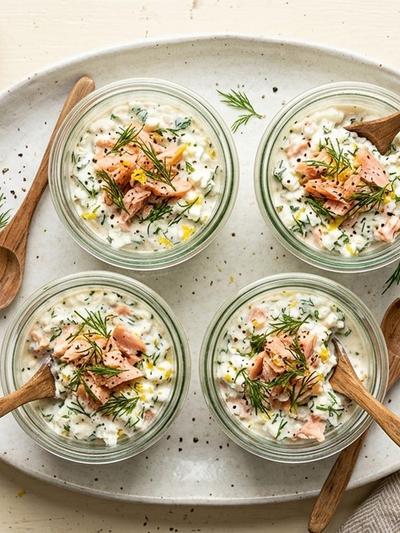
Each snack pot delivers 26 grams of protein from sardines and cottage cheese — two of the most nutrient-dense foods you can keep in your kitchen. A single serving provides over 100% of your daily vitamin B12, significant omega-3 fatty acids, and bone-building calcium from the sardines' soft, edible bones. At just 195 calories per pot, this is a serious protein hit in a compact package.
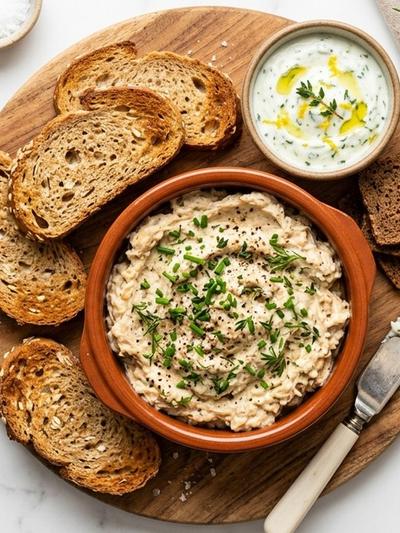
Classic French rillettes are typically made by slow-cooking meat in fat until it shreds into a rich, spreadable paste. This lighter version swaps the heavy butter for low-fat cottage cheese, which creates the same silky, whipped texture while dramatically cutting saturated fat. Dijon mustard adds the sharp bite you expect from a French preparation, cornichons bring briny crunch, and fresh chives round out the flavor with a gentle onion note that pairs beautifully with the mineral richness of the sardines.
For anyone on GLP-1 medications, this recipe solves the snack problem. Each pot is pre-portioned, so there is no guesswork about serving size. The high protein content keeps you satisfied between meals without the heaviness that larger portions can cause. And because the rillettes are served cold, you simply grab a pot from the fridge and eat — no reheating, no prep, no decisions when your appetite is unpredictable.
Why This Works on GLP-1
Muscle preservation is one of the most important nutritional priorities during GLP-1-assisted weight loss. When medications like Mounjaro or Wegovy reduce your appetite significantly, getting enough protein in smaller eating windows becomes a real challenge. These rillettes pots pack 26 grams of complete protein into fewer than 200 calories, making them one of the most protein-efficient snacks you can batch-prep. Sardines provide all essential amino acids, including leucine — the amino acid most directly responsible for triggering muscle protein synthesis.
The omega-3 fatty acids in sardines (EPA and DHA) offer anti-inflammatory benefits that complement GLP-1 therapy. The cottage cheese adds casein protein, which digests more slowly than whey, helping extend satiety between meals. This combination of fast-digesting fish protein and slower-digesting dairy protein creates a sustained amino acid release — ideal when you are eating less frequently.
Sardines are also one of the richest food sources of vitamin D and selenium, two nutrients that many GLP-1 users run low on when overall food intake decreases. The calcium from both the sardine bones and cottage cheese supports bone density, which matters during any period of weight loss. This is a genuinely nutrient-dense snack, not just a protein number on a label.
Ingredients (serves 4)
For the rillettes:
- 3 cans (4.4 oz / 125g each) sardines in water, drained and patted dry
- 1 cup (225g) low-fat cottage cheese
- 2 tablespoons (30g) Dijon mustard
- 2 tablespoons (30ml) fresh lemon juice
- 3 tablespoons finely chopped cornichons (about 6 small cornichons)
- 3 tablespoons finely chopped fresh chives
- 1 tablespoon capers, drained and roughly chopped
- ¼ teaspoon freshly ground black pepper
- Pinch of cayenne pepper (optional)
For the crudités (per pot):
- 3–4 celery sticks, cut into 3-inch batons
- ½ medium cucumber, sliced into rounds
- 4–5 radishes, halved
Instructions
Make the rillettes base:
Place the drained sardines in a medium mixing bowl. Use a fork to break them into small flakes — you want the texture somewhere between a rough mash and a smooth paste, with visible pieces remaining for interest. Crushing the soft bones completely is fine; they dissolve into the mixture and boost the calcium content significantly.
Add the cottage cheese to the sardines. Using the back of the fork, work the cottage cheese into the fish until the mixture becomes creamy and spreadable. Some small curds remaining are perfectly acceptable — they add texture. If you prefer a smoother consistency, pulse the sardines and cottage cheese together in a food processor for 10–15 seconds, but avoid over-processing into a purée.
Fold in the Dijon mustard, lemon juice, chopped cornichons, chives, and capers. The mustard emulsifies the mixture and adds the classic French sharp flavor that makes rillettes addictive. Season with black pepper and cayenne if using. Taste and adjust the lemon juice — sardines vary in saltiness between brands, so you may not need additional salt.
Portion and store:
Divide the rillettes evenly among four small airtight containers or glass jars (8 oz / 240ml size works well). Each pot should contain roughly ½ cup of rillettes. Press the mixture down gently with the back of a spoon to remove air pockets, which helps it keep longer.
Prepare the crudités for each pot. Cut the celery and cucumber and halve the radishes. Pack the vegetables in separate small bags or containers — keeping them separate from the rillettes prevents sogginess over the storage period. If you prefer, you can nestle the vegetable sticks into the same container with a small sheet of parchment separating them from the rillettes.
Seal the containers and refrigerate. The rillettes develop better flavor after at least two hours of chilling, as the mustard and lemon juice meld with the fish. They are even better the next day.
Nutrition per Serving
| Nutrient | Amount (approx.) |
|---|---|
| Calories | ~195 kcal |
| Protein | ~26g |
| Fat | ~8g |
| Carbohydrates | ~6g |
| Fiber | ~2g |
Estimates based on sardines canned in water (drained), low-fat cottage cheese, and raw vegetables. Actual values may vary slightly depending on sardine brand and fat content.
Practical Notes
Storage and shelf life. The rillettes keep well in sealed containers in the refrigerator for up to 4 days. The flavor actually improves on days two and three as the ingredients meld. Do not freeze the finished rillettes — cottage cheese changes texture when frozen and thawed, becoming grainy and watery.
Sardine selection matters. Choose sardines packed in water rather than oil to keep the fat content lower. Wild-caught sardines from Portugal, Spain, or Morocco tend to have firmer flesh and better flavor than budget brands. If you can find boneless, skinless sardines, they work fine but you lose the calcium benefit from the bones.
Swap the crudités for what you have. Bell pepper strips, endive leaves, blanched green beans, or sugar snap peas all work as dippers. For a more substantial snack, serve with two or three whole-grain crispbreads — this adds roughly 60 calories and 2 grams of fiber per serving. Endive leaves make an especially elegant vessel if you are packing these for work.
Start small if your appetite is limited. On days when GLP-1 medication suppresses your appetite heavily, eat half a pot (roughly 13 grams of protein) and save the rest for later. The sealed pot keeps perfectly well once opened if you reseal and refrigerate within an hour. Even half a serving still delivers meaningful protein.
Double the batch for a full work week. This recipe scales perfectly. Make eight pots on Sunday evening — the effort is nearly identical to making four, and you will have a grab-and-go protein snack available for every workday. The 15-minute hands-on time makes this one of the most efficient meal preps per gram of protein.
Frequently Asked Questions
I'm in the first weeks of Ozempic and the smell of fish makes me nauseous — can I still make this?
Can I use canned tuna or mackerel instead of sardines?
How should I reheat or serve these from the fridge?
Half a pot feels like too much on my current Zepbound dose — how can I adjust?
The rillettes seem dry or too thick — what went wrong?
This article provides general food and nutrition guidance only. It does not constitute medical advice. Always consult your healthcare provider regarding your GLP-1 medication and individual nutritional needs.