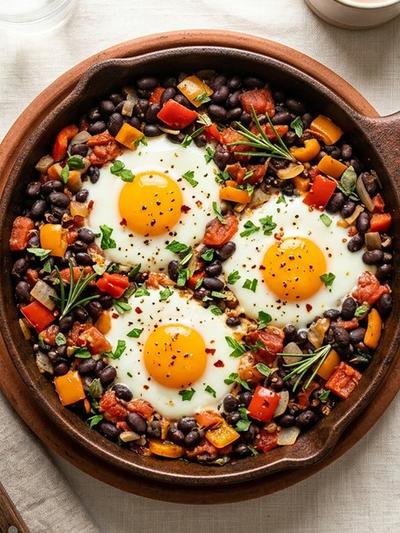
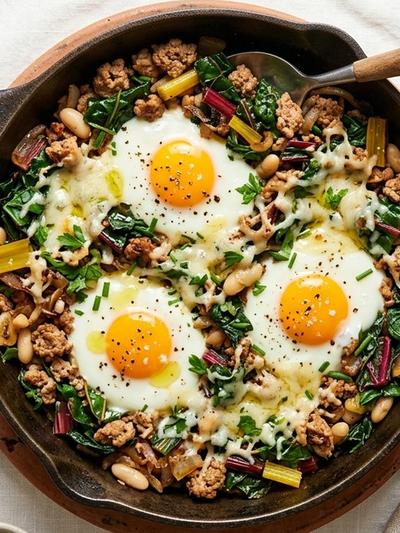
This French-inspired breakfast scramble delivers 34 grams of protein per serving by combining whole eggs with extra egg whites and creamy cannellini beans. The fines herbes blend — tarragon, chervil, chives, and parsley — is a cornerstone of French cuisine that brings a delicate, slightly anise-edged freshness without any heaviness. Each serving comes in at 338 calories with 22 grams of carbohydrates and 6 grams of fiber, making it a complete, balanced morning meal that sustains energy without weighing you down.
The key to this dish is building layers of savory depth in a single pan. Thinly sliced shallots soften into sweet, mild ribbons before cremini mushrooms join them, releasing their earthy umami as they brown. The eggs cook into soft, pillowy curds that wrap around tender beans and fragrant herbs. A small amount of Gruyère stirred in at the end adds just enough richness to feel indulgent without tipping the fat content over the edge.
For GLP-1 users, this scramble is designed around the realities of reduced appetite and slower gastric emptying. The portion is compact but protein-dense, so even if you can only manage half a serving on a low-appetite morning, you still get meaningful nutrition. The soft texture of scrambled eggs and beans is gentle on a sensitive stomach, and the quick cook time means you can prepare it fresh even when your motivation to eat is low.
Why This Works on GLP-1
Each serving provides 34 grams of complete protein from a combination of whole eggs, egg whites, and cannellini beans. For people on medications like Ozempic or Wegovy, preserving lean muscle mass during weight loss is one of the most important nutritional priorities. Research consistently shows that distributing protein across meals — aiming for at least 25 to 30 grams per sitting — supports muscle protein synthesis far more effectively than loading all your protein into a single meal. This breakfast hits that threshold comfortably, giving your body the amino acids it needs first thing in the morning.
The 6 grams of fiber from the cannellini beans provide steady, gentle bulk without the bloating that high-fiber cereals or raw vegetables can cause. White beans are one of the most digestible legume options because their softer starch structure breaks down easily. For Mounjaro users who sometimes experience constipation as a side effect, including moderate soluble fiber at breakfast can help maintain regularity.
The relatively modest fat content of 12 grams per serving is deliberate. Because GLP-1 medications slow gastric emptying, high-fat meals tend to sit uncomfortably and can trigger nausea. This scramble gets its satisfaction from protein and umami rather than butter or cream, which is a significant departure from traditional French egg cookery. The small amount of Gruyère (15 grams per serving) provides flavor impact without digestive burden.
Ingredients (serves 2)
For the scramble:
- 3 large eggs
- 4 large egg whites (about ½ cup / 120ml)
- 1 cup (170g) canned cannellini beans, drained and rinsed
- 6 oz (170g) cremini mushrooms, thinly sliced
- 1 medium shallot, thinly sliced
- 1 oz (30g) Gruyère cheese, finely grated
- 2 tsp (10ml) extra-virgin olive oil
- ⅛ tsp fine sea salt
- Freshly ground black pepper to taste
For the fines herbes:
- 2 Tbsp fresh chives, finely snipped
- 2 Tbsp fresh flat-leaf parsley, finely chopped
- 1 Tbsp fresh tarragon leaves, finely chopped
- 1 Tbsp fresh chervil, finely chopped (or substitute additional parsley)
Instructions
Prepare the ingredients:
Crack the whole eggs into a medium bowl and add the egg whites. Whisk until just combined — you want a uniform mixture but not a frothy one, since over-whisking incorporates too much air and creates rubbery curds. Season with the salt and a few grinds of black pepper.
Combine all four herbs in a small bowl and set aside. Keeping them separate until the very end preserves their volatile oils and delicate flavors, which break down quickly under direct heat.
Drain and rinse the cannellini beans thoroughly. Pat them gently with a paper towel to remove surface moisture — this prevents splattering when they hit the hot pan and helps them warm through without becoming waterlogged.
Cook the vegetables:
Heat the olive oil in a 10-inch (25cm) nonstick skillet over medium-high heat. Add the sliced mushrooms in a single layer. Let them cook undisturbed for 2 to 3 minutes until the undersides develop golden-brown color. Stir once, then cook another 2 minutes. Mushrooms release moisture when they first hit the pan — resisting the urge to stir gives that liquid time to evaporate so the mushrooms sear rather than steam.
Add the sliced shallot and cook for 1 to 2 minutes, stirring occasionally, until softened and fragrant. Push the mushroom-shallot mixture to one side of the pan.
Stir-fry the eggs:
Reduce the heat to medium-low. Pour the egg mixture into the open side of the pan. Let it sit untouched for about 20 seconds until the edges just begin to set, then use a silicone spatula to gently push the eggs from the edges toward the center in broad, sweeping strokes. This creates large, soft curds rather than the small, dry pieces you get from constant stirring.
When the eggs are about halfway set — still quite wet and glossy on top — fold in the cannellini beans and the mushroom-shallot mixture. Continue gently folding everything together for another 60 to 90 seconds. The residual heat will finish cooking the eggs, so pull the pan off the burner while they still look slightly underdone.
Immediately scatter the grated Gruyère over the top and gently fold it through once or twice. The cheese should melt into thin, creamy streaks rather than forming clumps. Sprinkle the entire fines herbes mixture over the scramble and fold once more.
Serve:
- Divide between two warmed plates immediately. Scrambled eggs continue to cook from residual heat and release moisture as they sit, so serving promptly preserves the soft, custardy texture. A slice of whole-grain toast on the side is optional but adds another 3 to 4 grams of fiber if your appetite allows.
Nutrition per Serving
| Nutrient | Amount (approx.) |
|---|---|
| Calories | ~338 kcal |
| Protein | ~34g |
| Fat | ~12g |
| Carbohydrates | ~22g |
| Fiber | ~6g |
Estimates based on 1.5 whole eggs, 2 egg whites, ½ cup drained cannellini beans, 85g cremini mushrooms, 15g Gruyère, and 1 tsp olive oil per serving.
Practical Notes
This scramble reheats better than most egg dishes. Because the cannellini beans retain moisture, microwaved leftovers stay softer than a plain scramble would. Reheat at 50% power in 30-second intervals, stirring between each, for best results. Use within 24 hours and store in an airtight container in the refrigerator.
Fresh chervil can be hard to find. If your grocery store does not carry it, substitute an equal amount of fresh flat-leaf parsley plus a tiny pinch of ground anise seed. The combination approximates chervil's mild, slightly sweet licorice flavor. Dried chervil is not a good substitute here — it loses nearly all its flavor when dehydrated.
Scale the egg whites for extra protein without extra volume. If you are further along in your Zepbound treatment and tolerating larger protein loads, you can add two more egg whites (another 7 grams of protein) without significantly changing the portion size or fat content. The additional whites add less than 35 calories.
Keep the heat low once the eggs enter the pan. GLP-1 users with nausea sensitivity often find that overcooked eggs — rubbery, sulfurous — are much harder to tolerate than soft, custardy ones. Medium-low heat and frequent folding give you the gentle texture that is easiest to eat on a sensitive stomach.
The beans make this a complete breakfast on their own. Unlike a plain egg scramble that often needs toast or a side to feel like a full meal, the cannellini beans provide enough complex carbohydrate and fiber to sustain your blood sugar through the morning. If your appetite is very low, skip any sides entirely and focus on finishing the scramble itself.
Frequently Asked Questions
I feel nauseous in the morning on my GLP-1 medication — can I still eat this?
Can I make this dairy-free or swap the cheese?
How long will this keep if I meal prep it?
What if I can only eat a very small portion right now?
Why stir-fry the eggs rather than making a traditional French omelette?
This article provides general food and nutrition guidance only. It does not constitute medical advice. Always consult your healthcare provider regarding your GLP-1 medication and individual nutritional needs.