Each serving of this braised mahi-mahi curry delivers 34 grams of protein from one of the leanest white fish available, paired with chickpeas that add both plant protein and soluble fiber. At 345 calories per portion, you get a complete, nutrient-dense meal with a balanced macro profile that supports muscle preservation during weight loss. The tomato-coconut braising liquid provides lycopene and medium-chain fatty acids, while wilted spinach contributes iron and folate without adding bulk.
The flavor here is layered but not aggressive — warm cumin and coriander build an aromatic base, while a modest amount of light coconut milk rounds out the acidity of crushed tomatoes into something silky and balanced. Fresh ginger and a touch of turmeric add warmth without the burn that heavier Indian curries rely on. The mahi-mahi absorbs the braising liquid beautifully, turning each flake into a carrier for the spiced sauce.
This recipe was designed specifically for batch cooking: four generous portions that reheat exceptionally well because braised fish actually improves as the flavors meld overnight. The sauce keeps the fish moist during reheating, solving the common problem of dried-out meal-prepped seafood. For people on Mounjaro or Wegovy who find their appetite unpredictable, having a ready-to-heat protein-rich meal in the fridge removes the friction of deciding what to eat when hunger does arrive.
Why This Works on GLP-1
Each portion provides 34 grams of complete protein from mahi-mahi and chickpeas combined, which is critical for preserving lean muscle mass during the rapid weight loss that GLP-1 receptor agonists like Ozempic and Zepbound can produce. Research consistently shows that adequate protein intake — at least 25 to 30 grams per meal — helps prevent the muscle loss that can account for up to 40 percent of total weight lost without dietary intervention. The amino acid profile of white fish is particularly bioavailable, meaning your body can use a higher percentage of what you consume compared to many plant sources alone.
The 6 grams of fiber per serving comes primarily from chickpeas and spinach, both of which are gentle on digestion. Soluble fiber from chickpeas forms a gel-like consistency during digestion that works synergistically with GLP-1 medications to promote steady blood sugar levels. Because GLP-1 drugs already slow gastric emptying, the fiber content here is deliberately moderate — enough to support gut health without causing the bloating or discomfort that high-fiber meals can trigger.
The light coconut milk provides a small amount of healthy fat (12 grams total per serving) that aids absorption of the fat-soluble vitamins in spinach and tomatoes. Turmeric's curcumin is better absorbed in the presence of both fat and black pepper, both of which are present in this dish. The overall calorie density is low enough that even on days when appetite is minimal, a half portion still delivers meaningful nutrition.
Ingredients (serves 4)
For the spice base:
- 1 tablespoon (15ml) avocado oil
- 1 medium yellow onion, finely diced — about 1 cup (150g)
- 4 cloves garlic, minced
- 1 tablespoon (6g) fresh ginger, grated
- 1 teaspoon (2g) ground cumin
- 1 teaspoon (2g) ground coriander
- 1/2 teaspoon (1g) ground turmeric
- 1/4 teaspoon (0.5g) black pepper
- 1/4 teaspoon red pepper flakes (optional — omit if sensitive to heat)
For the braise:
- 1 can (14.5 oz / 411g) crushed tomatoes
- 1/2 cup (120ml) light coconut milk
- 1 can (15 oz / 425g) chickpeas, drained and rinsed
- 1/2 cup (120ml) low-sodium fish or vegetable stock
- 1 1/2 pounds (680g) mahi-mahi fillets, cut into 2-inch pieces
- 1/2 teaspoon (3g) fine sea salt
For finishing:
- 4 cups (120g) fresh baby spinach
- 2 tablespoons (30ml) fresh lemon juice
- 2 tablespoons fresh cilantro, roughly chopped
Instructions
Build the spice base:
Heat the avocado oil in a large, deep skillet or Dutch oven over medium heat. Add the diced onion and cook for 5 to 6 minutes, stirring occasionally, until softened and translucent. Cooking the onion slowly at medium heat rather than high builds sweetness that balances the tomato acidity later.
Add the garlic and grated ginger, stirring constantly for 60 seconds until fragrant. Grating the ginger rather than slicing it ensures it dissolves into the sauce, preventing any fibrous bits in the finished dish.
Add the cumin, coriander, turmeric, black pepper, and red pepper flakes. Stir for 30 seconds to bloom the spices in the oil — this step releases the volatile aromatic compounds and deepens the flavor significantly compared to adding dry spices to liquid.
Braise the fish:
Pour in the crushed tomatoes, light coconut milk, and fish stock. Stir to combine and bring to a gentle simmer. Add the drained chickpeas and salt, then stir again.
Nestle the mahi-mahi pieces into the sauce, pressing them down gently so they are mostly submerged. The fish should be in a single layer with sauce reaching at least halfway up each piece.
Reduce the heat to medium-low, cover the pan, and braise for 12 to 14 minutes. The fish is done when it flakes easily with a fork and registers 137°F (58°C) internally. Do not stir during braising — the fish is delicate and will break apart if disturbed.
Finish and portion:
Remove the lid and scatter the baby spinach over the surface of the curry. Cover again for 2 minutes to wilt the spinach without overcooking the fish.
Remove from heat. Squeeze the lemon juice over the entire dish and gently fold once or twice to distribute the spinach. The lemon juice brightens all the flavors and prevents the sauce from tasting flat after refrigeration.
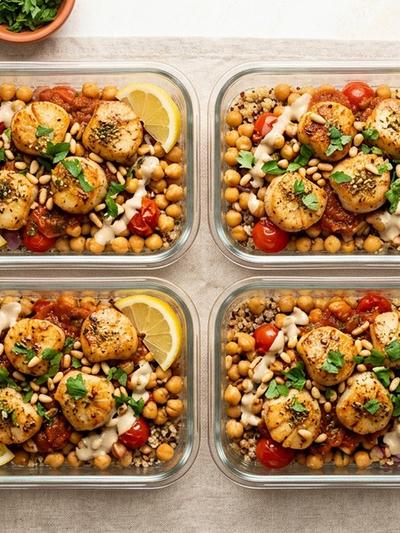
Divide evenly among four meal prep containers. Garnish each with cilantro. Allow to cool for 15 minutes with lids slightly ajar before sealing and refrigerating.
Nutrition per Serving
| Nutrient | Amount (approx.) |
|---|---|
| Calories | ~345 kcal |
| Protein | ~34g |
| Fat | ~12g |
| Carbohydrates | ~24g |
| Fiber | ~6g |
Estimates based on 6 oz (170g) raw mahi-mahi per serving, light coconut milk, and canned chickpeas. Actual values may vary based on specific brands and fish thickness.
Practical Notes
Reheating without drying out the fish. Microwave each container at 70 percent power for 2 to 2.5 minutes, pausing halfway to stir the sauce around the fish. The lower power setting heats the sauce evenly while keeping the fish from turning rubbery. Alternatively, reheat in a covered skillet over low heat for 4 to 5 minutes.
Storage and shelf life. Sealed containers keep well in the refrigerator for up to 4 days. The flavor actually improves on days two and three as the spices continue to permeate the fish. For longer storage, freeze individual portions for up to 6 weeks — thaw overnight in the refrigerator before reheating.
Serving over a base. Each container is a complete meal on its own, but if your appetite allows, serve over 1/3 cup cooked basmati rice or a small piece of naan. This adds roughly 70 to 100 calories and can make the meal feel more substantial on higher-appetite days.
Adjusting the spice level for sensitive stomachs. If you experience nausea on your GLP-1 medication, omit the red pepper flakes entirely and reduce the ginger to 1 teaspoon. The cumin and coriander provide plenty of warmth without any capsaicin-based heat that can irritate an already sensitive stomach.
Buying mahi-mahi efficiently. Frozen mahi-mahi fillets are often more affordable and just as good for braising as fresh. Thaw them overnight in the refrigerator on a plate lined with paper towels. Pat thoroughly dry before cutting — excess moisture dilutes the braising liquid and prevents the fish from absorbing flavor.
Frequently Asked Questions
Will this recipe cause nausea if I'm in my first weeks on Ozempic or Mounjaro?
Can I substitute another fish for mahi-mahi?
How well does this freeze, and what is the best way to reheat from frozen?
What if I can only eat a very small portion right now?
Do I need to sear the mahi-mahi before braising?
This article provides general food and nutrition guidance only. It does not constitute medical advice. Always consult your healthcare provider regarding your GLP-1 medication and individual nutritional needs.