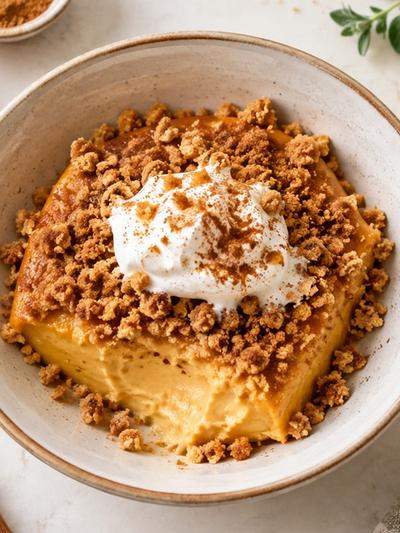
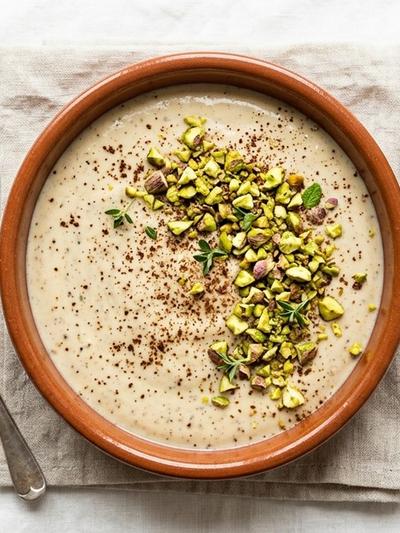
Each serving of this baked custard delivers 27 grams of protein from a combination of whole eggs, egg whites, and blended cottage cheese — a trio that creates an exceptionally smooth, high-protein base without relying on protein powder. The custard provides all essential amino acids, meaningful calcium from the dairy, and choline from the egg yolks, all within 298 calories per ramekin.
The flavor draws from North African pastry traditions: orange blossom water gives each bite a delicate floral perfume, while cinnamon and a touch of cardamom add warm depth. Chopped Medjool dates, pressed gently into the top before baking, caramelize at the edges and provide pockets of natural sweetness that contrast with the barely sweet custard itself. The texture lands between a French clafoutis and a Tunisian baked cream — set and sliceable at the edges, just barely trembling at the center.
For GLP-1 users, baked custards offer a practical advantage: they are soft, easy to digest, and deeply satisfying in small portions. A single ramekin feels like a complete dessert without the heaviness of pastry or the sugar load of conventional sweets. These hold beautifully in the refrigerator for days, making them a reliable option when you want something sweet but need it to work within your nutritional targets.
Why This Works on GLP-1
The 27 grams of protein per serving come almost entirely from eggs and cottage cheese — two of the most bioavailable protein sources available. During GLP-1-assisted weight loss, maintaining adequate protein intake is essential for preserving lean muscle mass, and many users find that conventional sweets offer empty calories with no protein contribution. This custard reverses that equation: it is a dessert that meaningfully contributes to daily protein goals. The egg whites provide leucine, the amino acid most directly involved in muscle protein synthesis.
The custard is naturally gentle on digestion. Baking transforms the eggs and dairy into a smooth, soft-textured dessert that requires minimal digestive effort — an important consideration since GLP-1 medications slow gastric emptying. There is no added cream, no butter in the custard base, and the total fat stays at 9 grams per serving, well below what most desserts deliver.
Orange blossom water is a zero-calorie flavoring agent that creates the perception of richness without any actual fat or sugar. This is a practical tool for GLP-1 cooking: when appetite is reduced and portions are smaller, intensifying flavor through aromatics rather than calorie-dense ingredients lets each bite deliver more satisfaction. The dates provide natural sweetness plus potassium, which some Mounjaro and Wegovy users find helpful for managing the mild electrolyte shifts that can accompany reduced food intake.
Ingredients (serves 4)
For the custard base:
- 4 large eggs
- 4 large egg whites (or 1/2 cup / 120ml liquid egg whites)
- 1 cup (226g) low-fat cottage cheese (2% milkfat)
- 1/3 cup (80ml) low-fat milk
- 2 tablespoons (40g) honey
- 1 tablespoon orange blossom water
- 1 teaspoon vanilla extract
- 1/2 teaspoon ground cinnamon
- 1/4 teaspoon ground cardamom
- Pinch of fine sea salt
For the date topping:
- 3 large Medjool dates (about 72g), pitted and chopped into small pieces
- 1 tablespoon (8g) almond flour
- Light cooking spray or a small amount of butter for ramekins
Instructions
Prepare the ramekins and preheat:
- Preheat your oven to 325°F (165°C). Position a rack in the center. Low, slow baking is critical for custards — higher temperatures cause the egg proteins to seize and create a rubbery, pockmarked texture instead of a smooth one.
- Lightly grease four 6-ounce (180ml) ramekins or oven-safe cups with cooking spray. Place them in a deep baking dish or roasting pan that can hold all four with some space between them.
Blend the custard:
- Add the cottage cheese and milk to a blender. Blend on high for 60 seconds until completely smooth with no visible curds. This step is essential — any remaining cottage cheese texture will show up in the finished custard, and you want a perfectly silky result.
- Add the whole eggs, egg whites, honey, orange blossom water, vanilla, cinnamon, cardamom, and salt to the blender. Pulse 8–10 times, just until combined. Avoid blending on high at this stage, which would incorporate too much air and create bubbles on the surface of the baked custard.
- Let the mixture rest for 5 minutes. If any foam has formed on top, skim it off with a spoon.
Assemble and bake:
- Divide the custard evenly among the four prepared ramekins — each should be nearly full.
- Scatter the chopped dates over the top of each custard, pressing the pieces gently so they sit halfway submerged. Dust each ramekin with a light pinch of the almond flour.
- Carefully pour hot water into the baking dish around the ramekins until it reaches about halfway up their sides. This water bath (bain-marie) insulates the custards from direct heat, ensuring they cook gently and evenly.
- Bake for 40–45 minutes. The custards are done when the edges are firmly set but the center still has a slight jiggle — about 1 inch (2.5cm) of wobble in the middle. They will continue to set as they cool.
- Carefully remove the ramekins from the water bath using tongs or a towel. Let them cool on a wire rack for 20 minutes, then refrigerate for at least 2 hours before serving. The custards are best served cold or at cool room temperature.
Nutrition per Serving
| Nutrient | Amount (approx.) |
|---|---|
| Calories | ~298 kcal |
| Protein | ~27g |
| Fat | ~9g |
| Carbohydrates | ~28g |
| Fiber | ~2g |
Estimates based on large eggs, 2% milkfat cottage cheese, Medjool dates, and one-quarter of the total recipe per serving.
Practical Notes
Make them ahead. These custards actually improve after a night in the refrigerator — the flavors meld and the texture firms to the ideal consistency. Store covered in the fridge for up to 4 days. This makes them excellent for weekly prep: bake a batch on Sunday and have a high-protein dessert ready all week.
Orange blossom water varies by brand. Some brands are intensely concentrated while others are milder. Start with 1 tablespoon, taste the raw custard mixture, and add up to another teaspoon if the floral note is too subtle. If you cannot find orange blossom water, rose water works as a substitute at half the quantity, or use 1 teaspoon of finely grated orange zest for a simpler citrus note.
Boost protein further if needed. For Ozempic or Zepbound users focused on hitting higher daily protein targets, add 2 additional egg whites to the blender mixture. This increases protein to approximately 31 grams per serving with minimal impact on flavor or texture, adding only about 17 calories per ramekin.
Skip the water bath only if short on time. Baking without the bain-marie will still produce an edible custard, but expect a slightly denser texture with less creaminess. If you skip it, reduce the oven temperature to 300°F (150°C) and check doneness 5 minutes earlier. The water bath is the difference between good and genuinely silky.
Small appetite strategy. If a full ramekin feels like too much in one sitting, bake the mixture in 6 smaller cups (about 4 ounces each) instead. Reduce baking time to 30–35 minutes. Each smaller portion provides approximately 18 grams of protein — still meaningful, and easier to finish when your appetite is suppressed.
Frequently Asked Questions
Will this custard be too rich if I'm experiencing nausea on GLP-1 medication?
Can I make this dairy-free or without cottage cheese?
How should I store and reheat these custards?
What if I can only eat a few bites at a time during the early weeks of GLP-1 treatment?
Why do I need to blend the cottage cheese separately before adding the eggs?
This article provides general food and nutrition guidance only. It does not constitute medical advice. Always consult your healthcare provider regarding your GLP-1 medication and individual nutritional needs.