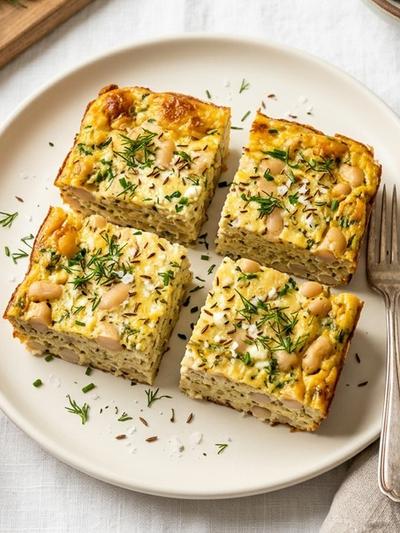
Each thick slice of this Scandinavian-style egg terrine packs 27 grams of protein from a combination of whole eggs, egg whites, and low-fat cottage cheese. The slow cooker gently sets the custard without any risk of overcooking, producing a silky, sliceable loaf that holds together beautifully for grab-and-go snacking. At just 242 calories per serving, it delivers one of the best protein-to-calorie ratios you'll find in a snack — without relying on protein powder or processed ingredients. The addition of iron-rich spinach and vitamin K from fresh dill rounds out the nutritional profile.
The flavor here is unmistakably Nordic. Fresh dill runs through every bite, complemented by the mild sweetness of slowly softened leeks and a whisper of nutmeg that lifts the egg custard without overpowering it. Cottage cheese adds a subtle tang and creates a texture that's denser than a traditional quiche but lighter than a frittata — almost like a savory Scandinavian pudding. A touch of Dijon mustard in the base adds a gentle sharpness that keeps each slice interesting.
For GLP-1 users, this terrine solves a common problem: finding a high-protein snack that's genuinely gentle on a sensitive stomach. The slow cooker's low, even heat produces an exceptionally smooth texture with no browned edges or dry spots — far easier to digest than scrambled or fried eggs. Each slice is compact and satisfying, designed for the smaller portions that feel right on medication.
Why This Works on GLP-1
With 27 grams of protein per slice, this terrine delivers the kind of concentrated, high-quality amino acids that matter most during GLP-1-assisted weight loss. Preserving lean muscle mass while losing fat is one of the key nutritional challenges for people on Mounjaro or similar medications, and egg protein has the highest biological value of any whole food — meaning your body can use nearly all of it. The cottage cheese adds casein protein, which digests more slowly and extends the feeling of satiety well beyond the snack itself. Together, these two protein sources create a sustained amino acid release that supports muscle maintenance between meals.
The slow cooker method is particularly well suited for GLP-1 users who experience digestive sensitivity. Because the terrine cooks at a low, steady temperature for two hours, the proteins set gently without the toughening that can happen with high-heat methods. The result is easy to chew and digest, which matters when gastric emptying is already slowed by medication.
At 242 calories and 11 grams of fat per serving, this snack fits comfortably into a calorie-controlled day without the heaviness of cheese-laden quiches or butter-rich pastries. The fat that is present comes primarily from egg yolks, which provide choline — a nutrient many GLP-1 users under-consume that supports liver function and brain health.
Ingredients (serves 4)
For the egg base:
- 8 large eggs
- 4 large egg whites
- 1½ cups (340g) low-fat cottage cheese (2%)
- 1 teaspoon Dijon mustard
- ¼ teaspoon ground nutmeg
- ½ teaspoon fine sea salt
- ¼ teaspoon freshly ground black pepper
For the vegetables and herbs:
- 1 medium leek, white and light green parts only, thinly sliced (about ⅔ cup / 90g)
- 2 cups (60g) baby spinach, roughly chopped
- 3 tablespoons fresh dill, finely chopped, plus extra for garnish
- Nonstick cooking spray
Instructions
Prepare the leek and spinach:
- Slice the leek into thin half-moons and rinse thoroughly in a bowl of cold water to remove any grit — leeks trap soil between their layers, so this step is essential. Drain well and pat dry with a clean towel.
- Roughly chop the baby spinach so the pieces are small enough to distribute evenly through the terrine. Spinach shrinks dramatically when cooked, so don't worry about the volume looking large at this stage.
Build the egg custard:
- In a large bowl, whisk together the whole eggs and egg whites until fully combined and slightly frothy — about 30 seconds of vigorous whisking.
- Add the cottage cheese, Dijon mustard, nutmeg, salt, and pepper. Whisk again until the cottage cheese is mostly incorporated. Small curds remaining are fine — they'll melt into the custard during the slow cook and add pleasant texture to the finished terrine.
- Fold in the sliced leek, chopped spinach, and fresh dill with a spatula, making sure the vegetables are evenly distributed throughout the mixture.
Set up the slow cooker:
- Spray a 6-quart slow cooker insert generously with nonstick cooking spray, making sure to coat the sides at least 2 inches up. Alternatively, line the bottom and sides with parchment paper for the easiest removal — cut a strip to fit the base with two long tabs extending up the sides as handles.
- Pour the egg mixture into the prepared slow cooker and spread it into an even layer with the spatula. Tap the insert gently on the counter twice to release any air bubbles trapped in the custard.
Slow cook the terrine:
- Place a clean kitchen towel or a double layer of paper towels under the slow cooker lid before closing it. This absorbs condensation that would otherwise drip onto the terrine's surface and make it watery — a simple trick that makes a significant difference in texture.
- Cook on LOW for 2 to 2½ hours, until the center is set but still has a very slight jiggle when you shake the insert. The edges will pull away from the sides slightly when done. Avoid lifting the lid during the first 90 minutes, as the temperature drop extends cooking time.
- Turn off the slow cooker and let the terrine rest with the lid off for 15 minutes. This allows the residual heat to finish setting the center without overcooking the edges.
Cool, slice, and serve:
- Use the parchment handles (or slide a thin spatula around the edges) to lift the terrine onto a cutting board. Let it cool for another 10 minutes before slicing into 4 equal portions.
- Garnish each slice with a small pinch of fresh dill. Serve at room temperature, or refrigerate and eat cold straight from the fridge — both ways are excellent.
Nutrition per Serving
| Nutrient | Amount (approx.) |
|---|---|
| Calories | ~242 kcal |
| Protein | ~27g |
| Fat | ~11g |
| Carbohydrates | ~9g |
| Fiber | ~1g |
Estimates based on large eggs, 2% low-fat cottage cheese, and standard USDA values for fresh vegetables. Actual values may vary by brand.
Practical Notes
This terrine is a meal prep star. Once cooled, wrap each slice individually in plastic wrap or place in separate airtight containers. They keep in the refrigerator for up to 5 days and are genuinely good eaten cold — no reheating needed, which makes them ideal for desk snacking or on-the-go eating.
Use full-fat cottage cheese if you prefer richer flavor. The protein count stays nearly identical (within 1 gram), while fat increases by about 3 grams and calories by about 25 per serving. For most people on Wegovy or similar GLP-1 medications, this small difference is negligible if it means you actually enjoy eating the snack.
Don't skip the towel-under-the-lid trick. Slow cookers generate a lot of steam, and without absorption, that moisture drips back onto the custard surface. The result is a soggy, weeping top layer that affects both texture and appearance. A simple kitchen towel solves this completely.
Pair with raw vegetables for a more complete snack plate. A few cucumber rounds, cherry tomatoes, or radish slices alongside the terrine add crunch and volume without significant calories. For GLP-1 users in early phases who find even a full slice too much, cut each portion in half and add more vegetables to the plate.
The leek can be swapped for shallot or spring onion. If leeks aren't available, use 2 medium shallots (finely diced) or 4 spring onions (sliced). The flavor profile shifts slightly but remains firmly in Nordic territory. Avoid raw white or yellow onion, which can cause digestive discomfort — especially when gastric emptying is slowed.
Frequently Asked Questions
Can I eat this terrine if I'm in the early weeks of GLP-1 medication and have very little appetite?
Can I make this dairy-free by replacing the cottage cheese?
How should I store and reheat the terrine for weekly meal prep?
What if I find a full slice too filling as a snack on my GLP-1 medication?
Why does the recipe call for both whole eggs and extra egg whites?
This article provides general food and nutrition guidance only. It does not constitute medical advice. Always consult your healthcare provider regarding your GLP-1 medication and individual nutritional needs.