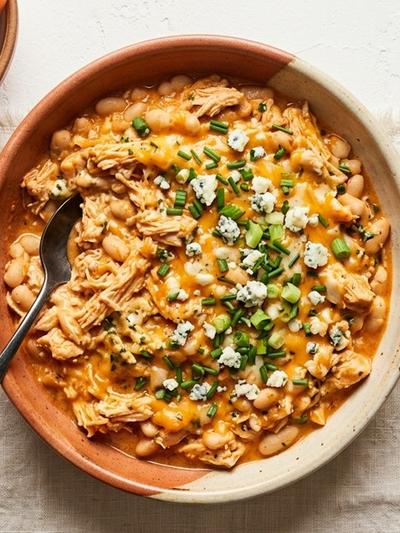
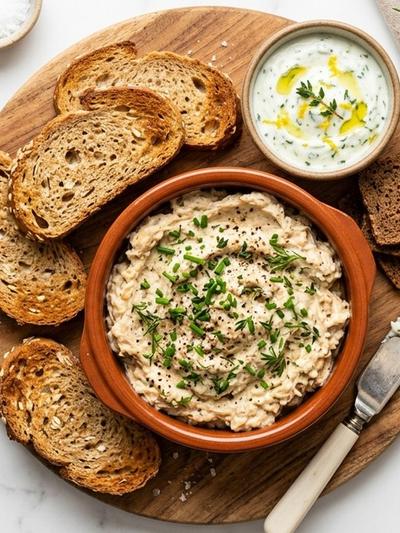
Each of these snack-sized mezze cups delivers 32 grams of protein from slow-cooked chicken breast, crumbled feta, and a spoonful of Greek yogurt for just 235 calories. The combination of lean chicken and two dairy sources creates a complete amino acid profile that supports muscle retention without tipping into heavy-meal territory. Sun-dried tomatoes contribute lycopene and a concentrated umami backbone, while Kalamata olives add heart-healthy monounsaturated fats in a measured dose.
The flavor here is distinctly eastern Mediterranean: oregano and thyme perfume the chicken during its slow braise, briny olives punch through the mild meat, and sweet roasted red peppers balance the tang of crumbled feta. A quick lemon-herb yogurt ties everything together with brightness and a creamy finish. The textures shift from tender pulled chicken to the pop of diced peppers and the crumbly salt of feta — enough variety to keep a small portion interesting from first bite to last.
This is a snack that earns its place in the fridge for people managing smaller appetites on GLP-1 medications. Each cup is satisfying without being heavy, portable without needing assembly, and works straight from the refrigerator. Ten minutes of hands-on work produces four ready-to-grab portions, so the effort-to-protein ratio is hard to beat.
Why This Works on GLP-1
Preserving lean muscle mass is one of the key nutritional priorities during GLP-1-assisted weight loss. These mezze cups provide 32 grams of protein per serving, primarily from chicken breast — a complete, highly bioavailable protein source. For someone on Wegovy or Mounjaro who struggles to eat full meals, a compact snack that quietly delivers this much protein can make the difference between meeting daily targets and falling short. Spreading protein intake across meals and snacks, rather than loading it into one or two sittings, also improves absorption and supports satiety between meals.
The fat content stays moderate at 9 grams per cup, with most of it coming from feta and olives rather than added cooking oils. This matters for GLP-1 users because the medication slows gastric emptying — high-fat foods can amplify nausea and discomfort, while moderate-fat foods provide flavor and satisfaction without sitting heavy. The lemon juice and herbs add brightness that can make food more appealing on days when appetite feels muted.
Greek yogurt contributes probiotics that support gut health, an underappreciated benefit during GLP-1 therapy when digestive patterns shift. The slow-cooker method breaks down the chicken fibers into tender, easily chewed shreds, reducing the mechanical work of digestion. This is a snack you can eat slowly, in small bites, without the protein becoming tough or unappealing as it cools.
Ingredients (serves 4)
For the slow cooker:
- 1 lb (450g) boneless, skinless chicken breast
- 1/2 cup (120ml) low-sodium chicken broth
- 3 cloves garlic, minced
- 2 tablespoons (16g) oil-packed sun-dried tomatoes, drained and finely chopped
- 1 teaspoon dried oregano
- 1/2 teaspoon dried thyme
- 1/4 teaspoon smoked paprika
- Zest of 1 large lemon
- 1/4 teaspoon fine salt
- 1/4 teaspoon black pepper
For assembling the cups:
- 1/4 cup (35g) Kalamata olives, pitted and chopped
- 1/4 cup (40g) jarred roasted red peppers, drained and diced
- 2 tablespoons (30ml) fresh lemon juice
- 2 tablespoons (5g) fresh flat-leaf parsley, chopped
- 3 oz (85g) feta cheese, crumbled
For the lemon-herb yogurt:
- 1/2 cup (120g) plain Greek yogurt, 2% fat
- 1 tablespoon (15ml) fresh lemon juice
- 1/4 teaspoon dried oregano
- Pinch of fine salt
Instructions
Season and load the slow cooker:
Pat the chicken breasts dry with a paper towel. Season both sides with the oregano, thyme, smoked paprika, salt, and pepper, pressing the herbs into the surface so they adhere.
Scatter the minced garlic and chopped sun-dried tomatoes across the bottom of the slow cooker. Place the seasoned chicken breasts on top in a single layer — the garlic and tomatoes underneath will infuse the broth as it cooks.
Pour the chicken broth around the chicken rather than over it, so the seasoning stays in place. Scatter the lemon zest directly on top of the chicken.
Cook and shred:
Cover and cook on Low for 3 hours, or High for 1 hour 30 minutes, until the chicken reaches an internal temperature of 165°F (74°C) and pulls apart easily with a fork. Chicken breast dries out quickly past this point, so check at the minimum time.
Transfer the chicken to a cutting board. Using two forks, pull the meat apart into bite-sized shreds — keep some texture rather than shredding it to threads, since you want each cup to have satisfying pieces.
Return the shredded chicken to the slow cooker. Toss gently with the cooking liquid until evenly moistened. Fold in the chopped Kalamata olives and diced roasted red peppers. Add the lemon juice and half the parsley, then stir to combine. The residual heat will warm the olives and peppers through without making them mushy.
Assemble the mezze cups:
Divide the chicken mixture evenly among four small airtight containers, ramekins, or wide-mouth mason jars. Let the portions cool for about 10 minutes at room temperature.
Top each cup with crumbled feta and the remaining parsley. Cover and refrigerate.
Make the lemon-herb yogurt:
In a small bowl, stir together the Greek yogurt, lemon juice, oregano, and salt until smooth. Transfer to a small separate container and refrigerate alongside the cups. Keeping the yogurt separate prevents the cups from becoming watery.
When ready to eat, spoon the yogurt over a cup or use it as a dip alongside. These taste best cold or at room temperature — no reheating required.
Nutrition per Serving
| Nutrient | Amount (approx.) |
|---|---|
| Calories | ~235 kcal |
| Protein | ~32g |
| Fat | ~9g |
| Carbohydrates | ~5g |
| Fiber | ~1g |
Estimate based on 1 lb raw boneless skinless chicken breast, 3 oz feta, 1/2 cup 2% Greek yogurt, and standard jarred roasted red peppers and Kalamata olives. Actual values vary with specific brands and chicken size.
Practical Notes
Refrigerator life and storage. These cups keep well for up to 4 days in the refrigerator when stored in airtight containers. Always keep the lemon-herb yogurt in a separate container until serving — adding it to the cups in advance releases moisture and dilutes the flavors. If you prefer warm snacks, the chicken mixture reheats in the microwave in 30 to 45 seconds, but add the yogurt and feta after heating.
Add fiber with dippers. The cups themselves are low in fiber, so pairing them with cucumber rounds, bell pepper strips, or a few whole-grain crackers rounds out the snack. A medium cucumber cut into rounds adds about 2 grams of fiber and negligible calories, and the cool crunch complements the tender chicken.
Start with half a cup if you are early in your GLP-1 journey. Half a portion still provides about 16 grams of protein and only 118 calories. You can always come back for the second half later. Small, frequent protein intake tends to work better than forcing a larger portion when appetite is suppressed.
Swap the feta if it is too sharp. Mild goat cheese crumbles work well if feta feels too briny, and they have a similar protein-to-fat ratio. Shaved Parmesan is another option — use about 2 tablespoons per cup and add it just before eating so it stays dry and distinct.
Double the batch without doubling the work. Use 2 pounds of chicken breast and increase the broth to 3/4 cup. Everything else scales linearly. The slow cooker handles larger batches without changing the cook time, since the low, even heat penetrates regardless of volume. Eight cups will carry you and a partner through four days of afternoon snacking.
Frequently Asked Questions
Can I use chicken thighs instead of chicken breast?
What if I do not have a slow cooker — can I make these another way?
Can I freeze the mezze cups for longer storage?
I can only eat a few bites at a time on my GLP-1 medication — how should I approach these?
How do I prevent the chicken from drying out in the slow cooker?
This article provides general food and nutrition guidance only. It does not constitute medical advice. Always consult your healthcare provider regarding your GLP-1 medication and individual nutritional needs.