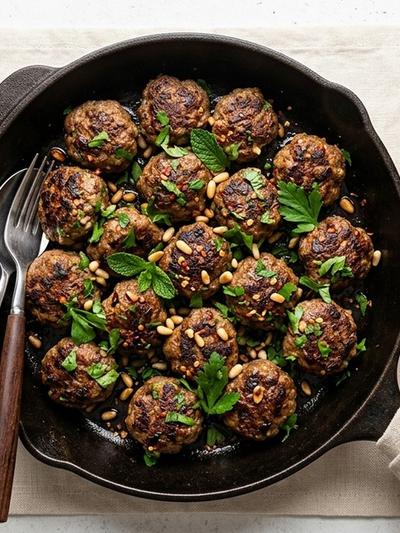
Each snack-sized serving of these Moroccan-spiced turkey kefta delivers 30 grams of protein from lean ground turkey paired with white beans, all for under 275 calories. The combination of cumin, paprika, and cinnamon gives the meatballs a deeply savory warmth, while the light tomato sauce adds moisture without heaviness. This is a one-skillet recipe that comes together in about 20 minutes from start to finish.
The flavor profile draws on the classic Moroccan kefta tradition — small, well-seasoned meatballs braised in a fragrant tomato base. Fresh parsley and a squeeze of lemon at the finish brighten the warm spices, while cannellini beans add a creamy, mild texture that rounds out each bite. The sauce concentrates as it simmers, coating each meatball in a glossy, cumin-scented glaze.
For GLP-1 users, this recipe hits a practical sweet spot: it is portioned as a satisfying snack rather than a full meal, making it ideal when appetite is limited but protein needs remain high. The soft-textured meatballs and gentle sauce are easy on digestion, and the entire dish can be made in one skillet with minimal cleanup.
Why This Works on GLP-1
Preserving lean muscle mass is one of the most important nutritional goals during GLP-1-assisted weight loss, and protein intake is the primary lever. Each serving of these turkey kefta delivers 30 grams of complete protein — roughly half the minimum daily target many dietitians recommend for people on Mounjaro or similar GLP-1 medications. Because the meatballs are made with 93% lean ground turkey, you get that protein without excessive saturated fat, which can be difficult to tolerate when gastric emptying is slowed.
The cannellini beans contribute both additional plant protein and soluble fiber, which supports steady blood sugar response between meals. The tomato-based sauce keeps the dish moist and easy to eat, an important consideration when GLP-1 medications reduce saliva production or make dry foods less appealing.
Cumin, beyond its characteristic warmth, has mild carminative properties that may help ease the digestive discomfort some Wegovy and Ozempic users experience in early weeks of treatment. The modest fat content — just 10 grams per serving — means this snack is unlikely to trigger the nausea that higher-fat foods can provoke during GLP-1 therapy.
Ingredients (serves 4)
For the kefta meatballs:
- 1 lb (450g) ground turkey, 93% lean
- 1 teaspoon ground cumin
- 1 teaspoon sweet paprika
- 1/2 teaspoon ground cinnamon
- 1/4 teaspoon ground black pepper
- 1/2 teaspoon fine sea salt
- 2 tablespoons finely chopped fresh flat-leaf parsley
- 1 clove garlic, minced
For the sauce:
- 2 teaspoons olive oil
- 1 small yellow onion, finely diced (about 3/4 cup / 110g)
- 1 clove garlic, minced
- 1 can (14.5 oz / 410g) diced tomatoes, undrained
- 1/2 cup (90g) canned cannellini beans, rinsed and drained
- 1 teaspoon ground cumin
- 1/2 teaspoon sweet paprika
- 1/4 teaspoon salt
- 1/4 cup (60ml) water
To finish:
- 2 tablespoons chopped fresh flat-leaf parsley
- 1 tablespoon fresh lemon juice
- Lemon wedges for serving
Instructions
Form the kefta:
- In a medium bowl, combine the ground turkey with cumin, paprika, cinnamon, pepper, salt, parsley, and garlic. Mix gently with your hands until the spices are evenly distributed — overmixing makes the meatballs tough. Roll the mixture into 16 small meatballs, about 1 heaping tablespoon each. Setting them on a plate as you go keeps your hands free for the next step.
Build the sauce and cook:
Heat the olive oil in a 10- or 12-inch skillet over medium heat. Add the diced onion and cook for 3 to 4 minutes, stirring occasionally, until softened and just beginning to turn golden. Add the garlic and cook for 30 seconds until fragrant.
Pour in the diced tomatoes with their juices, then add the cannellini beans, cumin, paprika, salt, and water. Stir to combine and bring the sauce to a gentle simmer. The sauce should be loose enough that the meatballs will poach rather than fry — add another splash of water if it looks too thick.
Nestle the meatballs into the sauce in a single layer, spacing them so they have room to cook evenly. Cover the skillet, reduce heat to medium-low, and simmer for 12 to 14 minutes. The meatballs are done when they reach an internal temperature of 165°F (74°C) and the sauce has thickened slightly around them.
Remove the lid, scatter the fresh parsley over the top, and squeeze the lemon juice directly into the sauce. Swirl the skillet gently to incorporate. Serve warm, with lemon wedges on the side.
Nutrition per Serving
| Nutrient | Amount (approx.) |
|---|---|
| Calories | ~275 kcal |
| Protein | ~30g |
| Fat | ~10g |
| Carbohydrates | ~16g |
| Fiber | ~4g |
Estimates based on 93% lean ground turkey, canned diced tomatoes, and canned cannellini beans. Actual values may vary by brand.
Practical Notes
Meal prep storage. These kefta store well in the sauce for up to 4 days in the refrigerator. Portion into individual containers so you can grab a snack-sized serving without reheating the whole batch. They also freeze well for up to 2 months — thaw overnight in the fridge and reheat gently in a covered skillet.
Scaling for smaller appetites. If you are in the early weeks of GLP-1 treatment and eating very small amounts, serve just 2 to 3 meatballs with a spoonful of sauce. The protein density means even a half portion gives you 15 grams — enough to make a meaningful contribution to your daily intake.
Make the meatballs ahead. You can roll the kefta and refrigerate them on a parchment-lined plate for up to 24 hours before cooking. Cold meatballs actually hold their shape better when placed into the simmering sauce, so this is a practical shortcut rather than a compromise.
Serving suggestions. These work well as a standalone snack, but you can also serve them over a small portion of couscous or with a piece of whole wheat pita for a more substantial mini-meal. A tablespoon of plain Greek yogurt on the side adds creaminess and an extra 3 grams of protein.
Ground chicken substitution. If you cannot find lean ground turkey, 93% lean ground chicken works identically in this recipe. Avoid fattier grinds (85% lean or below), as the extra fat will make the sauce greasy and may cause digestive discomfort on GLP-1 medications.
Frequently Asked Questions
Can I eat these kefta if I experience nausea on my GLP-1 medication?
Can I make these without the cannellini beans?
How should I reheat these for best texture?
What if I can only eat very small portions right now?
Why do the meatballs need to be small rather than full-sized?
This article provides general food and nutrition guidance only. It does not constitute medical advice. Always consult your healthcare provider regarding your GLP-1 medication and individual nutritional needs.