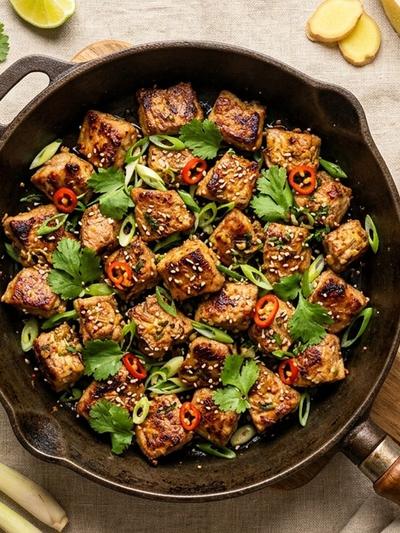
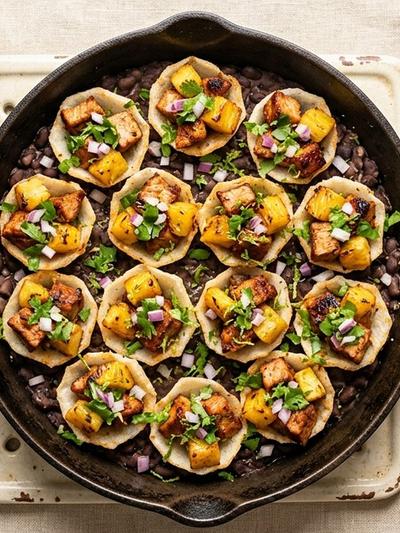
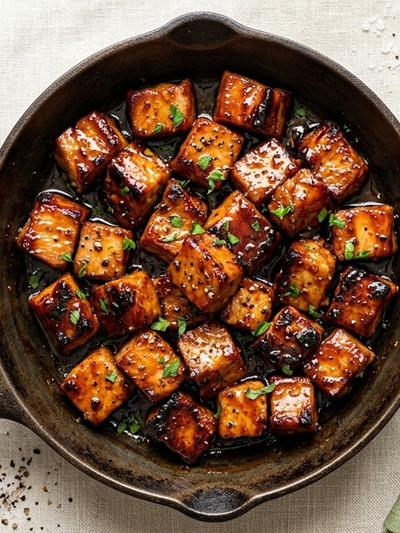
Each serving of these Caribbean jerk pork lettuce cups delivers 28 grams of protein from lean pork tenderloin, supported by black beans that add both fiber and slow-releasing carbohydrates. The combination of pork and beans creates a complete amino acid profile while keeping calories at just 275 per serving. Fresh mango provides natural sweetness along with vitamin C and beta-carotene, nutrients that support immune function during active weight management.
The flavor here is unmistakably Caribbean — warm allspice and thyme anchor the jerk seasoning, while scotch bonnet brings a fruity heat that plays beautifully against the cool sweetness of ripe mango. Crisp butter lettuce wraps everything in a clean, refreshing shell that adds texture contrast without extra calories. A drizzle of lime juice and a spoonful of Greek yogurt tie the warm and cool elements together into something that tastes far more indulgent than its macro profile suggests.
Lettuce cups are an ideal snack format for GLP-1 users because they offer built-in portion control — each cup is a self-contained bite that you can eat slowly and stop when satisfied. The pork is cut into small dice that cook quickly and are easy to chew and digest, which matters when gastric emptying is slowed. Everything comes together in one skillet in under 25 minutes, making this a realistic weekday snack that doesn't require meal prep commitment.
Why This Works on GLP-1
Pork tenderloin is one of the leanest cuts available, delivering 22 grams of protein per four-ounce portion with only 3 grams of fat. Combined with the protein from black beans and Greek yogurt, each serving reaches 28 grams — a meaningful amount for preserving lean muscle mass during GLP-1-assisted weight loss. Research consistently shows that distributing protein across meals and snacks, rather than loading it into one or two large meals, leads to better muscle protein synthesis. For people on Mounjaro or similar medications who are eating smaller portions at each sitting, a high-protein snack like this helps bridge the gap between meals.
The black beans contribute 5 grams of fiber per serving, predominantly soluble fiber that forms a gel-like substance during digestion. This works with, rather than against, the slowed gastric emptying that GLP-1 medications cause — the fiber adds gentle bulk without the bloating that raw vegetables or very high-fiber foods can trigger. The mango adds a small amount of additional fiber along with digestive enzymes that can help ease stomach discomfort.
The overall calorie density of this snack sits in a sweet spot for GLP-1 users — substantial enough to provide real nutrition and satisfaction, but light enough at 275 calories that it won't crowd out main meals. The balance of protein, complex carbohydrates, and modest fat creates steady energy rather than a blood sugar spike, which complements the glucose-regulating effects of GLP-1 medications.
Ingredients (serves 4)
For the jerk pork:
- 1 lb (450g) pork tenderloin, trimmed and cut into 1/2-inch dice
- 1 tablespoon olive oil
- 2 teaspoons ground allspice
- 1 teaspoon dried thyme
- 1/2 teaspoon garlic powder
- 1/2 teaspoon onion powder
- 1/4 teaspoon ground cinnamon
- 1/4 teaspoon cayenne pepper (or finely minced scotch bonnet to taste)
- 1/2 teaspoon salt
- 1/4 teaspoon black pepper
For the filling:
- 1 can (15 oz / 425g) black beans, drained and rinsed
- 1 ripe mango, peeled and diced into 1/2-inch pieces (about 1 cup / 165g)
- 3 scallions, thinly sliced (white and green parts separated)
- 2 cloves garlic, minced
- 1 tablespoon fresh lime juice
- 1 teaspoon low-sodium soy sauce
For serving:
- 12 butter lettuce leaves (about 2 heads)
- 1/4 cup (60g) plain Greek yogurt (2% or nonfat)
- 1 lime, cut into wedges
- Fresh cilantro leaves (optional)
Instructions
Prepare the pork and spice mix:
- Pat the diced pork tenderloin dry with paper towels — this step ensures proper browning rather than steaming, which builds the caramelized flavor that makes jerk seasoning sing.
- In a small bowl, combine the allspice, thyme, garlic powder, onion powder, cinnamon, cayenne, salt, and black pepper. Toss the diced pork with the spice mixture until evenly coated.
Cook the skillet filling:
- Heat the olive oil in a large nonstick skillet or cast-iron pan over medium-high heat until the oil shimmers but doesn't smoke.
- Add the seasoned pork in a single layer and cook without stirring for 2 minutes, allowing the bottom to develop a golden-brown crust. Stir and continue cooking for another 2–3 minutes until the pork is cooked through and lightly charred on several sides.
- Reduce heat to medium. Add the scallion whites and garlic, stirring for 30 seconds until fragrant — the residual heat blooms the aromatics without burning them.
- Add the drained black beans and soy sauce, stirring to combine. Cook for 2 minutes until the beans are warmed through and have absorbed some of the jerk spice flavor from the pan.
- Remove from heat. Fold in the diced mango and lime juice gently — adding the mango off-heat preserves its fresh texture and prevents it from breaking down into mush.
- Taste and adjust seasoning with additional salt or lime juice as needed.
Assemble the lettuce cups:
- Spoon approximately 1/3 cup of the pork and bean mixture into each butter lettuce leaf.
- Top each cup with a small dollop of Greek yogurt, a scatter of scallion greens, and cilantro if using. Serve with lime wedges on the side.
Nutrition per Serving
| Nutrient | Amount (approx.) |
|---|---|
| Calories | ~275 kcal |
| Protein | ~28g |
| Fat | ~8g |
| Carbohydrates | ~19g |
| Fiber | ~5g |
Estimates based on USDA data for pork tenderloin, canned black beans, fresh mango, and 2% Greek yogurt. Each serving is 3 lettuce cups.
Practical Notes
This works beautifully as meal prep. Cook the pork and bean filling in bulk and store in airtight containers for up to 4 days in the refrigerator. Keep the lettuce leaves, yogurt, and mango separate until serving — assemble fresh each time so the lettuce stays crisp and the mango keeps its texture.
Adjust the heat level to your comfort. GLP-1 medications can increase sensitivity to spicy foods. Start with just the cayenne pepper at the stated amount, which gives warmth without real burn. If you tolerate heat well, a quarter of a scotch bonnet pepper, seeded and finely minced, adds authentic Caribbean fire and fruity complexity.
Swap the lettuce for other vessels. If butter lettuce isn't available, Bibb lettuce or small romaine hearts work well. For a heartier version that fits a lunch slot, spoon the filling into a small whole-wheat tortilla — this adds roughly 100 calories and 3 grams of fiber per wrap.
Eat these slowly and mindfully. The individual lettuce cup format naturally slows your eating pace, which is especially helpful during the first weeks on Wegovy or similar medications when your stomach is still adjusting to new fullness signals. Start with two cups, wait ten minutes, and add a third only if you're still hungry.
Frozen mango works in a pinch. Thaw frozen mango chunks in the refrigerator overnight or run them under warm water for a few minutes. Pat dry before folding into the skillet filling. The texture will be slightly softer than fresh but the flavor remains excellent, and frozen mango is often more consistent in sweetness than out-of-season fresh mangoes.
Frequently Asked Questions
Can I eat these lettuce cups if I'm in the first few weeks of GLP-1 treatment?
Can I use ground pork instead of pork tenderloin?
How should I store and reheat leftovers?
What if I can only eat very small portions right now?
Can I make the jerk spice blend ahead of time?
This article provides general food and nutrition guidance only. It does not constitute medical advice. Always consult your healthcare provider regarding your GLP-1 medication and individual nutritional needs.