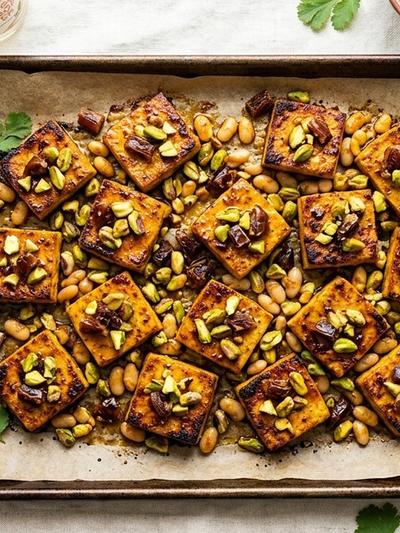
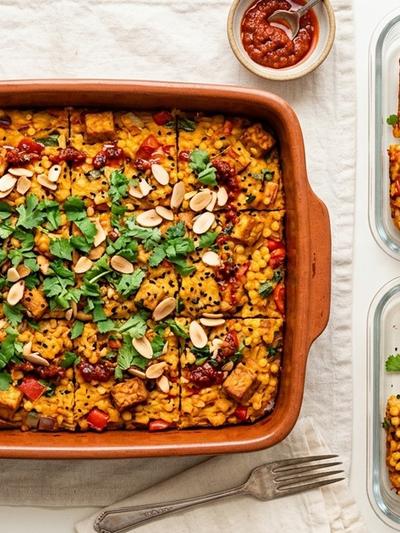
Each serving of these roasted tempeh and chickpea bites delivers 20 grams of complete plant-based protein alongside 8 grams of fiber, all packed into a 258-calorie snack portion. The combination of soy-based tempeh and chickpeas provides all essential amino acids without any meat, while smoked paprika and crushed caraway seeds create a spice crust that crisps beautifully in a hot oven. You get meaningful protein density from two sources that complement each other nutritionally, plus enough fiber to slow digestion and extend satiety between meals.
The flavor here is unmistakably Tunisian. Caraway, cumin, and coriander form the backbone of tabil, the foundational spice blend of Tunisian cooking, while smoked paprika deepens everything with a warmth that never overwhelms. The tempeh cubes develop caramelized edges against the sheet pan, the chickpeas turn shatteringly crisp, and the roasted bell pepper pieces go sweet and jammy. A quick dip made from Greek yogurt swirled with harissa paste brings the characteristic smoky-hot punch that ties the whole plate together.
This is the kind of snack that works with a reduced appetite rather than against it. You can eat three or four bites, set the rest aside, and come back to them cold or at room temperature without any loss of quality. Everything is firm, dry-surfaced, and easy on the stomach, with no heavy oils or dense doughs that can sit uncomfortably when your gastric emptying is already slowed.
Why This Works on GLP-1
Twenty grams of plant-based protein per serving puts these bites in strong territory for a snack, especially one that stays well under 300 calories. Preserving lean muscle mass is one of the most important nutritional goals during GLP-1-assisted weight loss, and consistent protein intake throughout the day, including at snack time, supports that directly. For someone on Wegovy or a similar semaglutide medication, appetite suppression often means skipping snacks entirely, which can leave protein intake dangerously low by the end of the day. A handful of these bites bridges that gap without requiring a full meal-sized commitment.
The 8 grams of fiber per serving come from two gentle sources: the whole soybeans in tempeh and the soluble fiber in chickpeas. Neither is harsh on the digestive system the way raw cruciferous vegetables or very high-fiber cereals can be, which matters when your gastric motility is already slowed by medication. Roasting both ingredients further softens their fiber structure, making them easier to digest than their raw or boiled equivalents.
Tempeh also provides meaningful iron, calcium, and B vitamins, nutrients that can fall short when overall food intake drops. The fermentation process that produces tempeh increases the bioavailability of these minerals compared to unfermented soy, so your body absorbs more from a smaller portion. Chickpeas add folate and manganese to the mix, rounding out a nutrient profile that goes well beyond just protein and calories.
Ingredients (serves 4)
For the sheet pan bites:
- 10 oz (280g) tempeh, cut into 3/4-inch (2cm) cubes
- 1 can (15 oz / 425g) chickpeas, drained, rinsed, and patted very dry
- 1 large red bell pepper, cut into 1-inch (2.5cm) pieces
- 2 tsp olive oil
- 1 1/2 tsp smoked paprika
- 1 tsp ground cumin
- 1/2 tsp ground coriander
- 1/2 tsp caraway seeds, lightly crushed
- 1/4 tsp garlic powder
- 1/4 tsp fine salt
- Pinch of cayenne pepper (optional)
For the harissa yogurt dip:
- 1/4 cup (60g) nonfat plain Greek yogurt
- 2 tsp harissa paste
- 1 tbsp fresh lemon juice
- 1 tbsp fresh mint, finely chopped
- Pinch of salt
Instructions
Prepare the ingredients:
- Preheat your oven to 425°F (220°C) and line a large sheet pan with parchment paper. The high heat is essential for getting crispy chickpeas and caramelized tempeh edges rather than steamed, soft results.
- Cut the tempeh into 3/4-inch (2cm) cubes. Smaller cubes mean more surface area for the spice crust to develop, which is where most of the flavor lives.
- Drain and rinse the chickpeas, then spread them on a clean kitchen towel and pat them thoroughly dry. Moisture is the enemy of crispiness here. Roll them around in the towel and remove any loose skins that slip off, as those tend to burn before the chickpeas crisp.
- Cut the bell pepper into 1-inch (2.5cm) pieces, roughly the same size as the tempeh cubes so everything finishes cooking at the same time.
Season and arrange the pan:
- In a large bowl, combine the smoked paprika, cumin, coriander, crushed caraway seeds, garlic powder, salt, and cayenne if using. Add the olive oil and stir into a loose paste.
- Add the tempeh cubes, dried chickpeas, and bell pepper pieces to the bowl. Toss everything together until the spice mixture coats all surfaces evenly. The oil is minimal by design, so use your hands to press the spices into the tempeh cubes where they will stick best.
- Spread the mixture in a single layer on the prepared sheet pan, making sure nothing overlaps. Crowding traps steam and prevents browning. If your pan feels tight, use two pans on separate oven racks.
Roast:
- Place the sheet pan in the center of the oven and roast for 12 minutes undisturbed. Resist opening the oven door during this time so the chickpeas can begin to dehydrate and pop.
- Remove the pan, flip the tempeh cubes, and shake the chickpeas around so they brown on all sides. Return to the oven for another 10 minutes, until the tempeh edges are deeply golden and the chickpeas are crunchy when you tap one with a spatula.
Make the dip and serve:
- While the bites roast, stir together the Greek yogurt, harissa paste, lemon juice, chopped mint, and a pinch of salt in a small bowl. Taste and adjust the harissa up or down depending on your heat preference and how your stomach is feeling.
- Transfer the roasted bites to a serving plate or divide among four containers. Serve the harissa yogurt dip alongside for dunking. These are best eaten with your fingers or small toothpicks.
Nutrition per Serving
| Nutrient | Amount (approx.) |
|---|---|
| Calories | ~258 kcal |
| Protein | ~20g |
| Fat | ~10g |
| Carbohydrates | ~23g |
| Fiber | ~8g |
Estimates based on standard USDA values for tempeh, canned chickpeas, nonfat Greek yogurt, and measured olive oil. Actual values may vary slightly by brand of tempeh and harissa paste.
Practical Notes
These store beautifully for grab-and-go snacking. Keep the roasted bites and the dip in separate airtight containers in the refrigerator for up to 4 days. The tempeh and chickpeas stay firm and flavorful cold, or you can spread them back on a sheet pan and reheat at 400°F (200°C) for 5 minutes to restore crispiness. Pack the dip in a small separate container so it does not soften the bites.
Crushing the caraway seeds releases their flavor. Do not skip this step or use them whole. Place the seeds in a small zip-top bag and press them with the bottom of a heavy mug, or use a mortar and pestle. You want them cracked, not powdered. Whole caraway seeds taste like almost nothing on the outside but release a sharp, anise-like bite when you happen to chew one, which is unpleasant. Crushed seeds distribute that flavor evenly across every piece.
Adjust the harissa to your digestion. Early in your GLP-1 journey, when nausea and stomach sensitivity are most common, start with just 1 teaspoon of harissa in the dip and work up from there. The yogurt base tempers the heat considerably, but everyone's tolerance is different. A milder alternative is to replace the harissa with 1/2 teaspoon of smoked paprika stirred into the yogurt.
Swap the tempeh for extra-firm tofu if you prefer. Press a 14 oz (400g) block of extra-firm tofu for 15 minutes, then cut into cubes. Tofu absorbs the spice crust slightly differently — it will be crisper on the outside but softer inside, whereas tempeh stays chewy throughout. The protein per serving drops by about 3 grams with tofu, so consider adding 2 tablespoons of hemp seeds to the spice mixture to compensate.
Double the batch on meal prep day. The roasting time is the same whether you fill one pan or two, so there is no real penalty for making eight servings at once. The bites reheat well in an air fryer at 375°F (190°C) for 3 minutes, which actually makes them crispier than the original oven version.
Frequently Asked Questions
Can I eat these if I am in the first few weeks of my GLP-1 medication?
What can I use instead of tempeh if I cannot find it or have a soy allergy?
How long do these keep, and can I freeze them?
What if my appetite is very small and I cannot finish a full serving?
Why do the chickpeas need to be so thoroughly dried before roasting?
This article provides general food and nutrition guidance only. It does not constitute medical advice. Always consult your healthcare provider regarding your GLP-1 medication and individual nutritional needs.