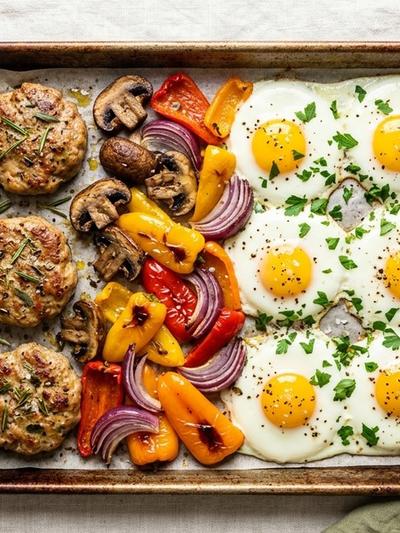
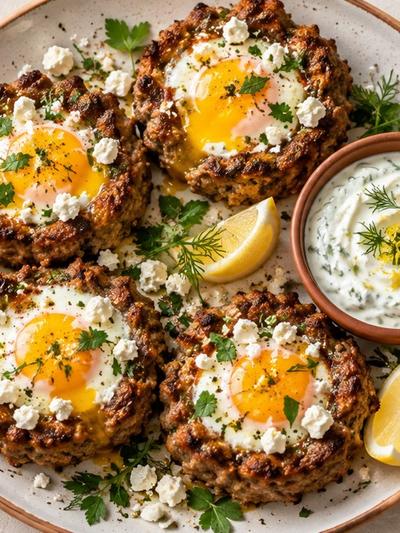
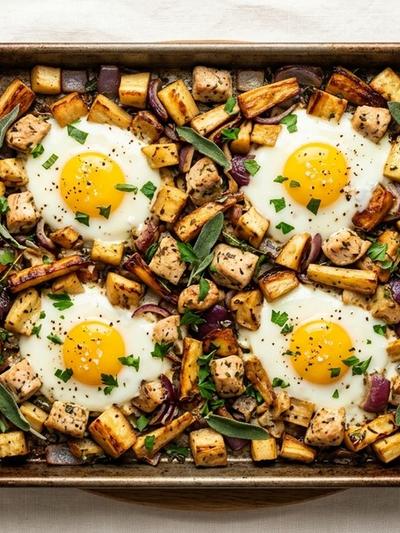
This sheet pan miso turkey breakfast hash packs 36 grams of protein into a warming, savory morning meal that comes together on a single pan. Lean ground turkey gets tossed with white miso paste and fresh ginger before roasting alongside shiitake mushrooms, sweet potato, and shelled edamame. Eggs baked directly on the pan bring the total protein count to a level that supports muscle preservation all morning. At just 395 calories per serving, every bite earns its place.
White miso brings a subtle, sweet umami depth to the turkey that pairs naturally with the earthy richness of roasted shiitake mushrooms. Cubes of sweet potato caramelize at the edges, adding gentle sweetness that balances the savory miso glaze. A finish of toasted sesame seeds, sliced scallions, and a drizzle of rice vinegar keeps the plate bright and layered without overwhelming the palate first thing in the morning.
Sheet pan breakfasts work especially well for GLP-1 users because the entire meal cooks together, making portion control visual and effortless. The combination of slow-digesting protein from turkey and eggs, paired with fiber from edamame and sweet potato, creates lasting satiety without the heavy, overstuffed feeling that GLP-1 medications can intensify.
Why This Works on GLP-1
Each serving delivers 36 grams of protein from two complementary sources: lean ground turkey provides 21 grams while a whole baked egg contributes another 6 grams, with edamame and shiitake mushrooms rounding out the total. For people taking Mounjaro or other GLP-1 receptor agonists, maintaining adequate protein intake is critical because these medications can accelerate lean muscle loss alongside fat loss. Spreading protein across all three meals — starting with a strong breakfast — gives your body consistent amino acid availability for muscle protein synthesis throughout the day. This hash makes that goal achievable without requiring you to eat a large volume of food.
The 6 grams of fiber per serving come primarily from edamame and sweet potato, both of which are gentle on the digestive system compared to raw cruciferous vegetables or high-bran cereals. GLP-1 medications slow gastric emptying, which means fiber-rich foods that might normally pass through quickly can sit longer in the stomach — choosing softer, cooked fiber sources reduces the risk of uncomfortable bloating or cramping.
White miso is a fermented food that contributes beneficial enzymes and supports gut health during a period when your digestive system is adjusting to medication effects. The combination of complex carbohydrates from sweet potato with protein and healthy fats also provides steady energy release, avoiding the blood sugar spikes that can worsen nausea for some Wegovy and Ozempic users in their first weeks of treatment.
Ingredients (serves 4)
For the miso turkey:
- 1 lb (454g) 93% lean ground turkey
- 2 tablespoons (36g) white miso paste
- 1 tablespoon (15ml) low-sodium soy sauce
- 1 tablespoon freshly grated ginger (about a 1-inch piece)
- 1 teaspoon (5ml) toasted sesame oil
For the sheet pan vegetables:
- 1 small sweet potato (about 6 oz / 170g), peeled and diced into ½-inch cubes
- 8 oz (227g) shiitake mushrooms, stems removed, caps sliced
- 1 cup (155g) shelled edamame (thawed if frozen)
- 2 heads baby bok choy (about 7 oz / 200g), quartered lengthwise
- Avocado oil cooking spray
For the baked eggs and finish:
- 4 large eggs
- 1 tablespoon (15ml) rice vinegar
- 3 scallions, thinly sliced
- 2 teaspoons toasted sesame seeds
- Pinch of flaky sea salt
Instructions
Preheat and start the sweet potato:
Position a rack in the center of the oven and preheat to 425°F (220°C). Line a large rimmed sheet pan (18 × 13 inches) with parchment paper and mist lightly with avocado oil spray.
Spread the diced sweet potato in a single layer on the prepared pan. Mist the cubes lightly with cooking spray and roast for 10 minutes to give them a head start — they take longer than the other ingredients to soften and develop caramelized edges.
Mix the miso turkey:
- While the sweet potato roasts, combine the ground turkey, white miso paste, soy sauce, grated ginger, and sesame oil in a medium bowl. Mix with your hands or a fork until the miso is evenly distributed throughout the meat — you want every pinch of turkey to carry that umami flavor. Don't overwork the mixture; gentle folding keeps the texture tender after roasting.
Build the sheet pan:
Remove the pan from the oven. Scatter the miso turkey in rough, uneven crumbles over and around the sweet potato — resist the urge to pack it into a solid layer, because irregular pieces develop more browned, crispy edges. Add the sliced shiitake mushrooms and edamame to the pan, distributing them evenly between the turkey crumbles.
Return the pan to the oven and roast for 10 minutes, until the turkey is cooked through and the mushrooms have started to shrink and darken at the edges.
Add the bok choy and eggs:
Pull the pan out and tuck the quartered bok choy into any open spaces around the edges. Using the back of a spoon, press four shallow wells into the turkey-vegetable mixture, spacing them evenly across the pan. Crack one egg into each well.
Return the pan to the oven and bake for 5 to 7 minutes, depending on how you like your eggs. At 5 minutes the whites will be just set with runny yolks; at 7 minutes the yolks will be jammy and creamy throughout.
Finish and serve:
Remove the pan from the oven. Drizzle the rice vinegar evenly over the hash — this brightness cuts through the richness of the miso and eggs. Scatter the sliced scallions and sesame seeds over the top and finish with a pinch of flaky sea salt.
Divide the hash into four equal portions, making sure each serving includes one baked egg, a share of turkey, and a good mix of vegetables. Serve immediately while the egg yolk is still warm and flowing.
Nutrition per Serving
| Nutrient | Amount (approx.) |
|---|---|
| Calories | ~395 kcal |
| Protein | ~36g |
| Fat | ~19g |
| Carbohydrates | ~21g |
| Fiber | ~6g |
Calculated using 93% lean ground turkey, large eggs, and standard USDA values for all vegetables, edamame, and seasonings.
Practical Notes
Meal prep this for weekday mornings. Roast the turkey, sweet potato, mushrooms, and edamame in advance and store in airtight containers for up to 4 days. When you're ready to eat, spread a portion on a small oven-safe plate, crack a fresh egg on top, and bake at 400°F (200°C) for 8 to 10 minutes. The precooked hash reheats beautifully; the egg is always better made fresh.
Swap the sweet potato for butternut squash or daikon. Diced butternut squash roasts on the same timeline and pairs equally well with miso if you want a slightly less sweet base. For a lower-carb version, try peeled daikon radish cut into cubes — it softens beautifully in the oven and cuts the carbohydrate count by more than half.
Start with a half portion if you're in early GLP-1 treatment. Many people in their first weeks on medication find full portions overwhelming at breakfast. Plate half a serving — still about 18 grams of protein — and save the rest for later. Even a smaller portion of this hash delivers meaningful protein and a satisfying balance of flavors that outperforms skipping breakfast entirely.
Use whatever miso paste you have on hand. White (shiro) miso works best here for its mild, slightly sweet character, but yellow miso is a perfectly fine substitute. Avoid red (aka) miso for this breakfast application — its stronger, saltier punch can taste too intense first thing in the morning. Miso paste keeps for months in the refrigerator, so a single tub will last through many batches of this hash.
Keep the eggs runny for a built-in sauce. The soft yolk acts as a rich, creamy dressing that coats the turkey and vegetables as you break into it. If runny eggs aren't your preference or you're meal prepping all portions in advance, scramble the eggs separately and add them when serving — baked eggs lose their appeal once fully cooked and reheated.
Frequently Asked Questions
Can I eat this if I'm experiencing nausea from my GLP-1 medication?
Can I use turkey breast instead of ground turkey?
How long does the cooked hash keep in the refrigerator?
What if my appetite is too small for a full serving?
Do I need to thaw frozen edamame before adding them to the pan?
This article provides general food and nutrition guidance only. It does not constitute medical advice. Always consult your healthcare provider regarding your GLP-1 medication and individual nutritional needs.