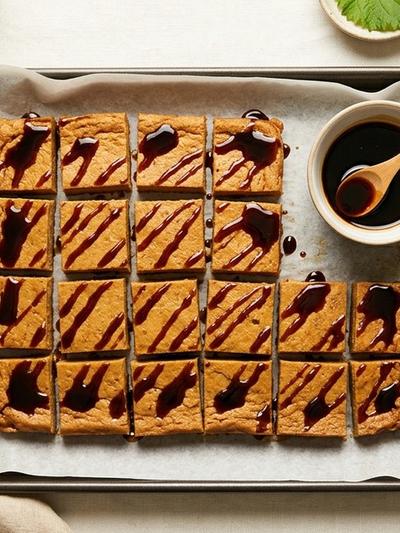
Each serving of these Japanese-inspired protein bites delivers 28 grams of protein from lean ground beef and egg whites, making them one of the most protein-dense sweet snacks you can bake on a single sheet pan. Black sesame paste adds earthy richness and healthy fats, while a thin matcha-yogurt drizzle brings a gentle bitterness that balances the sweetness without adding sugar. At just 285 calories per four-bite serving, you get substantial protein without excess volume.
The flavor profile here is distinctly Japanese — roasted black sesame carries a deep, almost smoky nuttiness that pairs surprisingly well with lightly sweetened beef. A small amount of mirin and miso paste in the mixture creates umami depth that keeps these bites from tasting like a typical protein bar. The texture is dense and fudgy, closer to a Japanese manju than a Western brownie, with a slight chew from oat flour.
For GLP-1 users, these bites solve the common problem of sweet cravings without the blood sugar spike or digestive heaviness of traditional desserts. The dense format means one or two bites feel genuinely satisfying, and the high protein content supports satiety far longer than conventional sweets. Sheet pan baking keeps preparation simple — mix, spread, bake, slice.
Why This Works on GLP-1
With 28 grams of protein per serving, these bites deliver more than many full meals while functioning as a sweet snack. Preserving lean muscle mass is critical during GLP-1-assisted weight loss, and research consistently shows that distributing protein across meals and snacks — rather than concentrating it at dinner — improves muscle protein synthesis. For people on Mounjaro or similar medications who find their appetite significantly reduced, a protein-rich sweet snack can help meet daily protein targets without requiring another large savory meal.
The fiber from oat flour and black sesame seeds adds gentle bulk without the bloating that high-fiber bars sometimes cause. Oat flour is one of the better-tolerated fiber sources for people experiencing the slowed gastric emptying common with GLP-1 medications, and the moderate 3 grams per serving keeps things comfortable.
The combination of protein and healthy fats from sesame creates a slow, steady energy release rather than the spike-and-crash cycle of sugar-based sweets. Miso paste contributes B vitamins and beneficial enzymes, while matcha provides L-theanine, which some studies associate with reduced stress eating — a useful complement to the appetite-regulating effects of Zepbound and similar medications.
Ingredients (serves 4)
For the protein bites:
- 12 oz (340g) extra-lean ground beef (95% lean)
- 2 large egg whites
- 3 tablespoons (45g) black sesame paste (nerigoma)
- 2 tablespoons (30g) white miso paste
- 1 tablespoon (15ml) mirin
- 2 tablespoons (25g) coconut sugar
- ½ cup (45g) oat flour
- 2 tablespoons (16g) black sesame seeds
- ¼ teaspoon fine sea salt
For the matcha drizzle:
- ¼ cup (60g) plain Greek yogurt (2% fat)
- 1 teaspoon (2g) culinary-grade matcha powder
- 1 teaspoon (5ml) honey
- 1 teaspoon (5ml) warm water
Instructions
Prepare the mixture:
Preheat your oven to 350°F (175°C) and line a quarter sheet pan (9×13 inches) with parchment paper. The parchment prevents sticking and makes cleanup effortless, which matters when working with a sticky protein mixture.
In a large bowl, combine the black sesame paste, miso paste, mirin, and coconut sugar. Stir until smooth — the miso and sesame paste will resist blending at first, but persistent stirring for about 30 seconds brings them together into a glossy, dark paste.
Add the egg whites and whisk vigorously until fully incorporated. The egg whites lighten the mixture and will provide structure during baking, binding the beef without adding fat.
Crumble the ground beef into the bowl in small pieces. Add the oat flour, black sesame seeds, and salt. Mix with your hands or a sturdy spatula until everything is evenly distributed — about 1 minute of mixing. The mixture will be dense and slightly sticky.
Shape and bake:
Transfer the mixture to the prepared sheet pan and press it into an even layer about ¾ inch (2cm) thick. Wet your hands slightly to prevent sticking. Use the back of a spoon to smooth the top — an even layer ensures uniform cooking so edges don't dry out while the center stays raw.
Bake for 22–25 minutes until the top is firm to the touch and the edges have pulled away slightly from the parchment. The internal temperature should reach 160°F (71°C). The bites will firm up considerably as they cool, so don't overbake — they should still have slight give when pressed.
Remove from the oven and let cool on the pan for 10 minutes, then transfer the parchment with the slab to a wire rack. Allow to cool completely — at least 20 minutes — before slicing. Cutting while warm will crumble the bites.
Make the matcha drizzle:
- While the bites cool, whisk together the Greek yogurt, matcha powder, honey, and warm water in a small bowl. Sift the matcha first if your powder is clumpy — lumps won't dissolve in cold yogurt. The drizzle should be thick enough to hold a line when drizzled from a spoon.
Slice and finish:
Cut the cooled slab into 16 squares (4 rows × 4 columns). Each serving is 4 squares. Use a sharp knife and clean the blade between cuts for neat edges.
Drizzle the matcha yogurt over the bites in thin lines, or serve it on the side as a dipping sauce. If meal prepping, store the drizzle separately to keep the bites from getting soggy.
Nutrition per Serving
| Nutrient | Amount (approx.) |
|---|---|
| Calories | ~285 kcal |
| Protein | ~28g |
| Fat | ~11g |
| Carbohydrates | ~18g |
| Fiber | ~3g |
Estimates based on 95% lean ground beef, standard nerigoma black sesame paste, and 2% Greek yogurt. Actual values may vary by brand.
Practical Notes
Meal prep storage. Store bites in an airtight container in the refrigerator for up to 5 days, with parchment paper between layers. Keep the matcha drizzle in a separate small container. The bites actually taste better cold from the fridge — the texture becomes denser and more fudge-like, which many GLP-1 users prefer since cold foods can be easier to eat in small quantities.
Black sesame paste substitute. If you cannot find nerigoma (Japanese black sesame paste), you can use tahini mixed with 1 tablespoon of toasted black sesame seeds. The flavor will be lighter but still works well. Avoid using raw sesame paste — the roasted version is essential for the nutty depth. Most Asian grocery stores stock nerigoma near the condiments.
Adjusting sweetness for GLP-1 taste changes. Many people on Wegovy or Ozempic report that their sweet tolerance changes — things taste sweeter than before. Start with just 1 tablespoon of coconut sugar and taste the raw mixture (the beef is safe to skip tasting, but you can assess sweetness from the paste alone). You can always drizzle a bit more honey on top after baking if needed.
Freezing for long-term prep. These bites freeze exceptionally well for up to 2 months. Freeze them on a parchment-lined tray until solid, then transfer to a freezer bag. Thaw individual bites in the refrigerator overnight or at room temperature for 15 minutes. Make the matcha drizzle fresh when ready to eat.
Portion control tip. Wrap individual servings of 4 bites each in parchment paper before storing. When appetite is very low — common in early weeks of GLP-1 treatment — even 2 bites with a glass of water can deliver 14 grams of protein and help you meet minimum daily targets without feeling overwhelmed by food volume.
Frequently Asked Questions
Can I eat these if I'm in the first few weeks of GLP-1 medication and have very low appetite?
Can I use regular ground beef instead of extra-lean?
How should I store and reheat these for weekly meal prep?
What if I find the texture too dense or dry?
Can I make these without miso paste?
This article provides general food and nutrition guidance only. It does not constitute medical advice. Always consult your healthcare provider regarding your GLP-1 medication and individual nutritional needs.