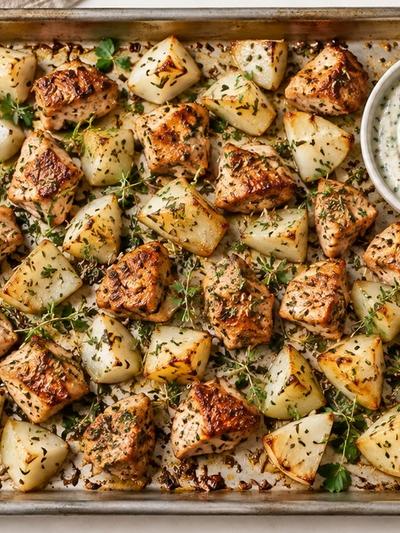
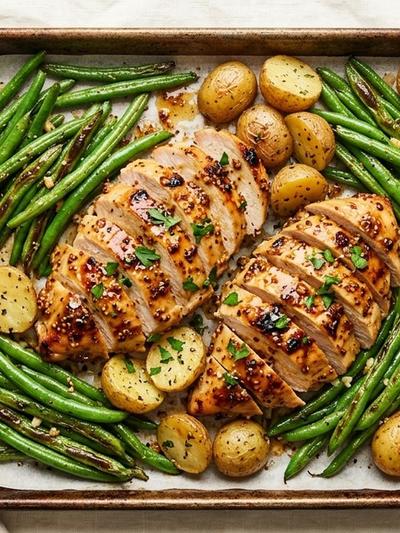
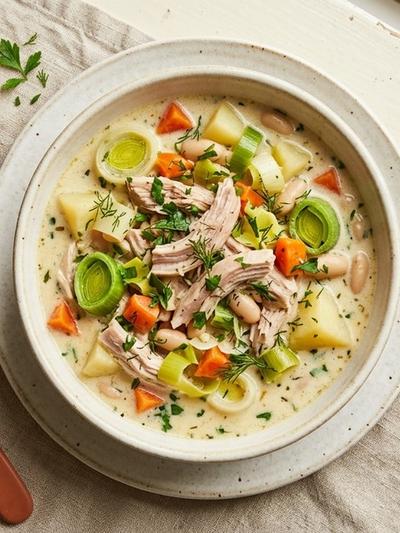
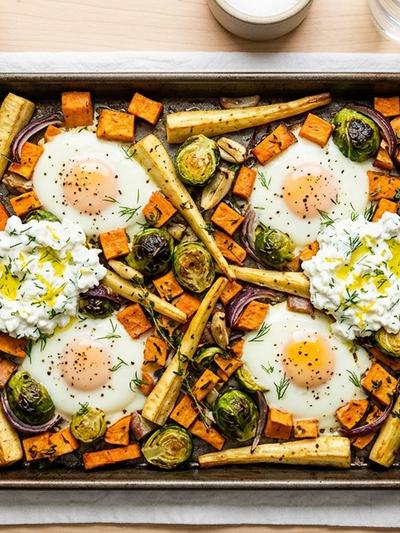
This sheet pan lunch delivers 38 grams of protein per serving, primarily from lean turkey breast tenderloin roasted alongside caramelized fennel and white cannellini beans. Each portion provides a complete amino acid profile with meaningful fiber from the beans and fennel, plus iron and B vitamins essential during active weight management. The lemon-thyme seasoning keeps sodium moderate while maximizing flavor across every component on the pan.
Fennel transforms when roasted — its mild licorice edge softens into a sweet, almost buttery flavor that pairs beautifully with the savory turkey and earthy white beans. Cherry tomatoes burst in the oven heat, creating a natural sauce that coats the beans and keeps everything moist. A simple Dijon-lemon dressing, whisked together while the pan roasts, ties the French-inspired flavors together without adding heaviness.
For GLP-1 users, this recipe checks critical boxes: high protein density in a moderate portion, gentle fiber from beans and fennel that won't overwhelm a slower-moving digestive system, and a format that makes weekday lunches effortless. Roasting everything on one pan means minimal cleanup, and the components reheat without losing texture — making this an ideal meal prep candidate for three to four days of satisfying midday meals.
Why This Works on GLP-1
Each serving provides 38 grams of protein from turkey breast, one of the leanest complete protein sources available. Maintaining adequate protein intake is critical during GLP-1-assisted weight loss, as medications like Mounjaro and Wegovy can reduce appetite significantly, making it easy to under-eat protein without realizing it. Muscle preservation depends on consistent high-protein meals, and this lunch supplies over half the daily minimum most dietitians recommend during active weight loss. The turkey breast format makes the protein easy to portion and track accurately.
The 7 grams of fiber per serving comes from a gentle combination of cannellini beans and roasted fennel — both sources that are well-tolerated by most people experiencing the slowed gastric emptying common with GLP-1 medications. Unlike raw cruciferous vegetables or very high-fiber grains, roasted fennel and cooked beans are soft and partially broken down by heat, reducing the likelihood of bloating or discomfort.
At 345 calories per serving, this lunch leaves substantial room in a daily calorie budget while still providing real satiety. The combination of protein and fiber creates a slow, steady energy release through the afternoon, avoiding the blood sugar spikes that can come from carb-heavy lunches. The modest 9 grams of fat per serving keeps the meal light on digestion without sacrificing moisture or flavor.
Ingredients (serves 4)
For the turkey and vegetables:
- 1¼ lb (560g) turkey breast tenderloin, cut into 1-inch medallions
- 2 medium fennel bulbs (about 1 lb / 450g total), trimmed and cut into ½-inch wedges
- 1 can (15 oz / 425g) cannellini beans, drained and rinsed
- 1 cup (150g) cherry tomatoes, halved
- 1 tablespoon (15ml) extra-virgin olive oil
- 1 teaspoon dried thyme
- ½ teaspoon dried herbes de Provence
- ½ teaspoon garlic powder
- ¼ teaspoon fine sea salt
- ¼ teaspoon black pepper
For the Dijon-lemon dressing:
- 2 tablespoons (30ml) fresh lemon juice
- 1 tablespoon (15ml) Dijon mustard
- 1 teaspoon (5ml) extra-virgin olive oil
- 1 teaspoon honey
- 1 small garlic clove, finely grated
- Pinch of salt
For serving:
- 2 tablespoons chopped fresh parsley
- Fresh fennel fronds, if available
- Lemon wedges
Instructions
Prepare the sheet pan:
Preheat your oven to 425°F (220°C) and line a large rimmed sheet pan with parchment paper. The high heat is important — it caramelizes the fennel and tomatoes quickly while keeping the turkey moist through fast cooking.
Cut the fennel bulbs in half lengthwise, remove the tough core, then slice each half into ½-inch wedges. Reserve any green fronds for garnish. Keeping the wedges connected at the base helps them hold together during roasting.
Slice the turkey breast tenderloin into medallions about 1 inch thick. If the tenderloin tapers at the ends, cut those pieces slightly thicker so they cook evenly. Pat the medallions dry with paper towels — surface moisture prevents browning.
Season and arrange:
In a large bowl, toss the fennel wedges, drained cannellini beans, and halved cherry tomatoes with the olive oil, dried thyme, herbes de Provence, garlic powder, salt, and pepper. Spread this mixture in an even layer across the prepared sheet pan, giving the vegetables room to caramelize rather than steam.
Season the turkey medallions on both sides with a light pinch of salt, pepper, and a dusting of dried thyme. Nestle the medallions among the vegetables on the pan, pressing them gently into the surface so they make contact with the hot pan through the parchment.
Roast:
Place the sheet pan on the middle rack and roast for 20 to 22 minutes, until the turkey reaches an internal temperature of 165°F (74°C) and the fennel edges are golden brown. The cherry tomatoes should be collapsed and jammy, and the beans should have slightly crispy tops where they were exposed to heat.
Remove the pan from the oven and let it rest for 3 minutes. This brief rest allows the turkey juices to redistribute, keeping each medallion moist when sliced.
Make the dressing and serve:
While the pan roasts, whisk together the lemon juice, Dijon mustard, olive oil, honey, and grated garlic in a small bowl. The dressing should be loose and tangy — it brightens every component on the plate.
Divide the turkey, fennel, beans, and tomatoes among four plates or meal prep containers. Drizzle each portion with the Dijon-lemon dressing, scatter with fresh parsley and fennel fronds, and serve with a lemon wedge for squeezing over the top.
Nutrition per Serving
| Nutrient | Amount (approx.) |
|---|---|
| Calories | ~345 kcal |
| Protein | ~38g |
| Fat | ~9g |
| Carbohydrates | ~26g |
| Fiber | ~7g |
Estimates based on turkey breast tenderloin, canned cannellini beans, and measured olive oil. Actual values may vary with specific brands and turkey cut thickness.
Practical Notes
Meal prep storage. These components store well in airtight containers in the refrigerator for up to 4 days. Keep the dressing in a small separate container and add it just before eating — the lemon juice stays bright and the vegetables don't get soggy. Reheat the turkey and vegetables in a microwave for 90 seconds or in a 350°F oven for 8 minutes.
Turkey tenderloin alternatives. If you can't find turkey breast tenderloin, use a boneless, skinless turkey breast half and slice it into medallions yourself. Turkey cutlets from the deli counter also work — they're pre-sliced and cook even faster, needing only 15 to 17 minutes. Avoid ground turkey here; the medallion format holds moisture better during sheet pan roasting.
Fennel selection and prep. Choose fennel bulbs that feel heavy and firm with no browning on the outer layers. If fennel isn't available, substitute 2 large zucchini cut into half-moons — the cooking time stays the same. Celery hearts cut into 2-inch pieces are another option, though they'll be softer than fennel.
GLP-1 portion flexibility. If your appetite is particularly low, serve yourself half a portion — roughly 2 turkey medallions with some vegetables and beans — and refrigerate the rest for a second meal. Even a half portion provides about 19 grams of protein, making it nutritionally worthwhile. Many Zepbound and Ozempic users find that smaller, more frequent meals work better than forcing a full portion.
Boost the fiber gently. For additional fiber without digestive strain, add ½ cup of peeled and cubed butternut squash to the sheet pan — it roasts in the same time and adds about 3 grams of fiber per serving. Avoid adding raw greens to the pan; instead, serve the roasted components over a small bed of baby spinach, which wilts gently under the warm food.
Frequently Asked Questions
Can I eat this recipe during the first weeks of starting a GLP-1 medication?
Can I make this dairy-free and gluten-free?
How long do the leftovers keep, and what's the best way to reheat them?
What if I find the portion too large for my appetite on GLP-1?
Can I roast the fennel and beans ahead of time and add fresh turkey later?
This article provides general food and nutrition guidance only. It does not constitute medical advice. Always consult your healthcare provider regarding your GLP-1 medication and individual nutritional needs.