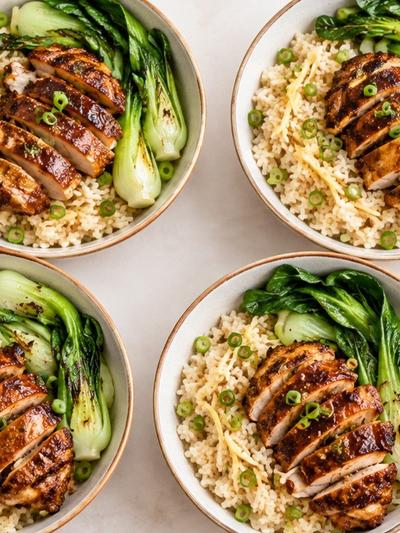
Each serving of these Thai chicken satay bowls delivers 42 grams of protein from a combination of lean chicken breast and shelled edamame, along with 6 grams of fiber to support steady digestion. At roughly 420 calories per portion, you get a nutritionally dense lunch that covers nearly half of most adults' daily protein needs. The bowls also provide a solid balance of complex carbohydrates from brown rice and essential fats from the peanut-lime sauce, without excess calories that can feel heavy on a smaller appetite.
The flavors here draw from traditional Thai satay — warm turmeric, earthy coriander, aromatic garlic, and a whisper of lemongrass in the marinade — but the real star is the peanut-lime sauce. It brings richness without heaviness, with the lime juice cutting through the nuttiness and a touch of rice vinegar keeping everything bright. Combined with the crunch of quick-pickled cucumbers and carrots, each bite has layers of texture and flavor that make this bowl feel like a restaurant lunch, not something pulled from the back of the fridge.
For GLP-1 users, these bowls solve the weekday lunch problem completely. You cook once on Sunday, portion into four containers, and grab one each morning without thinking. The components store and reheat separately, so the chicken stays tender and the pickled vegetables stay crisp rather than getting soggy. Small portions feel satisfying because the satay spices and peanut sauce deliver concentrated flavor — you taste every bite rather than eating on autopilot.
Why This Works on GLP-1
The 42 grams of protein per serving come from two complementary sources: lean chicken breast provides 31 grams of complete animal protein, while shelled edamame contributes another 5.5 grams of plant-based protein with additional fiber. This dual-source approach matters for anyone on Mounjaro or similar GLP-1 medications, because muscle preservation during weight loss depends on consistent, adequate protein intake at every meal. Research suggests spreading protein across meals rather than loading it into dinner gives your body the best chance of maintaining lean mass, and a 42-gram lunch does real work toward that goal.
The 6 grams of fiber per bowl come from brown rice, edamame, and the pickled vegetable slaw — all gentle, soluble-fiber sources that support digestion without the bloating that raw cruciferous vegetables or very high-fiber grains can cause. This matters because GLP-1 medications already slow gastric emptying, and pairing them with aggressive fiber loads can lead to discomfort. The fiber here is measured and moderate, enough to support gut health and blood sugar stability without overdoing it.
The fat content stays at 12 grams per serving, mostly from the peanut sauce and a small amount of cooking oil. That keeps the overall calorie density low while still providing enough fat for satiety and flavor. Turmeric in the marinade also brings curcumin, a well-studied anti-inflammatory compound, and the edamame contributes iron and folate — micronutrients that can become harder to get when overall food volume drops during GLP-1 treatment.
Ingredients (serves 4)
For the satay marinade and chicken:
- 1¼ lb (567g) boneless skinless chicken breast, cut into 1-inch strips
- 2 tablespoons low-sodium soy sauce
- ¼ cup (60ml) light coconut milk
- 1 teaspoon ground turmeric
- 1 teaspoon ground coriander
- ½ teaspoon ground cumin
- 2 cloves garlic, minced
- 1 teaspoon lemongrass paste (or 1 stalk, finely minced)
- 1 teaspoon honey
- 1 teaspoon neutral oil (avocado or grapeseed)
For the peanut-lime sauce:
- 3 tablespoons natural peanut butter (no sugar added)
- 2 tablespoons fresh lime juice (about 1 lime)
- 1 tablespoon low-sodium soy sauce
- 1 tablespoon rice vinegar
- 1 teaspoon honey
- 1 teaspoon sriracha (adjust to taste)
- 2–3 tablespoons warm water (to thin)
For the bowls:
- ⅔ cup (130g) dry brown rice
- 1⅓ cups (200g) shelled edamame (frozen is fine)
- 1 medium English cucumber, halved and thinly sliced
- 1 large carrot, julienned or shredded
- 2 tablespoons rice vinegar
- 1 teaspoon sesame seeds
- Fresh cilantro and lime wedges for serving
Instructions
Prepare the marinade and chicken:
- Whisk the soy sauce, light coconut milk, turmeric, coriander, cumin, garlic, lemongrass paste, honey, and oil together in a medium bowl. The coconut milk helps the spices adhere to the chicken while keeping the marinade light — you are building a thin coating, not a heavy batter.
- Add the chicken strips and toss to coat evenly. Cover and refrigerate for at least 15 minutes while you prepare everything else. If you are prepping the night before, marinating overnight deepens the flavor significantly.
Cook the rice and edamame:
- Rinse the brown rice under cold water and cook according to package directions, typically about 15–18 minutes in a rice cooker or 25 minutes on the stovetop. Slight undercooking by one minute helps, as the rice will soften further when reheated during the week.
- Cook the shelled edamame according to package directions — usually 3–4 minutes in boiling water or 2 minutes in the microwave. Drain and set aside.
Make the peanut-lime sauce:
- In a small bowl, whisk together the peanut butter, lime juice, soy sauce, rice vinegar, honey, and sriracha until smooth. Add warm water one tablespoon at a time until the sauce reaches a pourable but not watery consistency. It should coat the back of a spoon. Taste and adjust lime or sriracha to your preference.
Bake the chicken:
- Preheat your oven to 425°F (220°C) and line a sheet pan with parchment paper. Arrange the marinated chicken strips in a single layer with space between each piece — crowding causes steaming instead of browning, and browning is where the satay flavor develops.
- Bake for 16–18 minutes, flipping halfway through, until the internal temperature reaches 165°F (74°C) and the edges show golden-brown spots from the turmeric caramelizing. Let the chicken rest for 5 minutes before slicing against the grain into bite-sized pieces.
Prepare the quick-pickled vegetables:
- While the chicken bakes, toss the sliced cucumber and julienned carrot with the rice vinegar and a pinch of salt. Let this sit for at least 10 minutes — the vinegar lightly pickles the vegetables, giving them a tangy crunch that contrasts with the warm spiced chicken. These pickled vegetables improve over the course of the week rather than degrading.
Assemble the meal prep bowls:
- Divide the brown rice among four meal prep containers. Top each with the sliced satay chicken, edamame, and pickled cucumber-carrot slaw. Sprinkle with sesame seeds. Store the peanut-lime sauce in small separate containers or silicone cups — adding it fresh before eating prevents the rice from getting soggy.
- Tuck a lime wedge and a small pinch of fresh cilantro into each container if eating within 2–3 days. For days 4 and 5, add fresh cilantro and lime when you pull the container from the fridge.
Nutrition per Serving
| Nutrient | Amount (approx.) |
|---|---|
| Calories | ~420 kcal |
| Protein | ~42g |
| Fat | ~12g |
| Carbohydrates | ~35g |
| Fiber | ~6g |
Estimates based on USDA values for boneless skinless chicken breast, cooked brown rice, shelled edamame, and natural peanut butter. Actual values may vary with specific brands and exact portion sizes.
Practical Notes
Store sauce separately for the best texture. The peanut-lime sauce thickens in the fridge, which is normal. Give it a quick stir and add a splash of warm water before drizzling over your bowl. Keeping it apart from the rice and chicken means every component stays at its best texture through day five.
Reheat the chicken and rice, eat the vegetables cold. Microwave the chicken and rice portion for 90 seconds to 2 minutes, then add the pickled vegetables, edamame, and sauce. The temperature contrast between warm chicken and cool crunchy slaw makes the bowl more interesting to eat — and the cold vegetables retain their snap.
Double the chicken for extra protein portioning. If you find 42 grams is still not hitting your daily targets, bake a second batch of marinated chicken and store it separately. You can add extra strips to any bowl, or eat them cold as a standalone snack. The satay marinade makes plain chicken breast taste far better than the usual bland meal-prep chicken.
Swap brown rice for cauliflower rice to drop calories. Replacing the brown rice with steamed cauliflower rice reduces each bowl to roughly 310 calories and 12 grams of carbs while keeping the protein identical. This works well for anyone in an earlier phase of Wegovy or Zepbound treatment who finds even half a cup of grain too filling.
Freeze two bowls if you won't eat four in a week. The chicken and rice freeze well for up to 3 months — just thaw overnight in the fridge and reheat. The pickled vegetables and sauce should be made fresh for frozen bowls, but that takes under 5 minutes.
Frequently Asked Questions
I'm in my first weeks on Ozempic and can barely eat half a portion — how should I adjust?
Can I use chicken thighs instead of chicken breast?
How long do these bowls last in the fridge?
What if I have a peanut allergy?
Can I bake the chicken and make the sauce ahead of marinating?
This article provides general food and nutrition guidance only. It does not constitute medical advice. Always consult your healthcare provider regarding your GLP-1 medication and individual nutritional needs.