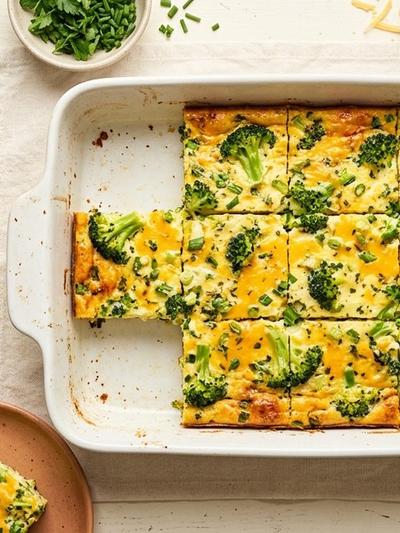
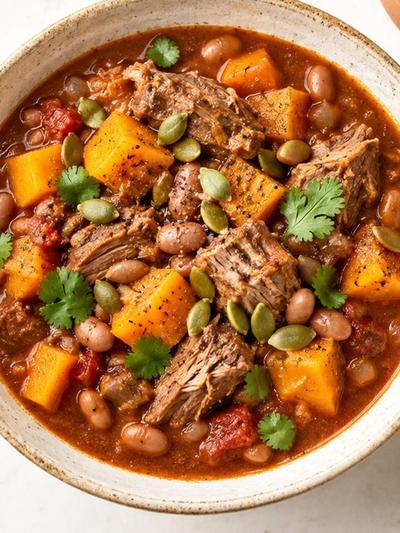
Each serving of this guajillo-sauced egg cazuela delivers 34 grams of protein and 9 grams of fiber from a combination of whole eggs, egg whites, cottage cheese, and pinto beans. The dried guajillo chiles provide a deep, earthy warmth without aggressive heat, while the beans contribute both plant protein and slow-digesting complex carbohydrates. At 385 calories per serving, this is a nutritionally dense dinner that covers more than half of most adults' daily protein target in a single meal.
Guajillo chiles have a mild, slightly fruity heat with notes of dried berry and gentle smoke — they are one of the most versatile chiles in Mexican cooking. Blended with tomato and garlic, they create a rich, rust-colored sauce that perfumes the entire bake. Pepitas add a nutty crunch on top, while crumbled queso fresco brings a gentle saltiness that ties the warm chile flavors together with the creamy egg base beneath.
This cazuela is designed for the meal prep rhythm that works best on GLP-1 medications: cook once on a quieter day, then reheat individual portions throughout the week when appetite and energy are unpredictable. The egg and cottage cheese base stays moist when reheated, and the guajillo sauce actually deepens in flavor after a day in the refrigerator.
Why This Works on GLP-1
With 34 grams of protein per serving, this cazuela provides a substantial foundation for preserving lean muscle mass during weight loss — a primary concern for anyone on Mounjaro or similar GLP-1 receptor agonists. The protein comes from three complementary sources: whole eggs supply complete amino acids along with choline and vitamin D, egg whites add pure protein with virtually no fat, and cottage cheese contributes casein, a slow-digesting protein that supports overnight muscle repair. Research consistently shows that distributing protein across meals rather than loading it all at lunch improves muscle protein synthesis, making a protein-rich dinner especially valuable.
The 9 grams of fiber per serving come primarily from pinto beans, with additional contributions from the vegetables and corn tortilla strips. This amount supports healthy digestion without overwhelming a slower-moving GI tract — a common consideration for Wegovy users, whose gastric emptying is already reduced by the medication. The guajillo chile sauce is naturally low in capsaicin compared to hotter varieties like habanero or serrano, making it a flavorful but gentle choice for sensitive stomachs.
Pinto beans are also rich in folate, magnesium, and potassium — micronutrients that can become depleted during periods of reduced food intake. The combination of eggs and beans creates a complete amino acid profile that rivals animal proteins alone, while keeping the dish lower in saturated fat than a cheese-heavy casserole. The pepitas on top contribute zinc and healthy monounsaturated fats in a controlled, portioned amount.
Ingredients (serves 4)
For the guajillo sauce:
- 3 dried guajillo chiles, stemmed and seeded
- 1 medium tomato (about 5 oz / 150g), quartered
- 1/2 medium white onion (about 3 oz / 85g), roughly chopped
- 2 cloves garlic, peeled
- 1/2 cup (120ml) hot chile soaking water
- 1/4 teaspoon ground cumin
- Salt to taste
For the egg base:
- 6 large eggs
- 8 large egg whites (or 1 cup / 240ml liquid egg whites)
- 1 cup (226g) low-fat cottage cheese
- 1/4 teaspoon smoked paprika
- 1/4 teaspoon dried Mexican oregano
- Freshly ground black pepper
For the cazuela:
- Cooking spray
- 1 medium zucchini (about 7 oz / 200g), diced small
- 1 medium bell pepper (about 5 oz / 150g), diced small
- 1 can (15 oz / 425g) pinto beans, drained and rinsed
- 2 small corn tortillas, cut into thin strips
For topping:
- 2 tablespoons (18g) raw pepitas (pumpkin seeds)
- 1 oz (28g) queso fresco, crumbled
- Fresh cilantro, chopped (optional)
- Lime wedges for serving
Instructions
Make the guajillo sauce:
Toast the dried guajillo chiles in a dry skillet over medium heat for about 1 minute per side, pressing them flat with a spatula, until they become fragrant and slightly pliable. Watch them closely — burnt guajillos turn bitter and will ruin the sauce.
Transfer the toasted chiles to a small bowl, cover with boiling water, and soak for 15 minutes until completely softened. While the chiles soak, prepare the vegetables and egg base.
Add the softened chiles, tomato quarters, chopped onion, garlic, cumin, a pinch of salt, and 1/2 cup of the soaking liquid to a blender. Blend until completely smooth, about 60 seconds. The sauce should be a deep rust-red color with no visible chunks.
Prepare the egg base:
Preheat the oven to 375°F (190°C). Coat a 9 x 13-inch (23 x 33 cm) baking dish with cooking spray.
In a large bowl, whisk together the whole eggs, egg whites, cottage cheese, smoked paprika, oregano, and a generous grinding of black pepper. The cottage cheese will remain slightly lumpy — that is fine. It melts into pockets of creaminess during baking.
Assemble and bake:
Spread half the guajillo sauce across the bottom of the prepared baking dish. This layer prevents sticking and infuses the bottom of the cazuela with flavor as it bakes.
Scatter the diced zucchini, bell pepper, pinto beans, and corn tortilla strips evenly over the sauce layer.
Pour the egg mixture over the vegetables and beans, then spoon the remaining guajillo sauce in dollops across the top. Use a knife to gently swirl the sauce into the egg mixture — you want visible streaks of red, not a uniform color.
Sprinkle the pepitas and crumbled queso fresco over the top.
Bake for 35 to 40 minutes, until the center is set and does not jiggle when you gently shake the pan. The top should be lightly golden with a few darker spots around the pepitas. A knife inserted in the center should come out clean.
Let the cazuela cool in the pan for at least 10 minutes before slicing. This rest period allows the egg custard to firm up, making clean cuts much easier. Cut into 4 equal portions.
Nutrition per Serving
| Nutrient | Amount (approx.) |
|---|---|
| Calories | ~385 kcal |
| Protein | ~34g |
| Fat | ~13g |
| Carbohydrates | ~33g |
| Fiber | ~9g |
Estimates based on USDA data for large eggs, low-fat cottage cheese, canned pinto beans, dried guajillo chiles, and raw pepitas. Actual values may vary with specific brands and exact quantities used.
Practical Notes
Meal prep storage. Slice the cooled cazuela into individual portions, wrap each tightly in plastic wrap or place in airtight containers, and refrigerate for up to 5 days. The guajillo sauce acts as a natural moisture barrier, so portions stay tender rather than drying out. For longer storage, freeze individual slices wrapped tightly for up to 2 months, then thaw overnight in the refrigerator before reheating.
Reheating for best results. Microwave individual portions for 90 seconds to 2 minutes on medium power, covering loosely to trap steam. For a slightly crisper top, reheat uncovered in a 350°F (175°C) oven for 10 to 12 minutes. Avoid reheating on high microwave power, which can make egg dishes rubbery.
Guajillo chile substitution. If you cannot find dried guajillo chiles, use 2 tablespoons of ancho chile powder mixed into 1/2 cup of crushed canned tomatoes as a simpler alternative. The flavor will be slightly sweeter and less tangy, but the dish still works well. Avoid cayenne or generic chili powder blends, which are much hotter and often contain added cumin and garlic that throw off the balance.
Boost the protein further. Stir 2 tablespoons of unflavored collagen peptides into the egg mixture before baking for an additional 6 grams of protein per serving without changing the flavor or texture. This is particularly helpful during the early weeks on GLP-1 medication when portions tend to be smallest and every gram of protein counts.
Pair with a simple side. This cazuela is satisfying on its own, but if your appetite allows, serve it alongside a small portion of brown rice or a simple green salad dressed with lime juice and a pinch of salt. The cazuela provides the protein and fiber foundation — let the side add variety rather than extra calories.
Frequently Asked Questions
Can I eat this during my first weeks on GLP-1 medication when my appetite is very small?
Can I make this without cottage cheese if I am lactose intolerant?
How long does this keep in the refrigerator, and can I freeze it?
What if I cannot find dried guajillo chiles at my local store?
Can I add meat to this cazuela for even more protein?
This article provides general food and nutrition guidance only. It does not constitute medical advice. Always consult your healthcare provider regarding your GLP-1 medication and individual nutritional needs.