 By Gerald
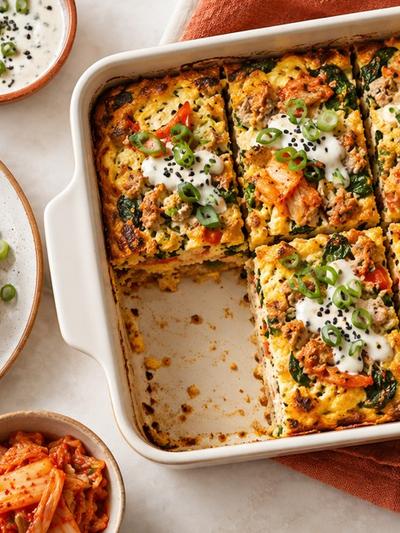
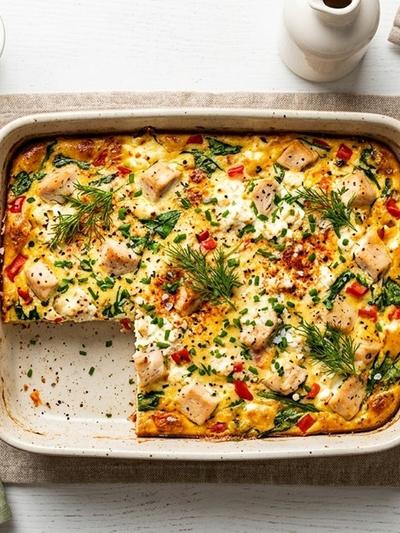
Each serving of this chicken tinga egg bake packs 38 grams of protein from a combination of lean chicken breast, whole eggs, and black beans. That trio also delivers iron, choline, and B vitamins that support energy levels and muscle repair during active weight loss. The dish bakes as a single pan and cuts into four even portions, each under 400 calories with balanced macros that keep you fueled through the morning without heaviness.
Tinga is one of the great Mexican pantry sauces: fire-roasted tomatoes, smoky chipotle peppers in adobo, sweet onion, and a hit of cumin. The chipotles bring a deep, rounded warmth rather than sharp heat, and they mellow further during baking. Layered with tender shredded chicken, creamy black beans, and soft-set eggs, the casserole has the satisfying density of a breakfast burrito filling without the oversized tortilla wrapper.
As a meal-prep format, this solves the hardest meal on GLP-1 medication: breakfast. When your appetite is lowest in the morning, pulling a single pre-portioned square from the fridge and reheating it for two minutes means you still get meaningful protein without having to face a full cooking session. The eggs set into a custard-like binder that reheats gently without drying out, and the tinga sauce keeps everything moist through the week.
Why This Works on GLP-1
Thirty-eight grams of protein per serving puts this bake well above the threshold research suggests for preserving lean muscle mass during weight loss. That matters especially during the first months on medications like Wegovy or Mounjaro, when rapid appetite suppression can lead to muscle loss if protein intake drops too low. The protein here comes from three sources with complementary amino acid profiles: chicken breast provides the bulk, eggs contribute leucine-rich complete protein, and black beans round out the total while adding slow-digesting plant protein.
Black beans contribute 6 grams of fiber per serving — mostly soluble fiber that feeds beneficial gut bacteria and helps regulate the blood sugar response from the carbohydrates in the dish. The moderate fiber load is intentional: enough to support digestion without the bloating that very high-fiber meals can trigger alongside GLP-1 medications that already slow gastric emptying.
The fat content stays moderate at 13 grams per serving, with most of it coming from the egg yolks rather than added cooking fat. Egg yolks also deliver choline, a nutrient many adults fall short on, which supports liver function during active fat metabolism. The calorie density of 382 per serving means you get a nutritionally complete breakfast without the portion size feeling overwhelming on a reduced appetite.
Ingredients (serves )
For the tinga base:
- 1 lb (450g) boneless, skinless chicken breast
- 1 can (14.5 oz / 411g) fire-roasted diced tomatoes, undrained
- 2 chipotle peppers in adobo sauce, minced, plus 1 tablespoon adobo sauce
- 1 medium yellow onion, diced (about 1 cup / 150g)
- 3 cloves garlic, minced
- 1 teaspoon ground cumin
- 1/2 teaspoon dried Mexican oregano (or regular oregano)
- 1 tablespoon olive oil
- 1/2 teaspoon salt, plus more to taste
For the egg bake:
- 6 large eggs
- 1 can (15 oz / 425g) black beans, drained and rinsed
- 1/4 cup (30g) cotija cheese, crumbled
- 2 tablespoons fresh cilantro, roughly chopped
- Cooking spray for the baking dish
Instructions
Amounts in the method are for 4 servings.
Poach and shred the chicken:
Place the chicken breasts in a medium saucepan and cover with cold water by about 1 inch. Add a pinch of salt. Bring to a gentle boil over medium-high heat, then reduce to a low simmer and cook for 12 to 14 minutes until the internal temperature reaches 165F (74C). Poaching rather than pan-searing keeps the breast tender without adding fat, and the low simmer prevents the exterior from toughening.
Transfer the chicken to a cutting board and let it rest for 3 minutes. Use two forks to shred the meat into bite-sized pieces. The fibers separate easily while the chicken is still warm.
Build the tinga sauce:
While the chicken poaches, heat the olive oil in a large skillet over medium heat. Add the diced onion and cook for 4 to 5 minutes, stirring occasionally, until softened and translucent. The onion sweetness is essential to balance the smoky heat of the chipotles.
Add the minced garlic, cumin, and oregano. Stir for 30 seconds until fragrant. Pour in the entire can of fire-roasted tomatoes with their juices, then add the minced chipotle peppers and the tablespoon of adobo sauce. Stir everything together and let the sauce simmer for 3 to 4 minutes until it thickens slightly and the flavors meld. Taste and adjust salt.
Fold the shredded chicken into the tinga sauce, stirring until every piece is coated. Remove from heat.
Assemble and bake the casserole:
Preheat your oven to 375F (190C). Lightly coat a 9x9-inch (23x23 cm) baking dish with cooking spray.
Spread the drained black beans in an even layer across the bottom of the baking dish. Spoon the chicken tinga mixture evenly over the beans. This layering keeps the beans from floating to the top and ensures every portion gets an equal share.
Crack the 6 eggs into a medium bowl and whisk until fully combined with no streaks of white remaining. Season with a pinch of salt and a few grinds of black pepper. Pour the beaten eggs evenly over the chicken and bean layers. Use a fork to gently nudge the chicken in a few spots so the egg mixture can seep down through the layers.
Bake uncovered for 25 to 28 minutes, until the eggs are fully set in the center and the edges just begin to pull away from the dish. The surface should look matte, not wet. A toothpick or knife inserted into the center should come out clean.
Remove from the oven and immediately scatter the crumbled cotija cheese and chopped cilantro over the top. The residual heat softens the cotija slightly without melting it into a pool. Let the bake cool in the dish for at least 10 minutes before cutting — this rest firms the structure and makes clean portioning possible.
Cut into 4 equal squares. Serve warm, or let cool completely before transferring portions to individual airtight containers for the week.
Nutrition per Serving
| Nutrient | Amount (approx.) |
|---|---|
| Calories | ~382 kcal |
| Protein | ~38g |
| Fat | ~13g |
| Carbohydrates | ~24g |
| Fiber | ~6g |
Estimates based on USDA data for boneless skinless chicken breast, large eggs, canned black beans, fire-roasted tomatoes, chipotle in adobo, and cotija cheese.
Practical Notes
Reheating without drying out. Microwave individual portions for 90 seconds to 2 minutes on medium power, loosely covered. The tinga sauce acts as a built-in moisture layer, but medium power prevents the egg from turning rubbery. A splash of water over the top before microwaving helps if you are reheating from day four or five.
Refrigerator meal prep window. Store cut portions in airtight containers in the refrigerator for up to 5 days. The bake actually improves on day two as the chipotle flavor deepens. If you want to freeze portions, wrap individual squares tightly in plastic wrap and then foil — they hold well for up to 6 weeks. Thaw overnight in the refrigerator before reheating.
Adjusting the heat level. Two chipotle peppers in adobo produce a mild-to-medium smokiness, not aggressive spice. For very sensitive stomachs in the early weeks of GLP-1 medication, reduce to one pepper and half a tablespoon of adobo sauce. For more heat, add a third chipotle or stir in a teaspoon of your preferred hot sauce before baking.
Swapping the chicken. Boneless skinless chicken thighs work here with almost no change to the method — increase the poaching time to 16 to 18 minutes and expect slightly higher fat per serving (about 3 grams more). Ground chicken is faster: brown 1 lb in the skillet before building the sauce directly in the same pan, skipping the poaching step entirely.
Boosting the fiber. If your digestion handles higher fiber comfortably, stir 1/2 cup (80g) of roasted diced sweet potato or roasted corn kernels into the chicken tinga layer before adding the eggs. Either addition pushes fiber above 8 grams per serving without significantly changing the protein or calorie count.
Frequently Asked Questions
Can I eat this on days when my GLP-1 appetite is very low?
Can I make this dairy-free?
How should I reheat this if I do not have a microwave at work?
I am in my first month on Ozempic and everything feels heavy. Will this sit well?
Can I prep the tinga filling ahead and bake fresh in the morning?
This article provides general food and nutrition guidance only. It does not constitute medical advice. Always consult your healthcare provider regarding your GLP-1 medication and individual nutritional needs.