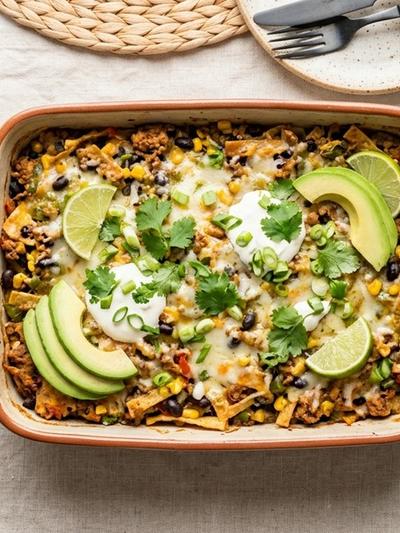
Each serving of this masala turkey egg bake delivers 43 grams of protein from two complementary sources — lean ground turkey and whole eggs — while keeping calories at a manageable 410. The combination provides all essential amino acids plus meaningful amounts of iron from the spinach and B vitamins from the eggs. A cool mint yogurt on the side adds another 4 grams of protein and rounds the meal with probiotics that support gut health.
The flavor here draws from the Indian masala omelette tradition, where eggs meet a base of bloomed spices and sautéed aromatics. Ground turmeric gives the bake a golden color and earthy warmth, while cumin and garam masala bring the layered savory depth that makes Indian breakfast cooking so satisfying. Wilted spinach and sweet green peas scattered through every slice add pockets of color and a gentle vegetal contrast to the richly spiced turkey.
This bake is designed for the reality of eating on GLP-1 medications: smaller portions that still need to carry real nutritional weight. A single square provides a complete breakfast without the volume that can feel overwhelming when your appetite is reduced. The soft, moist texture of a baked egg dish is easy on a sensitive stomach, and the mint yogurt doubles as both flavor and digestive support.
Why This Works on GLP-1
Preserving lean muscle mass is one of the central nutritional challenges during GLP-1-assisted weight loss, and getting enough protein at every meal is how you protect it. At 43 grams per serving, this breakfast bake covers roughly half the daily protein target most dietitians recommend for people on Wegovy or similar medications. The turkey provides the bulk of that protein in a lean, easily digested form, while the eggs contribute high-quality complete protein along with choline, which supports liver function during weight loss.
The spinach and peas add gentle fiber — about 3 grams per serving — without the bloating risk that comes from very high-fiber grains or raw cruciferous vegetables. The cooked spinach is particularly stomach-friendly, as heat breaks down the oxalates and makes the iron more accessible. Turmeric's curcumin, activated by the small amount of fat in the dish, adds its own anti-inflammatory properties.
The dish is calorie-dense enough to sustain you through a morning without being heavy. At 410 calories, each square delivers a strong protein-to-calorie ratio of roughly 10 grams per 100 calories — one of the most efficient breakfast options you can meal-prep ahead. The moderate fat content from eggs and turkey keeps you satiated without the sluggish feeling that higher-fat breakfasts can cause on GLP-1 medications.
Ingredients (serves 4)
For the masala turkey bake:
- 1 lb (450g) lean ground turkey (93% lean)
- 8 large eggs
- 1/2 cup (130g) plain nonfat Greek yogurt
- 5 oz (140g) fresh baby spinach
- 3/4 cup (100g) frozen green peas, thawed
- 1 medium yellow onion, finely diced
- 3 cloves garlic, minced
- 1 tablespoon fresh ginger, finely grated
- 1 teaspoon ground turmeric
- 1 teaspoon garam masala
- 1 teaspoon ground cumin
- 1/2 teaspoon ground coriander
- 1/4 teaspoon cayenne pepper (optional — omit for sensitive stomachs)
- 3/4 teaspoon fine sea salt
- 2 teaspoons olive oil
- Cooking spray
For the mint yogurt:
- 3/4 cup (180g) plain nonfat Greek yogurt
- 3 tablespoons fresh mint leaves, finely chopped
- 1 tablespoon fresh lemon juice
- 1/4 teaspoon ground cumin
- Pinch of salt
For garnish:
- Fresh cilantro leaves
- Pinch of red pepper flakes (optional)
Instructions
Prepare the mint yogurt:
- Stir the yogurt, chopped mint, lemon juice, cumin, and salt together in a small bowl until evenly combined. This takes thirty seconds and benefits from resting in the refrigerator while you build the bake — the mint flavor deepens as it sits. Cover and refrigerate.
Cook the masala turkey base:
Preheat your oven to 375°F (190°C). Lightly coat an 8×8-inch (20×20 cm) baking dish with cooking spray and set aside.
Heat the olive oil in a large nonstick skillet over medium heat. Add the diced onion and cook for 4 to 5 minutes, stirring occasionally, until softened and just starting to turn golden. Browning the onion here builds a savory foundation that dried spices alone cannot create.
Add the garlic and ginger and stir for 30 seconds until fragrant. Then add the turmeric, cumin, garam masala, coriander, and cayenne (if using). Stir the spices into the onion mixture for about 1 minute — this step blooms the ground spices in the oil and onion moisture, which unlocks their full aroma and prevents a raw, chalky taste in the finished bake.
Add the ground turkey, breaking it into small pieces with a wooden spoon or spatula. Cook for 5 to 6 minutes, stirring frequently, until the turkey is cooked through and no pink remains. The pieces should be fairly small and crumbly so they distribute evenly throughout the bake.
Add the baby spinach in two handfuls, stirring after each addition until wilted — this takes about 2 minutes total. Stir in the thawed peas. Remove the skillet from heat and let the mixture cool for 3 to 4 minutes while you prepare the egg base.
Assemble and bake:
In a large bowl, whisk the eggs and Greek yogurt together until smooth. The yogurt thins out as you whisk and adds moisture that keeps the bake from becoming rubbery — it also contributes extra protein without adding bulk. Season with the salt.
Add the slightly cooled turkey-spinach mixture to the egg bowl and stir until everything is evenly combined. Pour the mixture into the prepared baking dish and spread it level with a spatula.
Bake uncovered for 28 to 32 minutes, until the center is set and the top is lightly golden. The bake is done when a knife inserted into the center comes out clean with no liquid egg. A slight jiggle in the very center is fine — it will firm up as it cools.
Let the bake rest in the dish for 10 minutes before slicing into 4 equal squares. Serve each square topped with a generous spoonful of mint yogurt and a scattering of fresh cilantro leaves.
Nutrition per Serving
| Nutrient | Amount (approx.) |
|---|---|
| Calories | ~410 kcal |
| Protein | ~43g |
| Fat | ~20g |
| Carbohydrates | ~13g |
| Fiber | ~3g |
Estimates based on 93% lean ground turkey, large eggs, nonfat Greek yogurt, and standard USDA values for fresh spinach and frozen peas. Actual values may vary by brand.
Practical Notes
Meal prep storage and reheating. Once cooled completely, wrap each square individually in plastic wrap or place in separate airtight containers. They keep well in the refrigerator for up to 5 days. Reheat in the microwave for 90 seconds to 2 minutes at medium power, or in a 350°F (175°C) oven for 10 minutes. The mint yogurt stores separately in a small jar — do not add it until serving, as it will make the bake soggy.
Make the mint yogurt fresh if you can. While the bake itself reheats beautifully, the mint yogurt is best within 3 days. If you are prepping for a full 5-day week, make a half batch of yogurt on day one and a second half batch on day three or four. The extra minute of effort keeps the mint bright and the flavor lively.
Turkey substitutions. Ground chicken breast (99% lean) works as a direct swap and will reduce calories by about 30 per serving while slightly increasing the protein. If you prefer dark meat for flavor, ground chicken thigh is another option, though it adds roughly 3 grams of fat per serving. Avoid pre-seasoned turkey blends — they often contain added sugar and sodium that conflict with the masala spice profile.
For very small appetites in early GLP-1 weeks. Cut the bake into 6 squares instead of 4 for a lighter 275-calorie, 29-gram-protein portion that may be easier to finish. You can always eat a second square later in the morning if your appetite allows it. The portable size also makes these easy to eat at a desk or on the go.
Scaling up for larger households. This recipe doubles cleanly into a 9×13-inch (23×33 cm) baking dish — use 2 pounds of turkey, 12 eggs, and proportionally more of everything else. Increase the bake time to 35 to 40 minutes and check doneness the same way. A doubled batch gives you 8 portions, which is enough for two people eating breakfast all work week.
Frequently Asked Questions
Will reheating the egg bake cause digestive issues on GLP-1 medication?
Can I make this dairy-free by replacing the Greek yogurt?
How do I freeze this for longer storage?
I am in my first weeks on Ozempic and can barely eat in the morning. Is this too heavy?
Can I add other vegetables to the bake without changing the texture?
This article provides general food and nutrition guidance only. It does not constitute medical advice. Always consult your healthcare provider regarding your GLP-1 medication and individual nutritional needs.